Locations:





Key takeaways from the newest STS-Pedimacs report
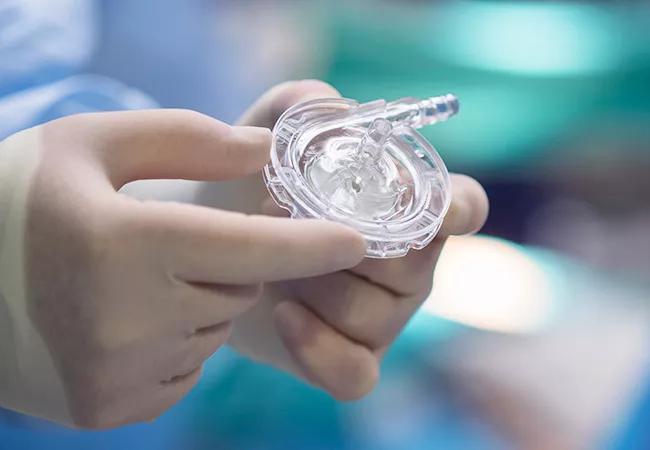
Image content: This image is available to view online.
View image online (https://assets.clevelandclinic.org/transform/2630791c-59a4-427a-b8d4-6da5efc1eb38/650x450-PediMag-ventricular-assist-device-jpg)
Hands holding a clear circular device
Nearly 1,500 children with end-stage heart failure received ventricular assist devices (VADs) across North America in the past 13 years, and survival continues to improve. That is a central finding from the newest Society of Thoracic Surgeons−Pedimacs Report, which analyzed data from 38 hospitals.
Advertisement
Cleveland Clinic is a non-profit academic medical center. Advertising on our site helps support our mission. We do not endorse non-Cleveland Clinic products or services. Policy
Even as VAD support is being extended to sicker children and those with more complex anatomy, one-year survival has risen steadily, from 67% in 2012-2015 to 71% in 2016-2020 and 78% in 2021-2024.
The gains reflect both advances in device technology and major improvements in pediatric heart failure care, according to the report’s lead author, Shahnawaz Amdani, MD, Section Head of Pediatric Heart Function and Transplant at Cleveland Clinic.
Pedimacs, the Pediatric Interagency Registry for Mechanical Circulatory Support, was established in 2012 as a national prospective registry of patients younger than 19. It captures use of both durable and temporary VADs and offers an important real-world view of outcomes for children with advanced heart failure in the U.S.
“The recent report highlights how pediatric VAD care is being extended to children with increasingly complex heart anatomy and physiology,” says Dr. Amdani. “Nearly three in four patients are on enteral or parenteral nutrition before receiving a VAD, underscoring how ill many of these children are at the time of implant.”
Several trends stand out in the latest analysis:
Advertisement
For pediatricians, these findings underscore an important shift: VAD therapy is increasingly being used in younger, more medically fragile children, including those with congenital and single-ventricle heart disease.
Overall survival on device was 77% at six months and 73% at one year.
Outcomes were best among:
Outcomes were poorest among:
“These patients have lower transplant rates and higher mortality,” Dr. Amdani notes. “Still, overall survival has improved over time, even as more infants and children with CHD are being supported. Much of this progress reflects better systems of care.”
He credits the ACTION (Advanced Cardiac Therapies Improving Outcomes Network) collaborative with helping standardize anticoagulation, blood pressure management, perioperative care and post-implant management.
“Most pediatric heart centers perform fewer than 10 VAD implants each year,” Dr. Amdani says. “Yet outcomes have improved, suggesting that front-line teams are increasingly equipped to care for these complex patients. Collaboration among centers has been essential to identifying and spreading best practices, even at lower-volume programs.”
Implantable continuous-flow devices are now the most commonly used VADs in pediatric patients. These devices are associated with better outcomes and often make discharge possible. Among children supported with implantable continuous-flow devices, 51% were discharged, and 94% of those patients went home.
Advertisement
“Nearly all children with implantable continuous devices who were discharged were able to go home, which is a major win in pediatrics,” Dr. Amdani says.
But important limitations remain. Children weighing less than 30 kg often do not have access to appropriately sized intracorporeal devices. As a result, many still require paracorporeal support, which carries higher risks of thrombosis, bleeding, infection and neurologic complications.
“The best outcomes with VAD support are seen in children who can leave the hospital, return to their communities, attend school and participate in physical, nutritional and psychosocial rehabilitation,” Dr. Amdani says. “Children who remain hospitalized do not have the same opportunities.”
The withdrawal of the HeartWare™ HVAD™ system from the U.S. market — due to adult data — has further narrowed options for smaller children, many of whom are now limited to paracorporeal devices and prolonged hospitalization.
“These patients lose the opportunity for discharge,” Dr. Amdani says. “They often must remain in the hospital on VAD support, which increases the risk of hospital-acquired infection and other complications.”
The report also takes a close look at biventricular assist device (BiVAD) support, an area of growing importance and ongoing challenge.
Key findings include:
Advertisement
“These findings point to the need for earlier recognition of right ventricular failure risk,” Dr. Amdani says. “They call for a high index of suspicion and proactive right ventricular support.”
He adds that poorer BiVAD outcomes likely reflect both greater preimplant acuity and limitations in currently available right-sided support strategies.
“We do not have dedicated pediatric right ventricular support devices, so we often adapt left-sided devices in ways that may not optimally support right ventricular function,” he says. “Innovation in device therapy, better predictive models for right ventricular failure and more tailored perioperative planning are all needed for these patients.”
Recovery is emerging as a more realistic and intentional goal in pediatric VAD care. Increasingly, VAD support is being used as a bridge to candidacy, allowing time for rehabilitation while clinicians assess whether transplantation or myocardial recovery is possible.
As bridge-to-recovery cases increase, future trials may help establish standardized approaches to serial heart function assessment. They also may help determine when VAD explant may be appropriate.
“For pediatric patients, delaying transplantation by even five to seven years can meaningfully extend life expectancy,” Dr. Amdani says. “Helping children recover with their native hearts for as long as possible is an opportunity we should not overlook.”
Advertisement
Advertisement
Large retrospective analysis may prompt prospective studies
A scannable recap of recent volumes and clinical metrics from Cleveland Clinic

Experts are challenging the one-size-fits-all paradigm

Decongestion, therapy titration and readmission rates comparable to those with traditional hospital care
Metabolites from animal product substrates implicated in heart failure development in community cohorts
Panel proposes staging and treatment protocols that support harmonized evaluation and management of heart failure in patients with congenital heart disease
Eminent clinician-researcher brings special expertise in nutritional interventions for heart failure
Recent volume and outcomes data in two major realms of cardiovascular care
 Search