Locations:


Affinity groups promote shared decision-making and clinical consistency across specialties
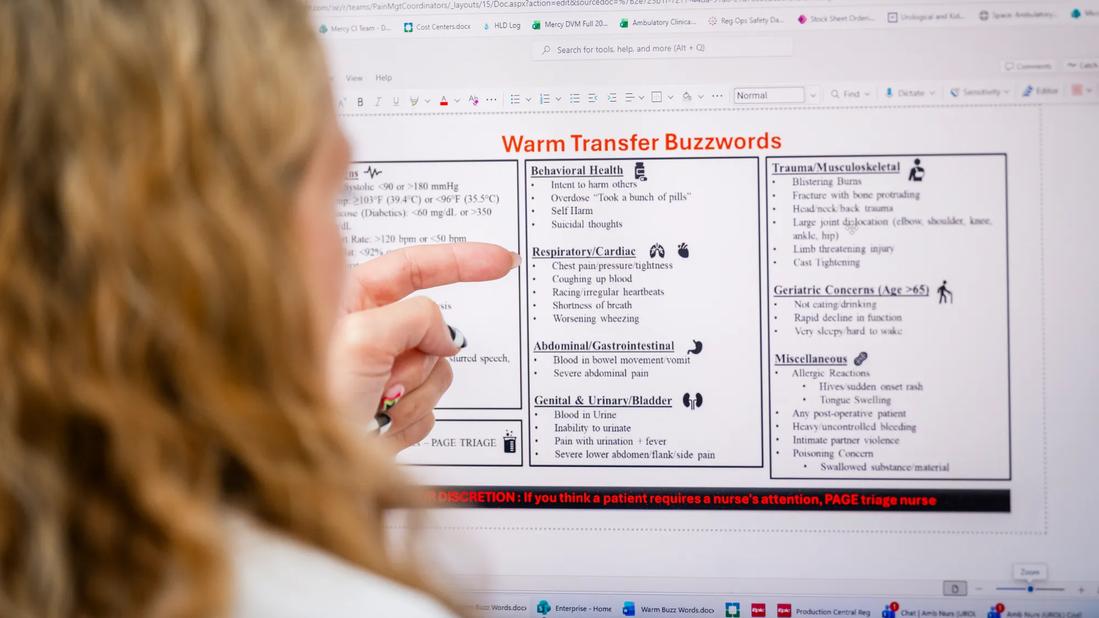
Image content: This image is available to view online.
View image online (https://assets.clevelandclinic.org/transform/b1515b6f-bbf4-424f-9522-9a4c2666c04e/NUR_8956858_08-06-26_025_SCG)
Nurse at computer
When care is planned and evaluated by those who deliver it, clinical guidelines are upheld, the voice of the nurse is preserved and processes follow best-in-class standards. At Cleveland Clinic, ambulatory affinity groups are helping turn that philosophy into practice. By bringing together caregivers and leaders from across outpatient specialties, multidisciplinary teams help ensure that nursing expertise shapes how care is delivered.
Advertisement
Cleveland Clinic is a non-profit academic medical center. Advertising on our site helps support our mission. We do not endorse non-Cleveland Clinic products or services. Policy
“When done well, affinity groups bring together the best of professional nursing, quality, safety and patient experience,” says Sheila Miller, DNP, MBA, RN, NEA-BC, Executive Director and Associate Chief Nursing Officer, Ambulatory Services and Care Management at Cleveland Clinic. “In the ambulatory setting, that means clarity for teams and excellent practices that help patients in whatever ways they need it most, wherever they receive care.”
Through nine ambulatory affinity groups — each representing different healthcare specialties — Cleveland Clinic nurses and their leaders play a critical role in determining how outpatient care is delivered across the organization. Although each group has its own goals and priorities, collectively they aim to drive excellence in nursing.
The affinity groups’ work is designed to support Cleveland Clinic’s ambulatory operating model, which was recently restructured to better reflect geographic markets and improve consistency across the organization’s more than 300 global outpatient locations.
“Changing to a market-based model created an opportunity to standardize and align ambulatory functions throughout the enterprise,” Miller explains. “Those improvements entail a layered approach in which leaders are organized by region or market and affinity groups provide the link to clinical institutes.”
By connecting specialty expertise to market operations, Miller says affinity groups are the ideal shared governance mechanism for ensuring consistency across the large, geographically aligned model. With the right people involved — nurses and nurse leaders from each location within a clinical area, executive sponsors, administrators and other subject-matter experts — the groups are empowered to make decisions that enhance care and improve outcomes.
Advertisement
“Cleveland Clinic is unique because it encompasses so many separate facilities around the globe,” she explains. “By having ambulatory affinity groups working across markets and specialties, we’re better able to capture the full scope of our services, review practices and identify and resolve variations.”
Nurses, who are often the first point of contact for outpatients, help manage chronic conditions, support care transitions and improve clinical outcomes.
“It’s so important for nurses to own how they and their colleagues work in ambulatory settings,” Miller says. “Our top priority is maintaining consistent, high-quality patient care, and no one is better suited to creating that reality than nurses. Without question, their work contributes to more efficient healthcare delivery, lower costs, reduced hospital admissions and increased patient satisfaction.”
Keeping a keen eye on clinical practice and workflows, group members evaluate and report on safety, quality, experience, regulatory requirements and more. They compare local practice standards as well as medications, procedures, therapies and equipment. They seek to identify barriers and workflow gaps and devise solutions through standardization, streamlined communication and enhanced quality measures. The groups also enable structured discussions, policy and protocol alignment, and enhanced review of compliance, scope and role.
“This formal market-to-institute linkage for practice review helps prevent geographic alignment from becoming practice fragmentation,” Miller says. “It safeguards the clinical standards of each specialty area and ensures they are followed.”
Advertisement
She adds, “The structure is designed to promote collaboration among different groups, specialties and disciplines while providing organizational support.”
Ambulatory affinity groups are tied to Cleveland Clinic’s Ambulatory Practice Council, which serves as the central forum for reviewing and coordinating outpatient recommendations. Ideas generated by the individual groups are passed to the council for further consultation.
“Under a shared governance structure, affinity groups elevate practice by providing clarity about workflows, medications, procedures and roles,” explains Amanda Roth, MHA, MSN, RN, a Senior Nursing Director at Cleveland Clinic. “Change recommendations follow a standard review pathway from affinity groups to the Ambulatory Practice Review Committee, and then to the Ambulatory Practice Council.”
New workflows are created at the council level with support from affinity group nurses. Approved changes are then implemented by the affinity group and supported by council members and local nurse leaders.
“New information is communicated to leaders and departments through strategies that include templates for topic submissions and communication tools with meeting agendas and recordings,” explains Joseph Melendez, MSN, RN, an Ambulatory Nurse Manager.
Roth and Melendez, who co-lead the council, outline a lengthy list of successful projects that demonstrate how the affinity groups convert local variations into shared learning, clinical tools and enterprisewide protocols.
One example from the Urology Affinity Group (operating under the Surgical Specialty Affinity Group) showcases how identifying variances led to a standardized, scalable operating solution.
Advertisement
Along with a team of coding experts, physician leaders, operational leaders and regional caregivers, the group evaluated opportunities to improve efficiency and accuracy. They joined forces to create standardized nursing documentation workflows and charge-capture processes, align billing practices across sites, improve caregiver education on coding and billing, and build electronic documentation tools to support automated and consistent charge capture.
The team’s work resulted in the development of a scalable, data-driven model for supply charging and auditing, says Stacey Russell, RN, Ambulatory Team Lead in Cleveland Clinic’s Glickman Urological Institute.
“This project serves as a best practice for how affinity groups can identify enterprisewide variations, bring together front-line experts and develop workflows that improve consistency, compliance, operational efficiency and revenue integrity across ambulatory settings,” she explains.
Russell recently partnered with the Surgical Specialty Affinity Group to develop a “warm transfer/buzzword list” to help front-desk and support staff identify patient concerns that require triage.
“Now, when a patient calls and describes symptoms associated with a warm transfer to a nurse, the call is efficiently directed, helping ensure timely assessment, appropriate interventions and improved patient care,” she says.
All affinity groups participated in a cornerstone project to assess and chronicle medications, procedures and therapies performed in the ambulatory setting by clinical service line. Information was organized into a central resource by location, administering department and task per caregiver role.
Advertisement
“The exercise helped us determine what needed to be clarified, regulated, escalated or supported with education,” Melendez says. “It also provided ambulatory caregivers with greater visibility into the services and treatments offered across the enterprise.”
Russell agrees saying, “The cornerstone project fostered teamwork, knowledge sharing and a better understanding of how other offices operate.”
Other recent ambulatory affinity group projects include standardizing:
• Medication, procedure and bowel preparation education in digestive disease care
• Medications and vaccines for children’s services
• Hospital-based care roles, medications, equipment and staffing
• Neuroscience and surgical specialty documentation, procedure setup and patient education
Russell emphasizes the professional fulfillment she’s found by participating in affinity groups and the invaluable connections she’s made with her fellow caregivers.
“The experience has made me more aware of all the work that goes on in the background,” she admits. “I’m grateful for the opportunity to hear different perspectives, ask questions and consider other ways of doing things. Affinity group relationships allow us to promote consistency by leveraging the experience and expertise of our caregivers.”
Perhaps most important, Russell says the groups help amplify the voices of nurses throughout the enterprise. “Affinity collaborations ensure we have a say in the way we work and allow us to witness firsthand how our ideas directly shape patient outcomes,” she concludes.
Advertisement

Tech-driven specialty embraces change to shape the future
Findings highlight the value of simple, evidence-based comfort measures at the bedside
How transferable skills and professional curiosity can lead to unexpected rewards
Event fosters career exploration and advancement through ongoing education
Short, structured check-ins help build nurse resilience
Nurses identify knowledge gaps, moral distress and the need for clear organizational guidance
How simple ideas can lead to practice-changing inventions
Specialized course equips caregivers to manage unpredictable behaviors with compassion and conviction
 Search