Locations:


Nurses identify knowledge gaps, moral distress and the need for clear organizational guidance

Image content: This image is available to view online.
View image online (https://assets.clevelandclinic.org/transform/13bf28f5-6d31-4034-9c10-270d1eea46a2/patient-er-465325051)
Patient in ER
Human trafficking is often described as a silent crime, but for ambulatory healthcare professionals, it may also be a hidden clinical challenge. Although nurses and social workers in outpatient settings routinely care for patients with complex physical, emotional and social needs, many report feeling unprepared to identify or respond to potential victims of human trafficking.
Advertisement
Cleveland Clinic is a non-profit academic medical center. Advertising on our site helps support our mission. We do not endorse non-Cleveland Clinic products or services. Policy
A new nurse-led Cleveland Clinic study explores how ambulatory nurses and social workers perceive and respond to patients affected by human trafficking. Through one-on-one interviews, researchers sought to better understand how front-line caregivers perceive trafficking victims, identify barriers to intervention and define their role in responding to at-risk patients.
“Ambulatory clinicians are uniquely positioned to identify patients who may otherwise go unnoticed,” says Terrie Koch, BSN, RN, lead investigator and an obstetrics nurse in Cleveland Clinic’s Wooster Family Health Center. “However, recognition is only possible when caregivers have the knowledge, resources and organizational support to respond with confidence.”
Researchers interviewed 29 ambulatory healthcare professionals, including registered nurses, licensed practical nurses, medical assistants and social workers. Analysis of the interviews revealed three consistent themes: misconceptions about trafficking victims, a lack of organizational direction and the moral distress caregivers experience when they suspect trafficking but are uncertain how to respond.
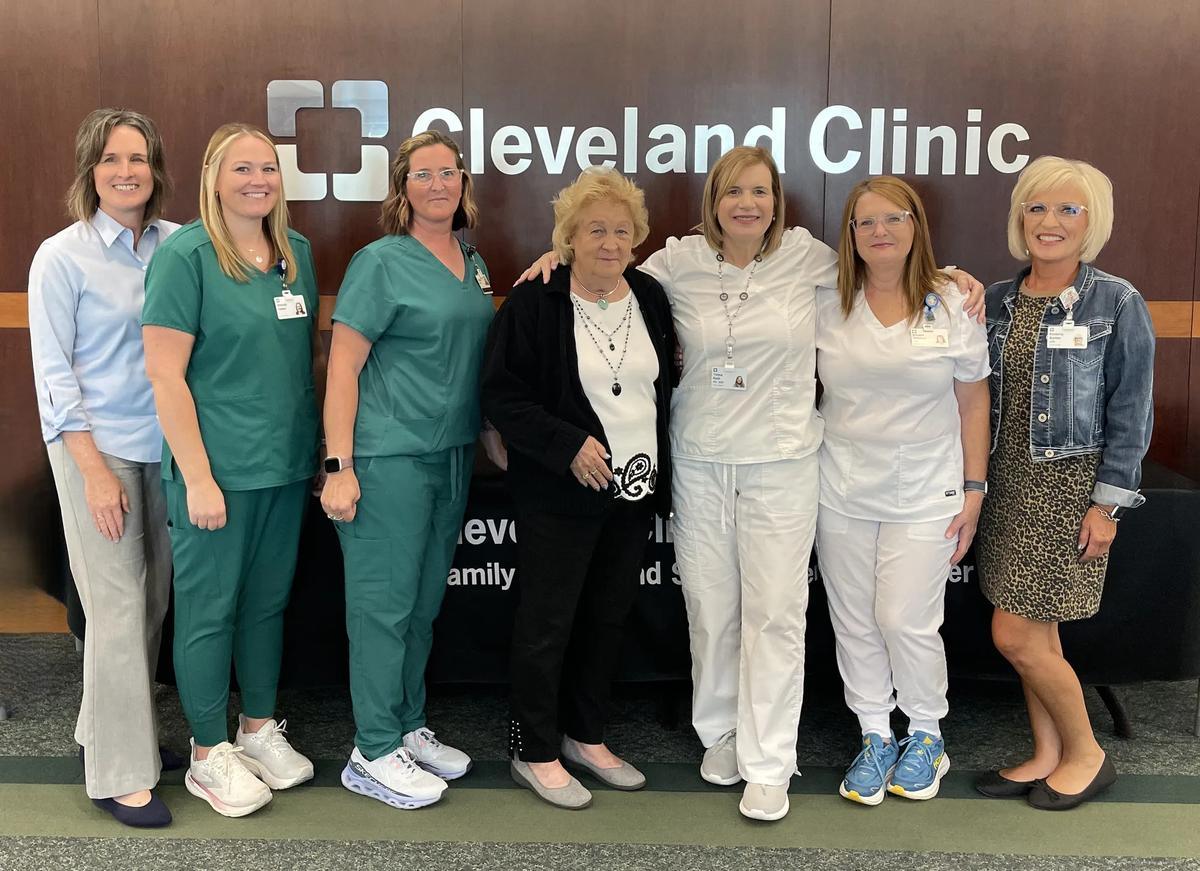
Image content: This image is available to view online.
View image online (https://assets.clevelandclinic.org/transform/4145db42-f7a7-4c1e-bc67-369b005964fd/human-traffic-nurse-team)
The research team (L to R): Amanda Roth, MHA, MSN, RN; Amanda Caskey, MA; Tabatha Cary, MA; Sandra Siedlecki, PhD, APRN-CNS, FAAN; Terrie Koch, BSN, RN; Annalee Dellafave, LPN; and Kimberly Beckler, LPN.
Many participants acknowledged that human trafficking exists but admitted they lacked confidence in recognizing children and adults who have been victimized. Some participants relied on common “recognition” stereotypes, such as assuming victims would display obvious physical injuries or that trafficking primarily affects women and adolescents. Others admitted they knew little about labor trafficking, and some believed traffickers were typically strangers to their victims, despite evidence showing that victims are often exploited by someone they already know.
Advertisement
“Our findings remind us that trafficking rarely looks the way clinicians expect,” Koch explains. “When caregivers rely on stereotypes rather than evidence, opportunities to identify vulnerable patients may be missed.”
Study participants consistently identified significant gaps in education, resources and standardized assessments, and reporting and support service protocols. Most reported that their understanding of human trafficking had come primarily from television, movies or internet sources rather than formal employer education. Many also expressed uncertainty about how to report concerns or what actions were expected of them when trafficking was suspected.
Caregivers emphasized the need for practical, experiential education on warning signs, reporting responsibilities and available resources. They also voiced frustration at the scarcity of policies that specifically address human trafficking, leaving them unsure how to proceed when concerns arise.
“It’s apparent that education must move beyond awareness,” Koch says. “Nurses want realistic guidance that prepares them to recognize concerning situations, understand their role and connect patients with appropriate resources.”
Koch notes what she considers the study’s most striking finding: the emotional burden participants described. Nearly 50% of participants believed they had never cared for a trafficking victim — even though many also acknowledged they may have missed warning signs. The realization that they may have overlooked a trafficked patient contributed to moral distress, as caregivers struggled with balancing patient safety, personal safety and ethical responsibilities.
Advertisement
By creating a uniform approach to suspected human trafficking, Koch believes healthcare organizations can help reduce uncertainty while ensuring patients receive appropriate support. The study emphasizes that caregivers must be proactive in recognizing and reporting suspected trafficking to law enforcement, who are responsible for investigating complaints, providing appropriate protections, building partnerships and prosecuting offenders.
Although the research was limited to eight ambulatory sites within a single healthcare organization, the findings provide important insights into an understudied area of nursing practice. Investigators recommend annual trafficking-specific education, standardized reporting pathways and clear decision-support tools to help ambulatory caregivers respond with greater confidence.
For Koch and her six co-investigators (see image above), including one nurse leader, two medical assistants, two licensed practical nurses and a nurse scientist, the findings underscore an important opportunity for
nursing leadership.
“Ambulatory nurses build trusting relationships with patients over time,” she says. “By investing in education and creating clear internal processes in ambulatory clinics and office practices, healthcare organizations can better equip nurses and other clinical caregivers to recognize human trafficking, respond and communicate with sensitivity, reduce moral distress, and connect vulnerable individuals with important community resources.”
Advertisement
Advertisement
Affinity groups promote shared decision-making and clinical consistency across specialties

How simple ideas can lead to practice-changing inventions

Specialized course equips caregivers to manage unpredictable behaviors with compassion and conviction
Howley ASPIRE Program prepares caregivers for the professional road ahead

Specialized training prepares caregivers to address the unique physical and emotional needs of young patients

Using meticulous preparation and teamwork to manage critically ill patients in constantly changing environments
Translating clinical questions into meaningful, sustainable change
Guidance for creating a relevant framework that reflects organizational values, supports professional practice
 Search