Locations:


Short, structured check-ins help build nurse resilience
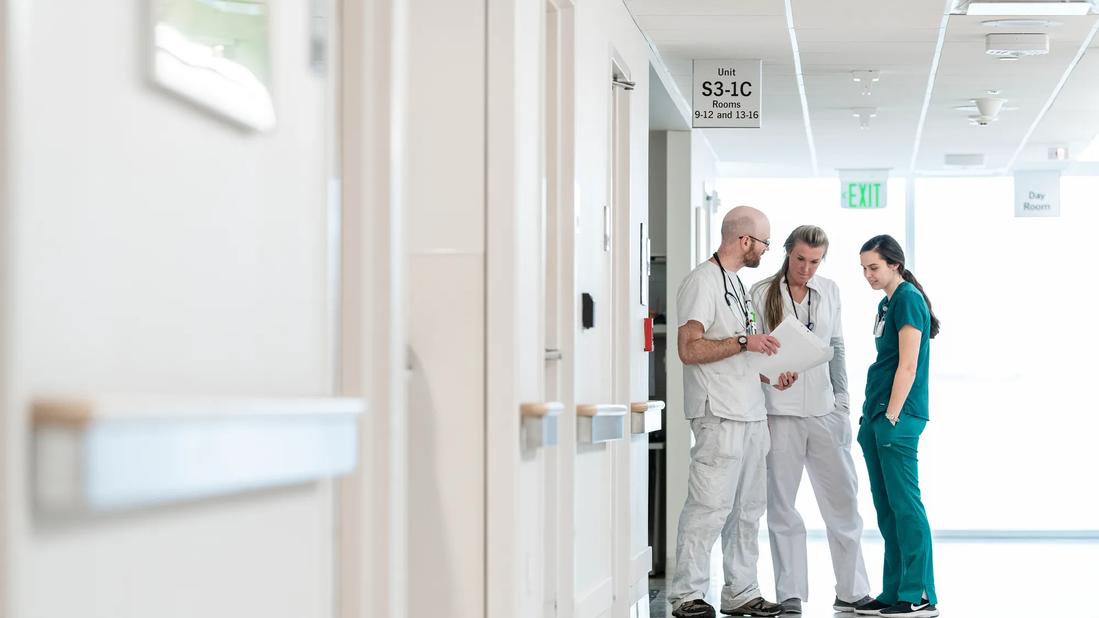
Image content: This image is available to view online.
View image online (https://assets.clevelandclinic.org/transform/8dfdf990-9481-42aa-9c73-7ee195d3a40f/NUR-1777739_11-21-19_160_MLC-jpg)
Decompression huddle
Nurses often carry the emotional weight of difficult shifts long after they’ve gone home. At Cleveland Clinic, a growing number of nursing units are addressing that challenge through decompression huddles — brief end-of-shift conversations that help caregivers connect with one another, resolve lingering concerns and leave work feeling heard.
Advertisement
Cleveland Clinic is a non-profit academic medical center. Advertising on our site helps support our mission. We do not endorse non-Cleveland Clinic products or services. Policy
“We have to care for our nursing teams as much as we care for our patients,” says Erin Turner, DNP, RN, NEA-BC, Executive Director and Associate Chief Nursing Officer of the Florida Region and Cleveland Clinic Weston Hospital. “Decompression huddles are one way to make sure our caregivers feel like they are heard, valued and uplifted by their leadership team.”
Thought leader Jeff Doucette, DNP, RN, Chief Nursing Officer at Press Ganey, has championed the use of decompression huddles since the company released Nurse Resilience in 2024. The e-book explores how to help caregiving teams use decompression huddles to build resilience by prioritizing tasks, providing peer support and disconnecting before a shift ends.
Doucette presented the concept to Cleveland Clinic nursing leaders at various events in 2025, including a monthly meeting of CNOs and ACNOs and a regional nurse leader retreat in Florida. Since then, nursing units across the healthcare system have adopted the approach. The organization’s Enterprise Retention Council, which includes representation from every hospital, has led the rollout.
The huddles provide a structured venue to help resolve issues that might linger after a shift ends and contribute to nurse burnout, explains Darlene Morocco, MHA, BSN, RN, NE-BC, FACHE, Vice President and Chief Nursing Officer at Cleveland Clinic Lutheran Hospital and co-executive sponsor of the Enterprise Retention Council.
“Nurses can experience incredibly difficult work shifts for a wide variety of reasons — from the death of a patient to the absence of a coworker that leads to a higher nurse-to-patient ratio,” she says. “Decompression huddles help ensure our nurses are healthy and whole before they leave for the day.”
Advertisement
Although the huddles vary slightly depending on each unit’s needs, most adhere to a standard framework: A nurse manager, assistant nurse manager or charge nurse gathers all available nursing caregivers for five to 10 minutes approximately one to two hours before the end of the shift. Leaders guide the conversation with a handful of questions about unfinished work, patient concerns, successes, opportunities for improvement and peer recognition.
Turner highlights several key benefits of decompression huddles, including their ability to help units prioritize tasks and enable caregivers to step in, engage in teamwork and encourage one another.
“When held at the end of every shift, decompression huddles provide nurses an opportunity to verbally confirm that they have completed their orders, medication administration and documentation before they leave for the day,” she notes. “By allowing team members to help each other deliver care on time, we can reduce frustration and burnout while building camaraderie and trust.”
The huddles also create space for caregivers to receive emotional support. Crystal Golightly, MSN, RN, NEA-BC, CPHQ, Director of Nursing, Medical-Surgical Division at Cleveland Clinic Indian River Hospital, recalls a colleague describing a difficult night shift years ago. The nurse stepped into a stairwell to cry where no one could see her. Her experience contrasts with a recent example from a surgical unit at Indian River Hospital, where a nurse resident disclosed during a decompression huddle that she had just experienced her first patient death.
Advertisement
“She was a new nurse and didn’t know how to ask for what she needed, but her fellow caregivers stepped in and volunteered to watch her patients while she took a 15-minute break,” Golightly says. Similar assistance and support are being provided across Indian River Hospital’s medical-surgical and telemetry units, which now use decompression huddles.
When Cleveland Clinic hospitals rolled out decompression huddles earlier this year, leaders recognized that introducing another scheduled meeting could be met with skepticism from both managers and nursing caregivers.
“Anytime you ask people to pause their work — especially when they are busy and are managing very sick patients — you run the risk of adding to their fatigue,” Turner says.
When Lutheran Hospital’s Retention Council presented decompression huddles to nurse managers hospitalwide, some were hesitant to implement them.
“I explained that although our teams regularly touch base, a day can quickly shift from smooth to hectic with admissions, discharges, codes and other urgent needs,” Morocco says. “The benefit of decompression huddles is that they allow leaders to address any issues prior to the end of the shift.”
In addition, leader buy-in was enhanced by allowing unit managers to tailor decompression huddles to their teams’ needs.
For instance, the operating room nursing team meets at 3 p.m. in a dimly lit break room to discuss routine questions and review instrumentation and equipment needs.
One of the surgical units has integrated decompression huddles into the electronic health record. The nurse manager messages caregivers at the start of the shift to remind them to use Epic’s secure chat feature to ask for and offer help to peers. The platform also enables leaders to announce when additional staff members are available to assist.
Advertisement
“It’s not as personalized as a face-to-face huddle, but it works well for this busy surgical unit,” Morocco says. “It’s a good example of how we can use technology to work for us in nursing to decrease steps and interruptions.”
As Cleveland Clinic nursing units continue to adopt and refine decompression huddles, their significance is becoming clear.
“Decompression huddles align with Cleveland Clinic’s core values of serving with heart and succeeding as one team,” Golightly explains. “They are an investment in our caregivers by allowing them a moment to pause, take a breath and feel supported, then come back to work better able to care for patients with compassion and purpose.”
Advertisement
Advertisement
Nurses identify knowledge gaps, moral distress and the need for clear organizational guidance
Affinity groups promote shared decision-making and clinical consistency across specialties

How simple ideas can lead to practice-changing inventions
Specialized course equips caregivers to manage unpredictable behaviors with compassion and conviction
Howley ASPIRE Program prepares caregivers for the professional road ahead
Specialized training prepares caregivers to address the unique physical and emotional needs of young patients
Using meticulous preparation and teamwork to manage critically ill patients in constantly changing environments
Translating clinical questions into meaningful, sustainable change
 Search