Locations:





Cardiovascular drug affects cancer cell protein pathways
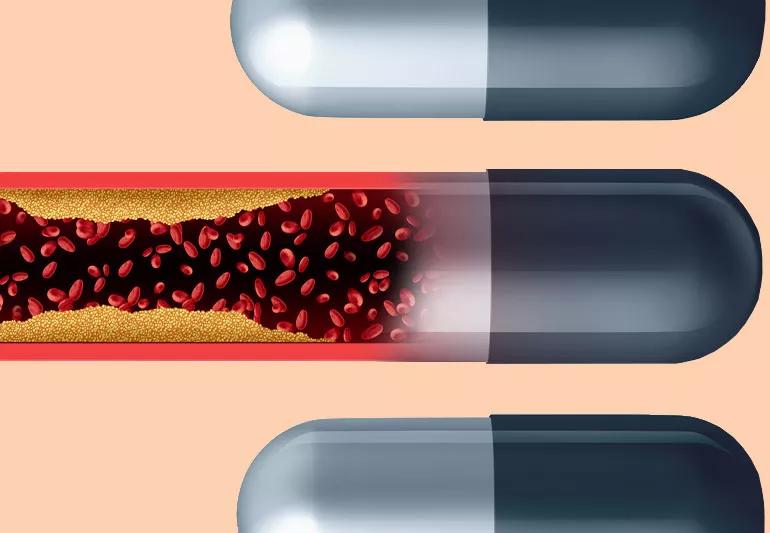
Image content: This image is available to view online.
View image online (https://assets.clevelandclinic.org/transform/a161c6a3-34a7-40c8-9063-84738282d16a/statinPills-909159546-770x553-jpg)
statins_650x450
Each year, colorectal cancer strikes 140,000 Americans — 100,000 cases occur in the colon and 40,000 in the rectum — and researchers recently uncovered an alarming rise in colorectal cancer (CRC) among young and middle-aged adults.
Advertisement
Cleveland Clinic is a non-profit academic medical center. Advertising on our site helps support our mission. We do not endorse non-Cleveland Clinic products or services. Policy
Standard treatment of rectal cancer includes radiation and chemotherapy before surgery, but patients vary widely in how they respond to that treatment. “Some people have a great response and the tumor just fades away to nothing, and some people have no response at all,” says Matthew Kalady, MD Co-Director of Cleveland Clinic’s Comprehensive Colorectal Cancer Program.
Recently, however, Dr. Kalady and colleagues performed an observational study and determined that patients who were taking statins to reduce their risk of cardiovascular disease responded better to neoadjuvant chemoradiation therapy. They postulated this effect might be due to the anti-inflammatory effect of statins.
To really understand the impacts of statins on CRC, however, required a deeper investigation. So Dr. Kalady and his colleagues decided to test the effects of statins on colorectal cells in vitro to see whether the drug might make such cells more susceptible to the effects of radiation.
“In the lab we’ve studied rectal cancer’s response to radiation and the mechanisms that decrease or increase sensitivity,” Dr. Kalady says. “So we decided to go back to the lab try and figure out what’s really happening on a cellular level with statin treatments.”
Dr. Kalady and colleagues took four CRC cell lines and exposed them to radiation alone, to the statin simvastatin alone, and to simvastatin and radiation together. They found that simvastatin combined with radiation inhibited the growth of CRC cells in vitro and increased their radiation sensitivity in a dose-dependent manner.
Advertisement
They also found simvastatin inhibited the viability and growth of irradiated CRC cells via the depletion of geranylgeranyl pyrophosphate (GGPP), a known cofactor of Ras, which is a key cancer pathway. Furthermore, the researchers found that treatment with simvastatin decreased activity of ERK1/2 which is a downstream factor in the cancer signaling pathway. All of this resulted in increased cell death with the combination treatment.
“That was one of the novel findings,” Dr. Kalady says. “The statins actually worked by phosphorylating ERK1/2 and turning off this protein’s activity and thus making the cancer cells more prone to dying.”
Dr. Kalady says the next step is to introduce the use of statins combined with chemotherapy and radiation in clinical trials. “It’s a very simple, commonly used drug for heart disease that is taken by a good percentage of the population,” he says. “It’s fairly benign and fairly cheap so it could be used during chemoradiation for rectal cancer, potentially improving response rates.”
Until such trials are performed, Dr. Kalady says, he cannot recommend doctors prescribe statins during chemoradiation for patients with rectal cancer. “We need to evaluate this first to see if it might possibly become part of routine care for rectal cancer treatment for those getting radiation.”
Nevertheless, he says, “If someone with rectal cancer had other indications to go on a statin I would encourage them to do so because it might also have an effect on their cancer outcome.”
Advertisement
Advertisement

Study reinforces the importance of genetic testing prior to local therapy decisions

Understanding expanding treatment options and potential advances

Adding 177Lu-PSMA-617 to ADT plus an ARPI cut the risk of radiographic progression or mortality by 28%

New program will help patients improve fitness and manage weight after cancer treatment

Cleveland Clinic hematologist highlights new guidelines and treatment advances in immune thrombocytopenia
NIMBLE replaces weekly tumor board delays with same-day multidisciplinary recommendations

Cleveland Clinic study provides validation for the test, which combines AI and pathological data to predict outcomes in postoperative patients
Advanced imaging technology catches metastases much earlier, allowing treatment with fewer side effects
 Search