Locations:


Building a culture of trust and developing future leaders amid a changing healthcare landscape
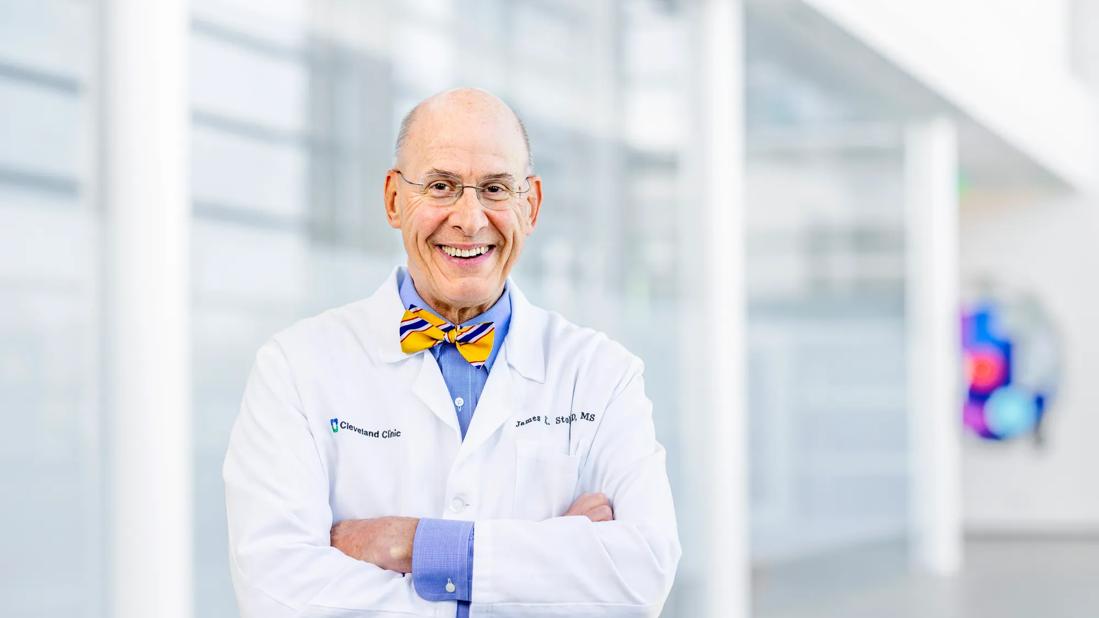
Image content: This image is available to view online.
View image online (https://assets.clevelandclinic.org/transform/5cedef51-9c26-45c1-8d5a-fb93c3cffce5/PHI_3857409_05-05-23_022_LDJ-jpg)
James Stoller, MD
Amid rapid technological advances, evolving care delivery models and growing workforce demands, strong healthcare leadership is more important than ever. Effective leaders must not only navigate an increasingly complex practice environment but also create cultures in which caregivers feel valued, supported and empowered to contribute their best work.
Advertisement
Cleveland Clinic is a non-profit academic medical center. Advertising on our site helps support our mission. We do not endorse non-Cleveland Clinic products or services. Policy
To learn more about the strategies Cleveland Clinic is using to foster career longevity and develop its future leaders, ConsultQD turned to pulmonologist and critical care physician James K. Stoller, MD, MS, Chief of Cleveland Clinic Education. A tenured healthcare leader and scholar of organizational behavior, Dr. Stoller holds the Jean Wall Bennett Chair in Emphysema Research and the Samson Global Leadership Academy Endowed Chair. He is Professor of Medicine and Senior Associate Dean of the Cleveland Clinic Lerner College of Medicine of Case Western Reserve University (CWRU) and an adjunct professor of Organizational Behavior at Weatherhead School of Management at CWRU.
Q: How would you define a healthy organizational culture, and what characteristics do you believe are essential to creating an environment in which people feel motivated to do their best work?
A: The classic Aristotelian virtues – trust, compassion, courage, hope, justice, wisdom and temperance – have stood the test of time for millennia. Research shows that when leaders are intentional about creating a culture that is embedded in those seven virtues – and when the leaders themselves model those behaviors in their day-to-day work – discretionary effort is released. In other words, it inspires high performance. People in the organization are motivated to do the right thing, even when no one's watching.
It’s deceptively easy to lose confidence in an organization when its actions seem discordant with its stated goals. Those of us who are parents know how hard it is to remain consistent. You said this, but you did that. When organizations or people have fallen from authority, the fall is often related to breaches of trust. Trust goes hand in hand with psychological safety and is foundational to a person’s ability to comfortably present their ideas without fear of retribution.
Advertisement
It’s important to note that these concepts aren’t unique to healthcare or academia. They reflect universal truths that can be generalized across sectors. When I speak to crowds, I often ask the question: How many people want to work in an environment that doesn't value trust, compassion, courage, hope, justice, wisdom and temperance? Nobody raises their hand because – simply put – nobody wants to work in a place like that.
Successful cultures that attract and retain talent are not accidental. Creating culture – a leader’s responsibility - is much like gardening. If you don’t feed, water and fertilize the plants, things will end in disarray. On the other hand, you can create a beautiful, abundant garden with care and deliberate attention.
Q: As healthcare continues to evolve, what knowledge and competencies will clinicians need to succeed in the future, and how can medical educators help prepare them for those demands?
A: We educators spend a lot of time thinking about how to prepare providers for the future.
Drawing on what the American Medical Association calls health systems science, doctors will never be able to get away from the core competencies: anatomy, physiology, biochemistry, clinical practice.
Beyond these core competencies, health systems science emphasizes quality and patient safety, population health, leadership and management competencies, among others. For many years, Cleveland Clinic has also provided a robust leadership curriculum, which I believe is an essential component of a progressive career.
Advertisement
About 25 years ago, I began and directed a course called Leading in Healthcare, which took doctors, nurses, and administrators offline for 10 days to help them develop competencies in leadership, team building, change management, situational leadership and conflict resolution. Leading in Healthcare was offered for 13 years and more recently, the Mandel Global Leadership and Learning Institute has scaled the curriculum to the entire organization.
Increasingly, clinicians today must also be conversant in artificial intelligence (AI) and have a fundamental understanding of its strengths and shortcomings. We are incorporating those topics in our curricula – as are academic leaders throughout the country – by developing courses that illuminate what AI can and can't do.
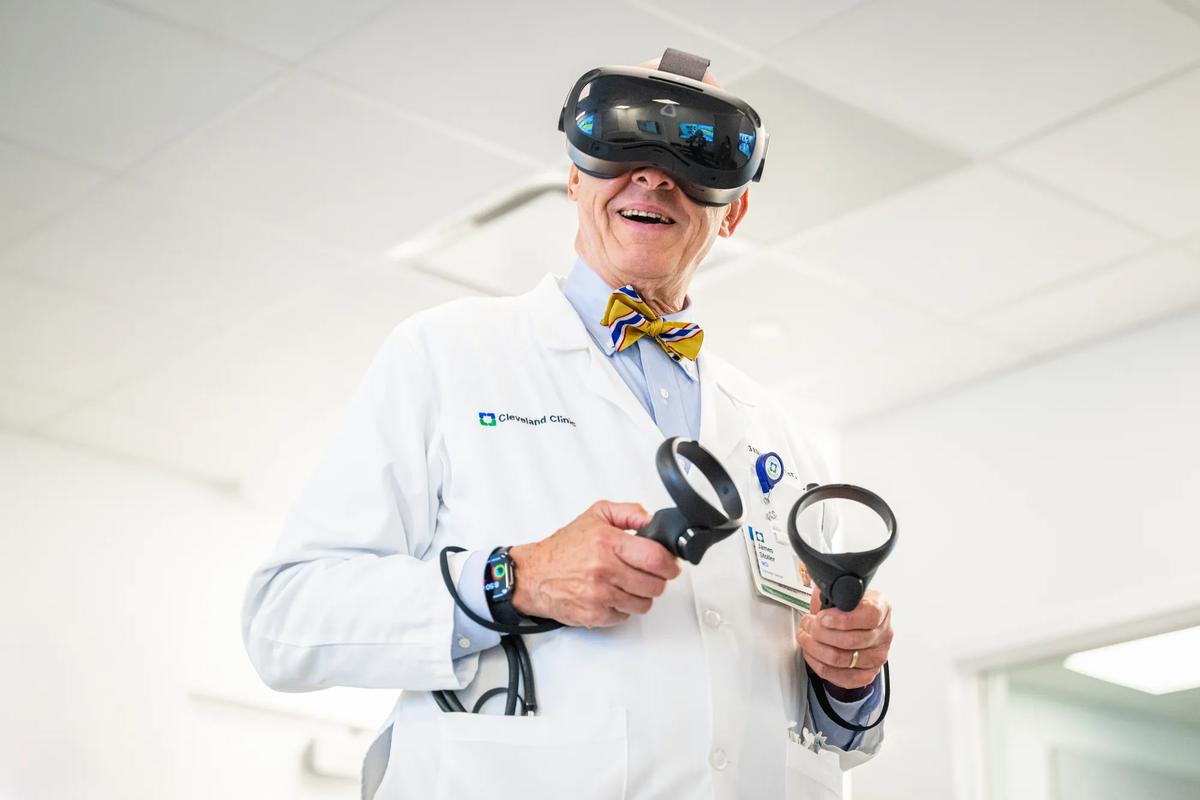
Image content: This image is available to view online.
View image online (https://assets.clevelandclinic.org/transform/44eab900-b51b-41b9-88c2-d8cbc1ed9414/EDU_8023009_04-06-26_040_SCG)
Dr. Stoller celebrates the recent opening of a new virtual reality training center in Cleveland Clinic's HealthSpace Building.
Q: What roles do coaching and mentorship play in the development of caregivers and future leaders?
A: Coaching and mentorship – two different but overlapping concepts – are critical to organizational growth. Coaching relies on a sense of altruism that can unleash an individual's intrinsic wisdom. It’s an action-oriented approach that targets specific skills or performance outcomes.
Mentoring, on the other hand, is a process through which senior caregivers facilitate the long-term growth and development of their junior colleagues by sharing their own experiences and insights. It’s designed to foster a culture of collaboration and continuous learning.
There are many organizations in which leaders covet power. Fortunately, that isn’t the culture here. We have very explicit discussions with our leadership here about the need to develop a pipeline of successors. We’re clear that the work we do is more important than the tenure of any individual.
Advertisement
Q: How can healthcare leaders create a more constructive and effective approach to giving feedback?
A: Successful feedback comes down to framing. It should always be offered as a gift – never weaponized as a “gotcha”. Although I believe we’ve made improvements, feedback in medicine has traditionally been acrimonious, often intended to diminish or discourage the recipient. After all, doctors are trained to be deficit-based thinkers.
When a patient presents with a problem, clinicians are trained to use the patient’s history, physical exam, lab tests and imaging studies to arrive at a diagnosis and proposed solution. That approach works well in clinical practice, but it doesn't necessarily translate to organizational leadership. Organizations are not compilations of problems to be solved; they are an array of opportunities to be realized.
To provide constructive, actionable feedback, I encourage providers to view the situation through an appreciative lens rather than a deficit-based lens. The most important question is not: What's the problem, and how do we fix it? Instead, we should be asking: When we are at our best, what are we doing right, and how do we do more of it?
In fact, I've changed my own practice based on my training in organizational development. Earlier in my career, I would zero in on historical questions when seeing a patient for the first time: Mrs. Jones, what brings you to see me today? This is the traditional chief complaint in a person’s history. Now, I'm much more likely to say something like: Mrs. Jones, if this visit were successful beyond your wildest dreams, what would we accomplish together? That question frames the interaction very differently. It prioritizes the patient's voice rather than the doctor's presumptive definition of success.
Advertisement
Q: What advice would you offer caregivers who are looking to build a long, fulfilling career in healthcare?
A: Kierkegaard’s famous quote has become increasingly resonant for me: “Life can only be understood backwards, but it must be lived forwards.” It’s a difficult concept to understand when you’re early in your career, but I challenge caregivers to think about the contributions they would like to make to their patients and organization. In the end, that intrinsic motivation matters much more than any extrinsic reward.
If you're in an environment that celebrates the contributions you make – and your goals align with the goals of the organization – you're more likely to find organizational longevity and lasting fulfillment in your career. On the other hand, if you're forced to rely only on outside factors – how much you’re paid or what the call schedule looks like – to stay motivated, you’re probably in the wrong place.
Caregivers should remain clear-minded about their individual skillsets and the contributions they hope to make throughout their careers. I've been fortunate to feel aligned with Cleveland Clinic's values throughout my career, and that's what's kept me growing here for more than 40 years.
Advertisement

New resilience pillar equips caregivers and patients with tools to recognize and prevent cybercrime

Reflecting on a year of learning, collaboration and creating capacity

Leveraging technology while preserving the human touch

Regular team discussions give caregivers the information, confidence and support they need to identify threats

How Cleveland Clinic’s facility dog is enhancing caregiver wellness

Mentoring Resource Center expands opportunities for professional growth through new technology and peer learning

Specialized advocacy program provides care, compassion and essential community connections

Program teaches communication and leadership skills
 Search