Locations:





A look at how personal stories sparked an enterprise-wide cultural reset
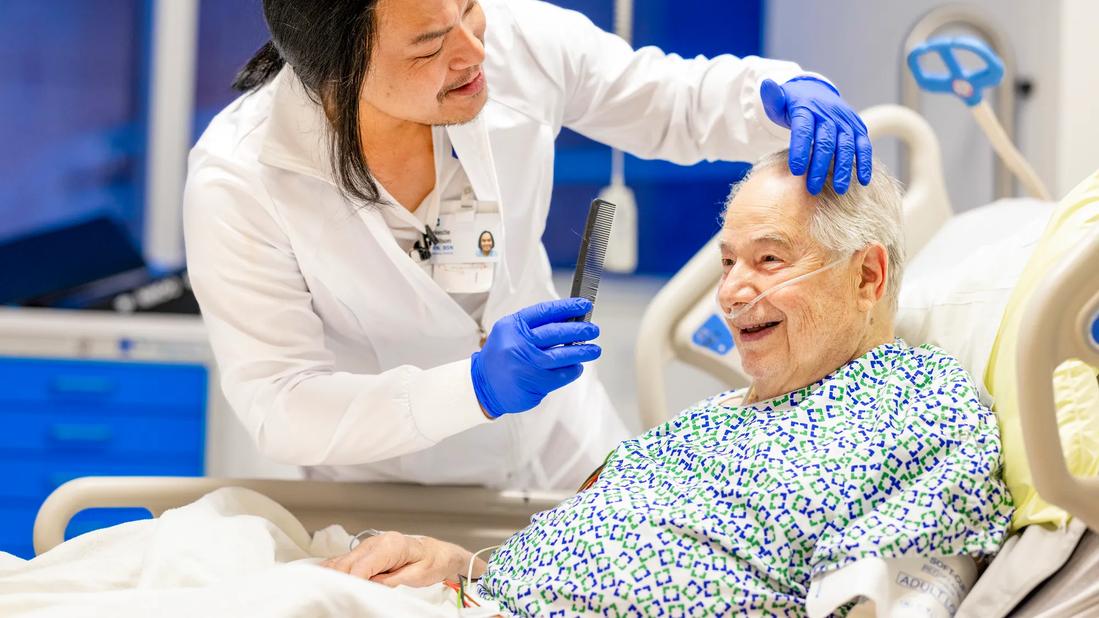
Image content: This image is available to view online.
View image online (https://assets.clevelandclinic.org/transform/8a9dfcf6-3924-40f9-8e8e-a4f267116958/PHI-3814630ab_06-16-23_012_LDJ-jpg)
Nurse combing patient's hair
Most people who choose healthcare careers are driven by something deeply human. Their desire might stem from their own health journey or that of a loved one – a moment of vulnerability that revealed the power of exceptional care. For others, it may be a calling to save lives or make a meaningful difference. Whatever the motivation, the work carries heart and purpose.
Advertisement
Cleveland Clinic is a non-profit academic medical center. Advertising on our site helps support our mission. We do not endorse non-Cleveland Clinic products or services. Policy
That sense of purpose is exactly what inspired a Cleveland Clinic internal team to spark a cultural movement in 2025. The team began by creating a video that invites a pause – a moment of reflection and introspection – by focusing on the authentic, personal stories of the institution’s caregivers.
Since its launch, caregivers have embraced their own vulnerability to create a powerful, enterprise-wide source of inspiration and connection. Today, these stories can be found in every corner of the enterprise, from intranet articles and podcasts, to meeting moments and more – all united by a single theme: The Power of Purpose.
The Power of Purpose didn’t happen overnight. It took years of collaboration across teams before it came to life.
The journey began in 2022 with a conversation about one of Cleveland Clinic’s most iconic pieces of storytelling: Empathy: The Human Connection to Patient Care. Often referred to simply as the “empathy video,” it debuted in 2013 and has since reached 8.2 million views on YouTube. It’s shown at every new caregiver orientation, shared in meetings and presented at conferences around the world. The video was created to inspire empathy by reminding us that every patient’s journey is personal and that understanding healthcare means seeing through the eyes of others.
The video’s powerful message sparked a new line of thinking: The caregiver experience deserved its own spotlight. The team began to imagine a story told through the eyes of caregivers – one that explored the deeper “why” behind healthcare and what draws people to serve.
Advertisement
Teams from the institution’s Caregiver Office, Marketing and Communications and Media Production came together to explore this concept. What began as a conversation about creating a similar video quickly evolved into something much bigger – a broader effort that prompted the group to reflect on their own personal “why” for working at Cleveland Clinic.
“We were all inspired by the empathy video, which is powerful because it gives us a glimpse into the journeys of patients,” says Lisa Minor, MBA, CPC, Senior Director, Leadership and Learning, who helped lead the broader team. “But as we reflected on that video, we realized something important – the caregiver experience is just as crucial to the healthcare journey as the patient experience. The two are connected, especially in today’s healthcare environment.”
Keeping that vision in mind, the team got to work. With the endorsement and support of Kelly Hancock, DNP, RN, NE-BC, FAAN, Executive Vice President, Chief Caregiver Officer and Chief Administrative Officer, the initiative quickly gained executive leadership support across the enterprise. Hancock championed the idea and encouraged the team to think boldly.
“In some ways, we lost our way in healthcare over the last couple of years,” Hancock explains. “After years marked by the pandemic, workforce shortages and constant change, we needed something that would bring us back to center and reconnect us with why we chose healthcare and what makes this work so meaningful.”
What followed was years of listening and exploration. The team held focus groups with caregivers, conducted surveys, reviewed data and gathered stories from across the organization. Storyboards multiplied – and slowly, a concept began to take shape.
Advertisement
It quickly became clear that, while every caregiver’s reason for serving was unique, a shared sense of purpose connected them all. By 2024, the team had a strong prototype for the video, but something was still missing. It needed a name. Once again, the team turned to caregivers, using focus groups and internal surveys to find the right words. That process ultimately led to the name and identity: The Power of Purpose.
The Power of Purpose officially debuted during the 2025 State of the Clinic, when Cleveland Clinic CEO and President, Tom Mihaljevic, MD, introduced the video as part of the program.
Since 2025, countless caregivers have stepped forward to share why they choose Cleveland Clinic.
The movement has fueled creativity for storytelling from caregivers and leaders across the enterprise, even inspiring a new video series in which Hancock has candid conversations with caregivers about their paths into healthcare and what continues to draw them back.
The first episode spotlights Tim Wolbert, RN, who left a career in garage installations after encouragement from his wife to return to school and become a nurse. Today, Wolbert serves as a nurse manager, finding fulfillment in his second career caring for patients and leading a team of caregivers.
The Power of Purpose has found its way into meetings, retreats and more. It’s often a focal point of content on the organization’s intranet, featuring stories and photos of a caregiver’s “why” for working at Cleveland Clinic. Some caregivers share that their journey into healthcare was shaped by the loss of a loved one, a firsthand experience with the hope of cancer research or a calling to help others.
Advertisement
Hancock reflects on the impact of hearing colleagues share their personal reasons for serving. While there is vulnerability in telling those stories, she notes that openness creates deeper connections and reminds caregivers that they are not alone in their purpose.
Cleveland Clinic’s experience launching The Power of Purpose shows that a successful workplace culture requires intention, authenticity and time, says Hancock. Along the way, the team uncovered valuable lessons that can help other organizations create similar movements that resonate.
Start by listening. Before creating anything, invest time in listening. Focus groups, surveys and one-on-one conversations help surface real experiences, language and emotions. The most authentic movements are built from the voices of the people living the culture every day.
Secure leadership buy-in early. Culture initiatives gain credibility and momentum when leaders champion them. Encourage leaders to openly participate, which signals to others that they have permission to explore and reflect. In addition, executive sponsorship signals that the work matters and gives teams the freedom to think bigger.
Build with intention – and patience. A strong culture movement takes time. Allow the concept to evolve naturally rather than rushing to a finished product.
Make it more than a moment. A successful reset or movement doesn’t start and end with a single video or launch. Create tools, content and touchpoints that allow the message to live on and stay relevant long after its debut.
Advertisement
Invite people into the story. The most powerful culture stories aren’t just told, they’re shared. A clear call to action encourages employees to contribute their own stories, creating ownership and connection.
Advertisement

Making a difference by putting empathy into action
Annual event galvanizes leaders and inspires excellence

Peer collaboration, flexibility amplify learning
Volunteer program invites caregivers to serve as patient navigators
Online course supports emotional well-being

Building resilience through collaboration and mutual respect
Frontline listening and engagement are crucial
Regional organizations collaborate to address nurse faculty shortage
 Search