Locations:





Embracing generational differences to create strong nursing teams
Podcast content: This podcast is available to listen to online.
Listen to podcast online (https://www.buzzsprout.com/2256206/18502453)
Working with multigenerational teams can offer significant benefits, but it also presents a distinct set of challenges. When not well managed, differing life experiences and work-related expectations can lead to misunderstandings, frustration and reduced engagement.
Advertisement
Cleveland Clinic is a non-profit academic medical center. Advertising on our site helps support our mission. We do not endorse non-Cleveland Clinic products or services. Policy
“Addressing these challenges is essential for creating a productive and inclusive work environment,” explains Colleen Carroll, a senior director from Cleveland Clinic’s Mandel Global Leadership and Learning Institute. “By acknowledging generational differences and fostering open dialogue, organizations can reduce conflict and leverage the strengths of each age group. When these issues are actively managed, multigenerational teams are better positioned to innovate, adapt and achieve shared goals.”
In the latest episode of Nurse Essentials, Carroll discusses proven strategies for fostering multigenerational collaboration. The candid conversation explains how nursing leaders can foster respect across generations by providing clear communication and opportunities for mutual learning.
Click the podcast player above to listen to the episode now, or read on for a short, edited excerpt. Check out more Nurse Essentials episodes at my.clevelandclinic.org/podcasts/nurse-essentials or wherever you get your podcasts.
Podcast host Carol Pehotsky, DNP, RN, NEA-BC: What are some of the challenges you're seeing when you have several generations of nurses showing up to work, and what strategies can be used to overcome them?
Carroll: I think the No. 1 challenge we see with multiple generations in the workplace is communication – mostly miscommunication around modality. These misunderstandings are for good reason. We have so many ways to communicate today. I can call you…I can text you…I can talk to you face-to-face…I can talk to you virtually. I can even react to your email with a thumbs up. I mean, the list is exhausting.
Advertisement
And then on top of that, each person has a preferred [communication style] and modality. However, when we show preference for certain communications, we mitigate the preferences of others. Here’s a great example: I asked a young team nurse if she had checked in with another team member about a particular project. I wanted an update. She said she sent the person an email last week. I asked, “Did you just try calling?” The look of shock on this team member's face when I suggested she pick up the phone! We both had a good laugh.
I mean, I get it. There's an app for everything. I don't always want to pick up the phone either – but, sometimes when we need to get something done, that's the fastest way to do it.
I would say one way to deal with these kinds of communication challenges – whatever your role – is to establish norms. You know, what are our team’s standard channels of communication? And when you receive a communication, what is the standard of reply? How quickly are you expected to respond…within 24 hours…48 hours?
I know it sounds granular, but I think different generations have different expectations when it comes to timing. It's better to have those expectations set from the beginning than to wait until there’s conflict or the norm has been violated.
Advertisement
Advertisement
Helping patients understand their options while navigating uncertainty
Nurse manager turns a patient safety concern into a data-driven effort to improve protocols and inspire innovation

Nurse draws on frontline experience and an engineering background to develop a new approach to incontinence management

How life experience, storytelling and a passion for service sparked a midlife nursing career
Plastic surgery nurses uniquely help patients meet medical, functional and aesthetic goals
Harnessing digital innovations to enhance nurse confidence and clinical outcomes
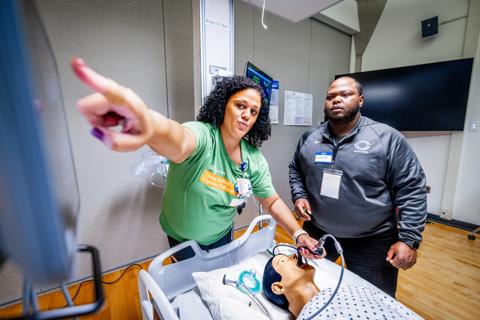
Regional organizations collaborate to address nurse faculty shortage
How wellness habits help nurses flourish
 Search