Locations:





Making a difference by putting empathy into action

Image content: This image is available to view online.
View image online (https://assets.clevelandclinic.org/transform/0061221d-2005-4209-b678-85dd8602bad4/CCC_3841960_04-20_23_045_LDJ-jpg)
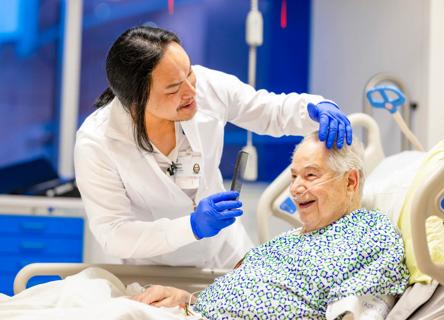
Nurse hugging patient
By Paul Kuzmickas, JD, Director of the Cleveland Clinic Ombudsman Office
Advertisement
Cleveland Clinic is a non-profit academic medical center. Advertising on our site helps support our mission. We do not endorse non-Cleveland Clinic products or services. Policy
It was happening too fast.
A patient learned they would be scheduled for surgery the next day.
While finalizing surgery details, one provider noticed the concern from the patient and their loved ones. She paused and turned to the patient.
“Let’s stop for a minute. I can only imagine how fast this is going for you,” she said and then asked the other care team members to step out of the room.
The provider sat down with the patient and their family to give them a moment to breathe and ask questions. She ensured they understood and agreed to the decision to schedule surgery.
Later, in a note to Cleveland Clinic’s Ombudsman Office, the patient shared they were even more impressed with the provider realizing they needed a moment to pause than they were with the procedure’s success.
In healthcare, we can use empathy to make a positive, memorable impact on the lives of so many. Here are three ways to apply this.
Maintain awareness and perspective. Tomorrow’s procedure could be the 100th one you perform — or today’s presentation could be a monthly occurrence in your schedule — but either could be the first for your patient or colleague.
Seeing each experience through the other’s eyes and responding with compassion and understanding is crucial to the way they’ll remember each moment.
Avoid fatigue and burnout. Expressing too much empathy can negatively impact your ability to perform at your best. Your health and well-being matter, too.
Know when to ask a colleague to step in during moments when others need support.
Advertisement
Practice with everyone. Empathy extends beyond patients and families to how we treat one another each day — from peer to peer, leader to team and across every role.
Approach every interaction with the same respect and kindness, recognizing that small moments of empathy shape our culture. Empathy is more than being kind. It’s being able to recognize what someone else is feeling and communicate that understanding in a way that supports their well-being.
Advertisement
Advertisement
A look at how personal stories sparked an enterprise-wide cultural reset

Annual event galvanizes leaders and inspires excellence

Peer collaboration, flexibility amplify learning

Volunteer program invites caregivers to serve as patient navigators
Online course supports emotional well-being

Three-day program focuses on leadership, safety, operations and change management

Findings show significant energy savings and no association with increased surgical site infection, mortality or ICU admission

Connecting interactions adds clarity to the full patient story
 Search