Locations:





New Department of Inflammation and Immunity formed
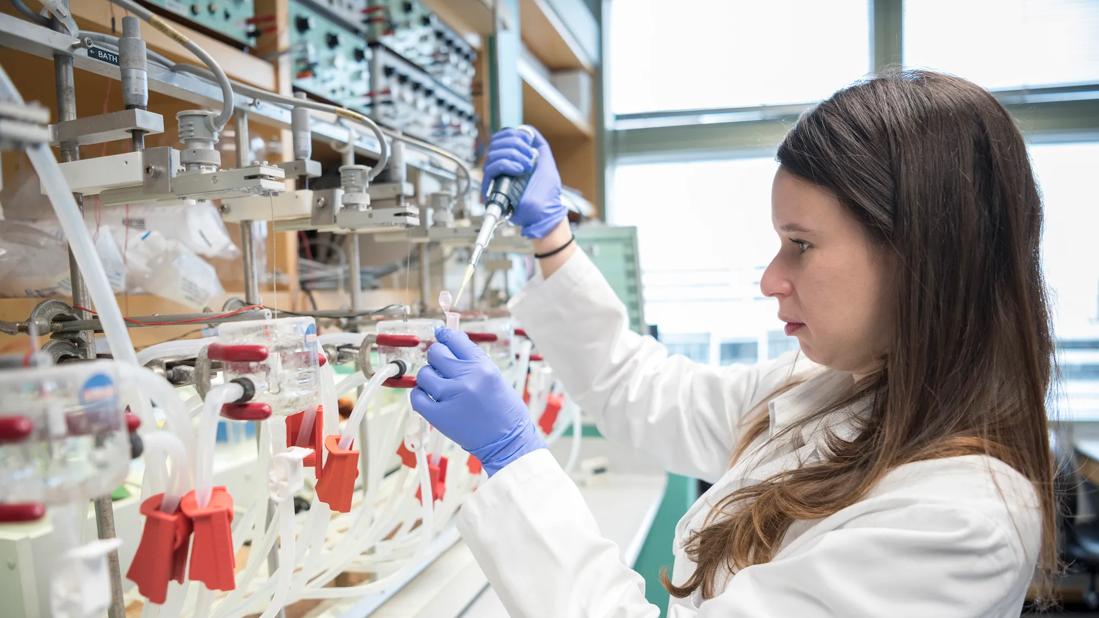
Image content: This image is available to view online.
View image online (https://assets.clevelandclinic.org/transform/1d649dbb-cade-4c92-b76c-1aeb76d2fd7b/LRI-1781266_12-05-19_224_RN-jpg)
Researcher in lab
Marking the first phase of Lerner Research Institute’s research transformation, Institute Chair Serpil Erzurum, MD, recently announced the formation of the Department of Inflammation and Immunity, a new department created from the former Departments of Pathobiology and Immunology. This is the first step to unite common areas of strength in both research and clinical practice at Cleveland Clinic in an effort to increase collaboration and accelerate scientific discovery and translation into patient care.
Advertisement
Cleveland Clinic is a non-profit academic medical center. Advertising on our site helps support our mission. We do not endorse non-Cleveland Clinic products or services. Policy
Reorganizing traditional research departments into disease-related communities, Dr. Erzurum plans to establish four new areas of impact, including neurologic disease and vision research, cancer research, cardiovascular and metabolic disease research, and inflammation and immunity research. Other strength areas that cross over these disease areas are biomedical engineering, genomics, regenerative medicine, and quantitative and data sciences.
This new, disease-focused research structure will help to bridge the gap between laboratory science and unmet patient needs observed in the clinic. The new organization enables scientists and programs to be more agile, making collaborations across departments and institutes easier and more fluid to better leverage existing resources.
With 50 independent laboratories and nearly 300 members, the new Department of Inflammation and Immunity is one of the largest, most productive and well-funded research programs investigation inflammation and immune sciences in the world. The new department brings together experts in inflammation and immunity sciences to form research programs focused on clinically relevant disorders. These programs aim to uncover the cellular and molecular pathways that cause diseases of inflammatory and immune system dysfunction, including digestive, lung, kidney and liver diseases, as well as transplant immunology, to develop effective treatment and prevention strategies.
Leading the new department is Ganes Sen, PhD, of the former Department of Immunology, who will serve as the interim chair of the department, and Carol de la Motte, PhD, of the former Department of Pathobiology, who will serve as interim vice chair. Dr. Sen’s research focuses on innate immunity and viral infection while Dr. de la Motte’s research expertise is in inflammatory bowel disease.
Advertisement
“Healthcare and science are changing in response to advancing technology and increasingly greater data,” explains Dr. Erzurum. “We must also adapt; after all, change and innovation are at the heart of what we do in biomedical research.”
The formation of this new department signals an exciting new phase for Lerner Research Institute, which will continue to unfold in the coming months and years as other disease-related communities come to fruition, as well.
Advertisement
Advertisement
First full characterization of kidney microbiome unlocks potential to prevent kidney stones
Researchers identify potential path to retaining chemo sensitivity
Large-scale joint study links elevated TMAO blood levels and chronic kidney disease risk over time
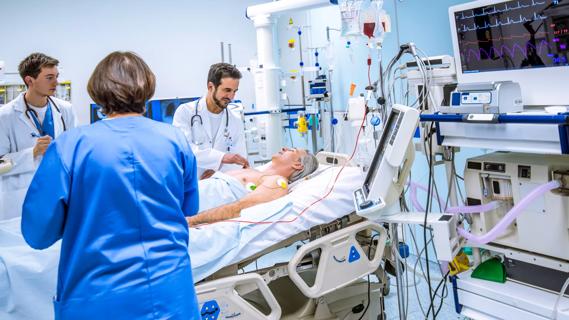
Investigators are developing a deep learning model to predict health outcomes in ICUs.
Preclinical work promises large-scale data with minimal bias to inform development of clinical tests

Cleveland Clinic researchers pursue answers on basic science and clinical fronts

Study suggests sex-specific pathways show potential for sex-specific therapeutic approaches

Cleveland Clinic launches Quantum Innovation Catalyzer Program to help start-up companies access advanced research technology
 Search