Locations:





Experts endorse a push to improve prevention and treatment following repetitive head injury
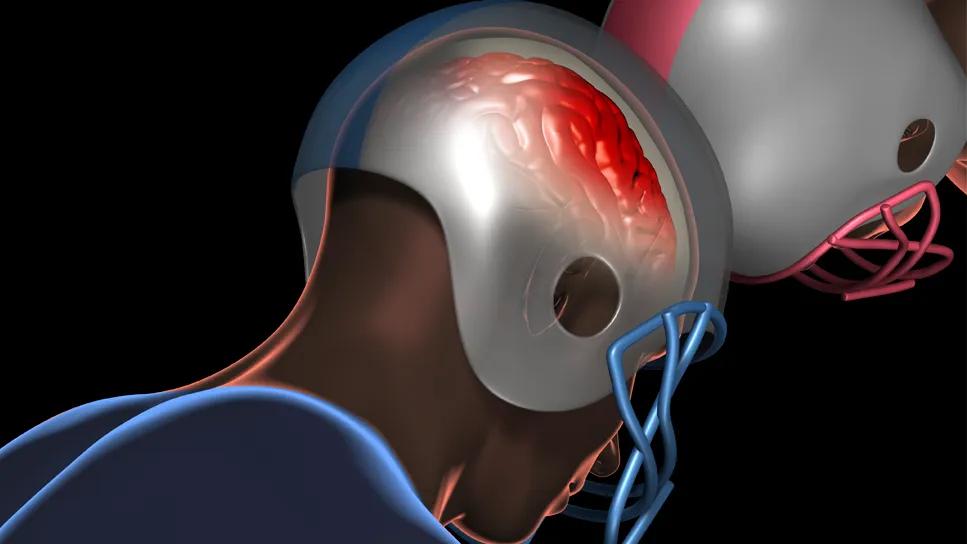
Image content: This image is available to view online.
View image online (https://assets.clevelandclinic.org/transform/d76f38ab-6a56-4425-a78b-11ff7c02c511/illustration-football-player-head-trauma)
Illustration of two football helmets butting into each other with an inflamed brain underneath one helmet
The search is on for biomarkers specific to chronic traumatic encephalopathy (CTE), the neurodegenerative condition associated with a history of repetitive head injuries, such as those experienced by boxers, football players and soldiers. Advancing the field of biomarkers for CTE was the focus of the 2025 Leon Thal Summit® convened at Cleveland Clinic Nevada. Recommendations from the summit panel were recently published in Alzheimer’s & Dementia: The Journal of the Alzheimer’s Association.
Advertisement
Cleveland Clinic is a non-profit academic medical center. Advertising on our site helps support our mission. We do not endorse non-Cleveland Clinic products or services. Policy
Currently, CTE can only be definitively diagnosed postmortem. The term traumatic encephalopathy syndrome (TES) was developed for research use with the intent to reflect the clinical features of CTE in living patients. Finding biomarkers that can be incorporated into the TES criteria to better identify individuals with CTE might offer the opportunity for interventional strategies to prevent or slow disease progression.
“In 2023, national guideline-setting experts decided it was premature to include biomarkers in clinical criteria for TES,” says the first and corresponding author of the new recommendations document, Charles Bernick, MD, MPH, staff neurologist and Senior Director of Cognitive Disorders at Cleveland Clinic Lou Ruvo Center for Brain Health. “However, blood, cerebrospinal fluid [CSF], brain tissue and imaging biomarkers have rapidly emerged from cohorts of patients in CTE registries, to the point that we should now focus on what we can learn and how they can be applied.”
Dr. Bernick led the 2025 Leon Thal Summit, which involved 25 clinicians, neuroscientists, neuropathologists and neuroimaging specialists from major centers studying CTE in the U.S., Canada, England, Sweden, China and India. He notes that it was the first effort of its kind undertaken anywhere.
Clinical characteristics of CTE are heterogeneous and can share qualities of Alzheimer’s and Parkinson’s diseases. However, emerging data from living patients and at autopsy are shedding light on unique features of CTE. Insights on biomarkers that might be specific for CTE are coming from an ongoing longitudinal cohort study directed by Dr. Bernick — the Professional Athletes Brain Health Study — as well as from the multisite DIAGNOSE CTE Research Project, in which Cleveland Clinic is a participant.
Advertisement
Promising biomarker candidates include the following:
“Although Alzheimer’s disease and CTE can occur together in individuals, the syndromes are distinct enough that tests specific for Alzheimer’s disease are primarily useful in patients with TES only to rule out Alzheimer’s disease,” Dr. Bernick explains.
He adds that identifying nonspecific biomarkers, e.g., indicators of cellular injury or inflammation, can also shed light on pathophysiological mechanisms of CTE and provide targets for therapies.
Advertisement
While Alzheimer’s disease is very common in today’s large elderly population, CTE is not, as it occurs in very specific, relatively small groups. Consequently, available autopsy material for CTE — which is invaluable for research — is scarce.
The summit identified as a priority the need for increasing the supply of autopsy brain tissue from individuals with CTE through collaborative efforts among institutions. In addition, centers are urged to pursue federal, academic and private initiatives specifically focused on at-risk populations.
Another special challenge of CTE research is that although the condition can be specifically identified at autopsy, its clinical profile is highly variable in living individuals.
“There are so many different paths to CTE, including repetitive injuries from contact sports and high-pressure blasts experienced by soldiers,” Dr. Bernick notes. “We can’t assume that all the symptoms and signs we see in one group, such as football players, is the same as what we might see in another group, such as boxers.
A suggestion from the summit, he adds, is to try and obtain a uniform set of measurements and testing across populations with different types of exposure, to allow for comparisons. He predicts that emerging artificial intelligence techniques will be enormously helpful when applied to the thousands of imaging scans now available from living patients with various injury types.
Dr. Bernick anticipates that some of the biomarkers already identified will prove useful for improving the accuracy of TES criteria in identifying underlying CTE. He looks forward to using them for the following applications:
Advertisement
He adds that although many groups have focused on concussion with the aim of determining criteria for return to play, few are deeply examining the natural history of CTE from the time when injuries are incurred throughout an individual’s life.
“If we systematically track people at risk over time, especially with the help of biomarkers, I think we will learn a lot about preventing and managing this condition,” Dr. Bernick concludes.
Advertisement
Advertisement
New guidelines from Brain Trauma Foundation urge early and aggressive treatment
Cleveland Clinic researchers collaborate with Microsoft to create a product ready for the field

Case report of a young man with severe traumatic brain injury and cognitive deficits
Evidence hints that chronic neuroinflammation might stem from a CNS-directed autoimmune response
Criteria-based diagnosis of traumatic encephalopathy syndrome predicts changes in brain volumes and cognition
Care guidelines have been crucial to progress in TBI care over the past 25 years
New guidance on penetrating head injuries, and noninvasive diagnostics get a nod in austere settings
Promising preclinical research indicates functional motor recovery is durable
 Search