Locations:


Unlocking better healthcare with responsible AI
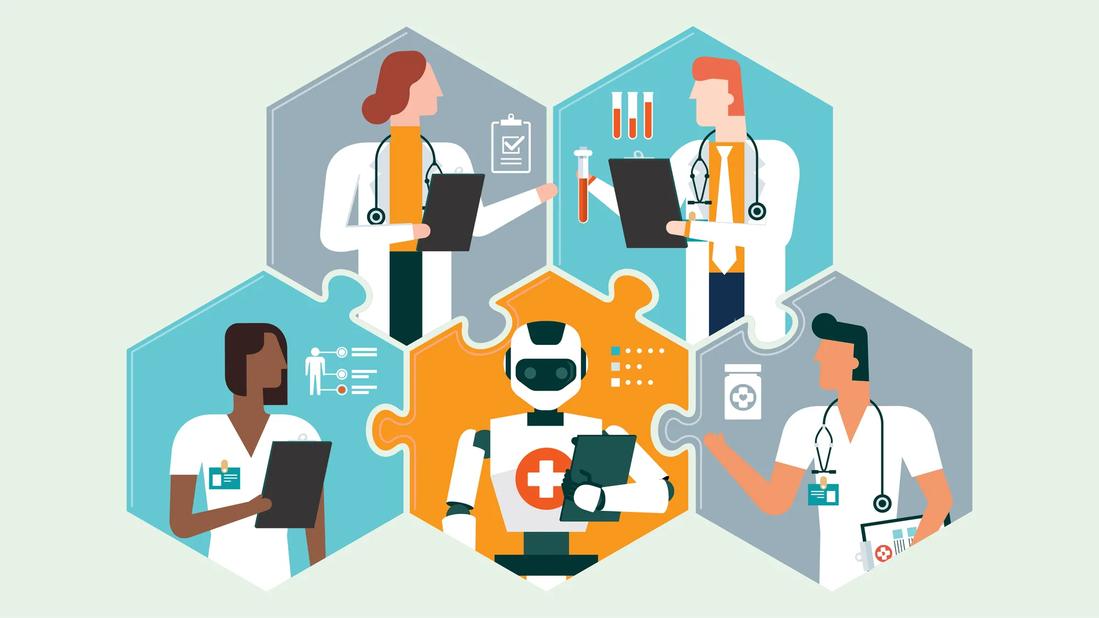
Image content: This image is available to view online.
View image online (https://assets.clevelandclinic.org/transform/1e936e43-dca5-4c75-ac13-c625d371a86e/doctors-and-nurses-ai-teamwork)
vector image of medical team
Artificial intelligence (AI) is already transforming healthcare by helping organizations automate administrative work, improve operations and identify opportunities to enhance patient care.
Advertisement
Cleveland Clinic is a non-profit academic medical center. Advertising on our site helps support our mission. We do not endorse non-Cleveland Clinic products or services. Policy
At Cleveland Clinic, leaders believe AI has significant potential to improve quality, affordability and access while ensuring new technologies are introduced responsibly.
“We’re seeing an impact across many areas, including patient and provider experience, hospital operations and patient outcomes,” says Ben Shahshahani, PhD, Cleveland Clinic’s Chief Artificial Intelligence Officer. “Each of these areas represents an opportunity to improve quality, reduce costs and help caregivers spend more time focused on patients.”
One of AI’s most valuable applications is predictive modeling. Cleveland Clinic has developed a data and computing foundation that supports AI models using relevant clinical information over time, such as medical history, medications and changes in health. These models can help identify patients at a higher risk for complications or readmission, creating opportunities for earlier intervention and more personalized care.
“AI can use that context to help predict what may happen next,” says Shahshahani. “That creates opportunities to identify risk earlier and design the right intervention.”
However, the technology is not a standalone solution. Predictive insights must be paired with clear workflows and caregivers’ actions.
“The workflow is what makes or breaks the system,” he says. “A prediction must connect to an intervention and a clear process that caregivers follow.”
AI is also helping teams analyze large volumes of safety-related data, identify trends and generate insights that can support quality improvement efforts across the organization.
Advertisement
Beyond clinical decision support, AI is improving both caregiver and patient experiences.
For providers, ambient documentation tools can reduce the burden of note-taking, allowing even more focus and attention on patients. AI is also being used to optimize operating room scheduling by more accurately estimating procedure times and helping teams use available resources more efficiently.
Over time, Shahshahani expects AI to automate more repetitive administrative work and processes.
“We are in the business of clinical intelligence,” he says. “The work that matters most is helping patients achieve better health outcomes. By taking on time-consuming administrative tasks, AI allows caregivers to focus more on the complex, high-value work that only they can provide.”
As AI capabilities expand, Cleveland Clinic remains focused on governance, validation and security.
Shahshahani says the organization’s approach is heavily influenced by guidance from The Joint Commission and the Coalition for Health AI. Priorities include protecting patient privacy and autonomy, securing data, validating tools and confirming a meaningful benefit before they are introduced into production.
“Responsible innovation requires more than adopting new technology,” says Shahshahani. “Before deployment, we ensure every tool has been carefully evaluated for security, validated for effectiveness and proven to support caregivers and patients in meaningful ways.”
Above all, Shahshahani says, “Trust must remain central to how we use AI. We need to uphold our commitment to privacy and security while using these tools in ways that benefit patients and caregivers.”
Advertisement
Responsible adoption also requires education. Cleveland Clinic continues to expand AI literacy efforts that help caregivers understand what AI can do, where it can add value and where human judgment remains essential.
Shahshahani encourages caregivers to gain practical experience with approved AI tools and learn how they can support their everyday work. He adds that hands-on experience is important, particularly as caregivers learn the technology’s strengths and limitations.
“Trial, error and learning go a long way,” he says. “As people use AI, they begin to understand both what it does well and when it may not work well.”
Looking ahead, AI could help prepare information before appointments, support triage processes and assist with care decisions. As validation standards, regulations and safeguards
continue to evolve, these capabilities may allow care teams to spend more time on complex patient care.
For Shahshahani, AI’s greatest potential is addressing three persistent healthcare challenges: quality, affordability and accessibility.
“The prospect of advancing personalized, precision medicine is very compelling,” he says. “AI can help synthesize a patient’s history and other relevant information to support more individualized care decisions.”
He also believes AI could extend scarce clinical expertise to more patients, making high-quality care more widely available.
“If we can make scarce clinical intelligence more abundant, we can begin to address affordability and accessibility more fundamentally,” Shahshahani says. “That is the larger goal: helping make high-quality healthcare available to more people.”
Advertisement
Shahshahani emphasizes that responsible implementation will remain essential as AI continues to evolve.
“If these tools can help improve access and affordability,” he says, “they can create meaningful benefits for patients while supporting a more sustainable healthcare system.”
Advertisement
Advertisement

LLM-driven system uses both structured and unstructured data, provides auditable justifications
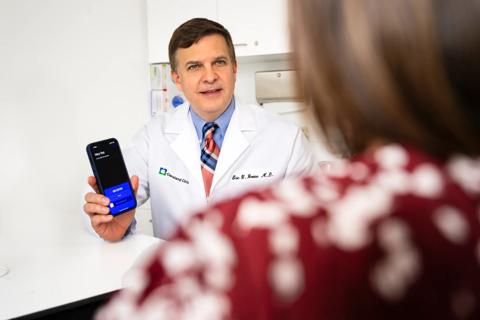
Advanced software streamlines charting, supports deeper patient connections

Cleveland Clinic uses data to drive its AI implementation strategy
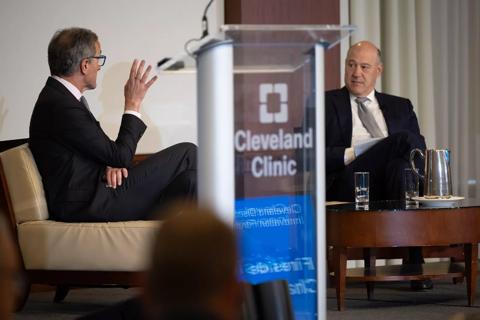
Cleveland Clinic and IBM leaders share insights, concerns, optimism about impacts
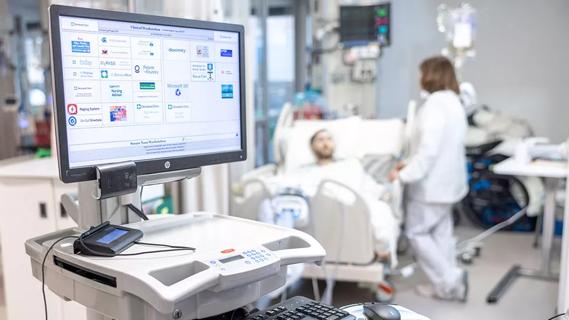
Customized bots improve speed, efficiency by streamlining daily clinical, clerical tasks

Cleveland Clinic neuromuscular specialist shares insights on AI in his field and beyond
Neurology is especially well positioned for opportunities to enhance clinical care and medical training

How technology is changing how and whom we hire
 Search