Locations:





Podcast content: This podcast is available to listen to online.
Listen to podcast online (https://www.buzzsprout.com/2256206/19778487)
For patients living with chronic lung disease, symptom management can affect nearly every aspect of daily life. For nurses, caring for these patients means looking beyond a diagnosis to recognize subtle changes, understand individual challenges and connect patients with the critical resources they need.
Advertisement
Cleveland Clinic is a non-profit academic medical center. Advertising on our site helps support our mission. We do not endorse non-Cleveland Clinic products or services. Policy
"Chronic lung disease can be difficult for patients to manage — and it can be difficult for nurses to watch them struggle," says Debra Matejka-Orlosky, LPN, a licensed practical ambulatory care nurse at Cleveland Clinic Fairview Hospital. "But when you get to know your patients and earn their trust, you have an opportunity to help them through those difficult moments and remind them that they’re not navigating their illness alone."
In this episode of Nurse Essentials, Matejka-Orlosky discusses the value of collaborative patient-caregiver relationships, the nurse's role in pulmonary care, strategies for supporting smoking and vaping cessation and recognizing the signs of respiratory decline. She also shares tips for educating patients on the use of inhalers and home oxygen and describes common barriers to treatment.
Click the podcast player above to listen to the episode now, or read on for a short, edited excerpt. Check out more Nurse Essentials episodes at https://my.clevelandclinic.org/podcasts/nurse-essentials or wherever you get your podcasts.
Podcast host Carol Pehotsky, DNP, RN, NEA-BC: What subtle signs or symptoms tell you that a patient is struggling and may need a higher level of care or a trip to the emergency department?
Matejka-Orlosky: This is why it’s so important to know your patients. When they call the office, I can tell what’s going on almost immediately just by the sound of their voice.
I’m looking for clues like: Do they have shortness of breath? Have they had a fever? Have there been any changes in their condition? Most of our respiratory patients have pulse oximeters at home, so I always ask [for that reading]. If they're using oxygen, it’s important to find out how much and if they’ve had to increase their usage.
Advertisement
For example, if a patient says they’re usually on two liters of oxygen but have had to turn it up to six liters, that’s a hard stop. I’ll say: Let's get you in here to see the doctor. Just turning it up isn’t the answer. By the time they’re calling in for help, the majority of our patients understand there's probably an issue. That's a good thing.
Advertisement
Advertisement

How simple ideas can lead to practice-changing inventions
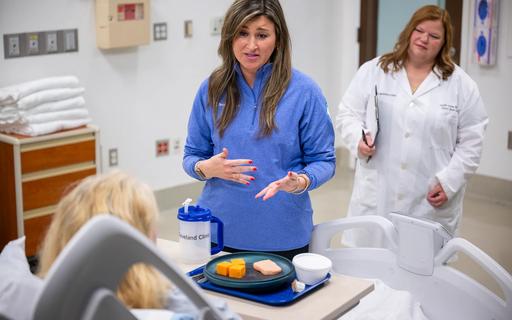
Specialized course equips caregivers to manage unpredictable behaviors with compassion and conviction
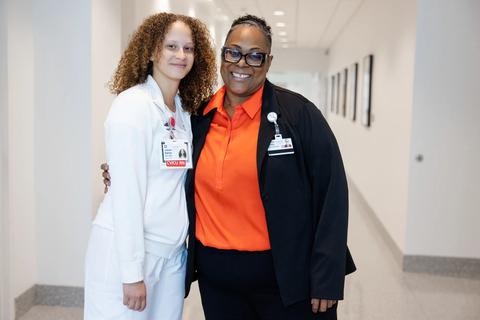
Howley ASPIRE Program prepares caregivers for the professional road ahead
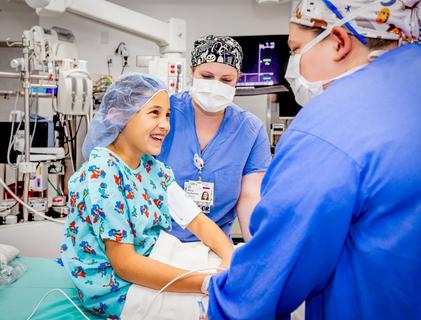
Specialized training prepares caregivers to address the unique physical and emotional needs of young patients
Using meticulous preparation and teamwork to manage critically ill patients in constantly changing environments
Translating clinical questions into meaningful, sustainable change
Guidance for creating a relevant framework that reflects organizational values, supports professional practice
Initiative provides hands-on opportunities to promote early, progressive activity
 Search