Locations:





Pre-operative SMA balloon occlusion helped reduce intraoperative blood loss in a high-risk procedure
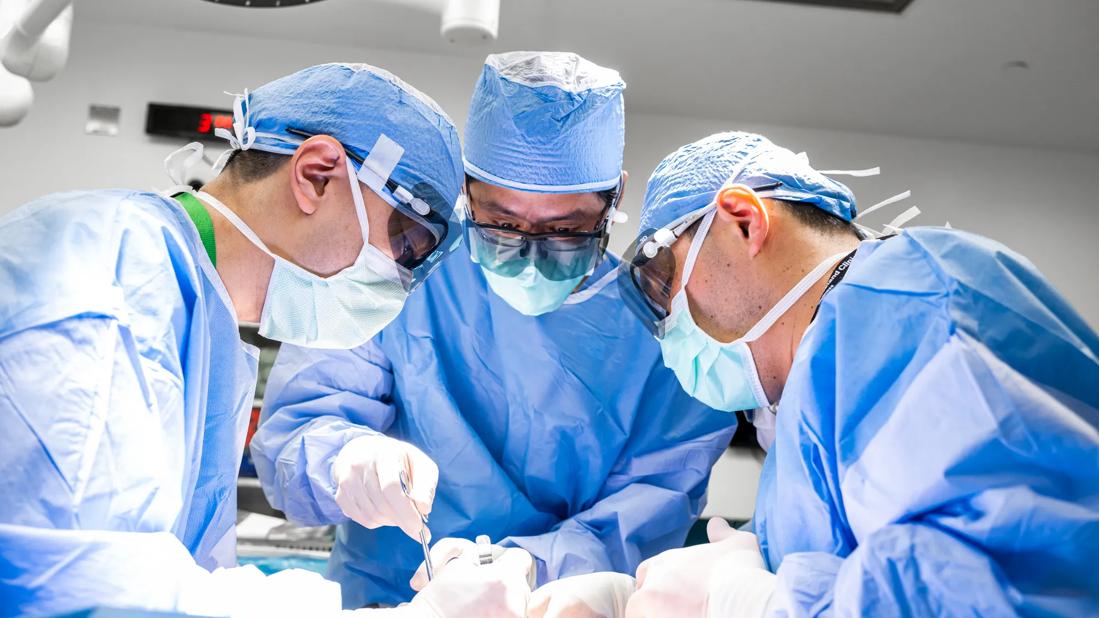
Image content: This image is available to view online.
View image online (https://assets.clevelandclinic.org/transform/0dfee598-6bb8-4769-818f-daf14a518b8b/CCC_3561108_1-23-23_026_MLC-jpg)
Dr. Fujiki in operating room
A 59-year-old patient presented with a JAK2 gene mutation, resulting in polycythemia vera (PV). The condition is characterized by the bone marrow producing too many red blood cells, which leads to blood thickening. The increased platelet count can lead to clot formation, and the patient developed a blood clot in the portal vein.
Advertisement
Cleveland Clinic is a non-profit academic medical center. Advertising on our site helps support our mission. We do not endorse non-Cleveland Clinic products or services. Policy
“When a patient has extensive portal vein thrombosis, the main blood vessels to the digestive tract become completely blocked, and patients can develop a large volume of ascites, as this patient did,” explains Masato Fujiki, MD, a liver transplant surgeon at Cleveland Clinic. “Paracentesis procedures are employed to remove the fluid buildup inside the abdomen, and before his transplant, the patient required over 200 paracenteses to drain ascites from his abdomen.”
The patient had been misdiagnosed as having liver cirrhosis due to his portal vein thrombosis, which is also often seen in patients with cirrhosis.
“Usually, patients with portal vein thrombosis will be sent to a hepatologist based on the radiology findings, and this is what happened with the patient before he came to Cleveland Clinic” says Dr. Fujiki. “Once he was properly diagnosed, he was referred to Cleveland Clinic since the referring medical center told him they could not do a liver transplant. Sometimes, if the main portal vein is gone, you cannot do a liver transplant because there’s no viable vessel available to connect the donor liver. In these cases, a multivisceral transplant is one of the last options.”
Due to the patient’s portal vein thrombosis, it was conclusively determined that a liver transplant was not possible. However, Dr. Fujiki still believed that this patient required a transplant, with a multivisceral transplant being the only option at this point.
“We tried to do a liver transplant only,” explains Dr. Fujiki. “Since Cleveland Clinic has a very strong liver transplant program, we are often able to perform liver transplants for patients who were declined at other hospitals. But after thorough investigation, we concluded that a liver transplant was not possible for this patient.”
Advertisement
After the patient was evaluated, which takes between four to six weeks, he was placed on the waiting list for transplant. Although multivisceral patients are prioritized on the waiting list, the patient still ended up waiting over a year for the donor organs.
The multivisceral transplant procedure took eight and a half hours to complete, removing the patient’s diseased organs and implanting the donor.
“We completely removed the patient’s organs, which is the most difficult part of the surgery,” says Dr. Fujiki. “We removed the intestines first, followed by the stomach. Then we took out the liver, pancreas and spleen together in block. After we attached an aortic conduit graft to the patient’s aorta, we implanted everything — the donor stomach, liver, pancreas, intestines — and reconnected the blood vessels.”
Historically, removing these diseased organs is a "surgical disaster” case because extensive portal vein thrombosis can cause massive, life-threatening bleeding. But a 2016 study illustrated that pre-operative balloon occlusion of mesenteric artery could decrease blood flow into the native organs and enable to reduce blood loss during organ removal.
“If you do that, you're going to have a very low blood flow into the organ and induce ischemia,” says Dr. Fujiki. “You have to hurry up, but it decreases significant blood transfusion. The patients are very stable — like regular transplant or regular surgery to some extent.”
However, there were some logistic challenges for performing the surgery this way.
Advertisement
“We don't have very good setting in the OR to do this kind of procedure because we don't have a hybrid surgery room,” says Dr. Fujiki. “So our solution was to have our interventional radiologist use a C-arm to help us see where the catheter was, so he did a balloon closure of the superior mesenteric artery.”
While multivisceral transplantation for extensive portal vein thrombosis typically requires a median of 29 units of blood, pre-operative SMA balloon occlusion helped the surgeons perform the operation for this patient with only four units of blood.
“Following the procedure, the patient was stable and was off a ventilator just two days after this massive procedure, which is a testament to the precision of this new technique,” says Dr. Fujiki. “He’s currently doing very well and living a normal life.”
In addition to Dr. Fujiki, Mohammed Osman, MD, and Mohamed Maklad, MD were also involved in the operation.Takeaways
Multivisceral transplants are among the rarest of all transplant procedures, accounting for only 0.1% of all global transplant procedures. There are typically fewer than 40 performed annually in the United States, with only three large-volume centers performing the majority of these cases. For this specific indication of portal vein thrombosis, which is also the most difficult indication for multivisceral transplantation, those rates are even lower.
“Cleveland Clinic has been the top intestinal transplant for adults, and we have the highest volume of cases,” says Dr. Fujiki. “One of the distinguishing aspects of our transplant program is our group of talented interventional radiologists who help us with occlusion at the time of transplant. Our ICU team is also very strong at managing these patients after transplant.”
Advertisement
While the procedure rate is understandably low, awareness of the procedure, even among GI specialists, remains low. Because the procedure is only performed in limited centers, many physicians do not recognize that this is an option for their most serious patients.
“For patients without many options, multivisceral transplantation can be a life-saving procedure,” says Dr. Fujiki. “This case demonstrates how we are pushing the boundaries of what is possible in transplant surgery, and as technology and technique have elevated the viability of the procedure, it’s important to increase awareness among referring physicians.”
Advertisement
Advertisement

Transplant centers vary substantially in how they assess, document and follow patients after allogeneic transplantation

Insights on bringing Cleveland Clinic even closer to becoming the best transplant enterprise in the world
Consensus statement aims to increase use of the perfusion technology and raise transplant volumes
Minimally invasive pancreas-kidney replacement reduces patient’s pain, expedites recovery
AHA recommendations for pretransplant evaluation, peritransplant and long-term management
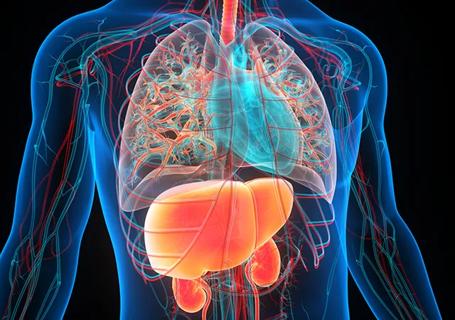
First-ever procedure restores patient’s health

The agent-based model aims to improve prediction accuracy
New guidelines expand on psychosocial, sexual health, cognitive and other issues
 Search