Locations:





Advocacy group underscores need for multidisciplinary expertise
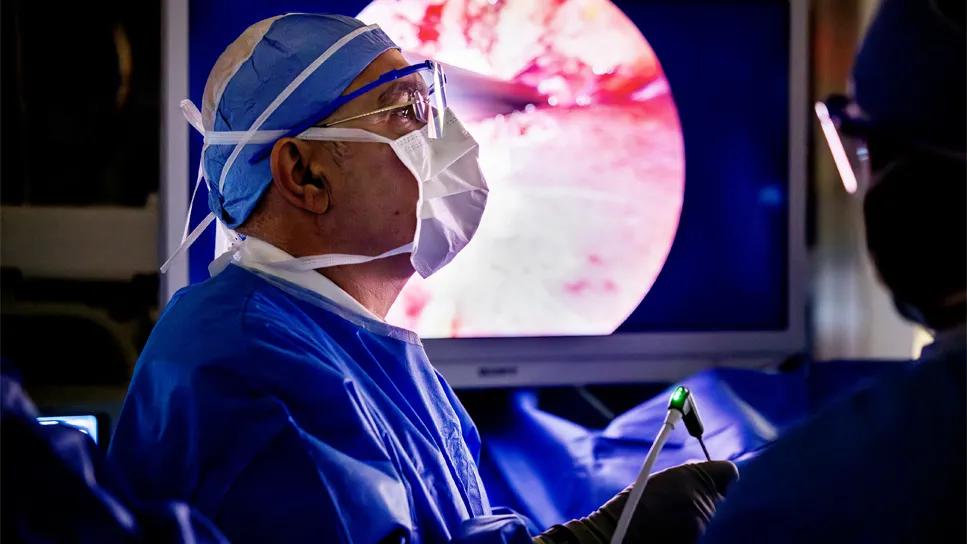
Image content: This image is available to view online.
View image online (https://assets.clevelandclinic.org/transform/90eb918a-e3c4-4864-8ee3-6f0a8c7fb498/pheo-para-alliance-center-of-excellence-designation)
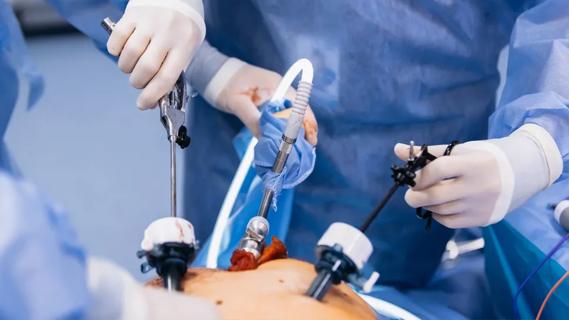
Dr. Eren Berber in surgery
Cleveland Clinic’s Endocrinology & Metabolism Institute and the Department of Endocrine Surgery have been named a Center of Excellence by the Pheo Para Alliance, an internationally recognized advocacy group that supports people with pheochromocytomas and paragangliomas and the medical professionals who treat them.
Advertisement
Cleveland Clinic is a non-profit academic medical center. Advertising on our site helps support our mission. We do not endorse non-Cleveland Clinic products or services. Policy
This is the second time Cleveland Clinic has earned the designation. The health system is one of just 14 designees in the United States.
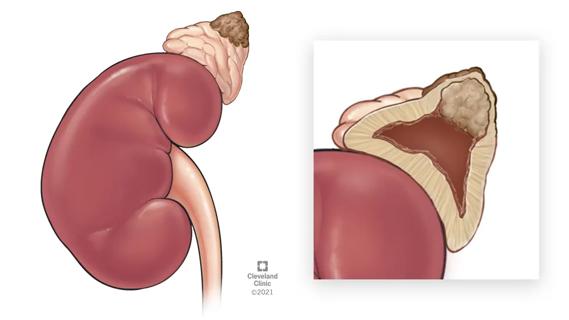
Pheochromocytomas and paragangliomas are rare endocrine tumors that form from chromaffin cells. The former develops in the adrenal medulla and the latter forms outside the adrenals, typically in the abdomen, chest, neck or head. While most are not malignant, they can release hormones that can damage organs and lead to stroke or heart attack.
These tumors typically require a multidisciplinary team of highly experienced surgeons, pathologists, endocrinologists, oncologists, genomic medicine experts and others to carry out assessments and interventions and perform long-term monitoring.
Through its Centers of Excellence program, Pheo Para Alliance aids patients and clinicians in identifying programs with the clinical and patient-satisfaction standards deemed necessary to treat the disease.
Surgeon Eren Berber, MD, directs Cleveland Clinic’s program. In this interview, he explains the significance of having a team with special expertise care for patients with the condition.
Consult QD: What makes pheochromocytomas and paragangliomas distinctive in terms of medical care?
Dr. Berber: They are rare and also very challenging tumors, with regard to their physiology, in terms of hormone production, and also the surgical expertise required to treat them. These tumors tend to have more blood vessels associated with them and to be in more anatomically complex locations, which makes them more challenging for surgeons to remove.
Advertisement
So patients with these tumors require multidisciplinary care that includes endocrinology, surgery and pathology. Genomic medicine needs to be involved, as well as possibly radiation oncology or oncology.
What should clinicians be telling patients about what it takes to properly address these tumors?
That significant expertise is necessary to diagnose an adrenal tumor. With a pheochromocytoma, you have to perform dedicated imaging, do hormonal testing, and you also need to know how to interpret the results.
For instance, catecholamines are always key in diagnosing the condition, but a mild elevation of catecholamines doesn't necessarily mean the patient has a pheochromocytoma. You have to really put that into the context of the patient and consider the size of the tumor and the hormonal physiology of different types of tumors.
Ordering appropriate testing should include consideration of resources utilization. Sometimes we see patients with pheochromocytoma who, even if they may have what we call sporadic disease, are given extensive and costly workups with special PET scans, when it really is not necessary.
What is Cleveland Clinic typical approach?
Normally we do a patient-tailored workup so we can diagnose the condition accurately. Ideally, we treat these tumors by removing them. If the person requires surgery, they must be prepared in advance with alpha blockers to control blood pressure during the procedure. They need to be in contact with an expert who can change the medication if necessary, escalating dosing, adding additional medications and adjusting the patient's diet appropriately. This is as important as the surgery itself.
Advertisement
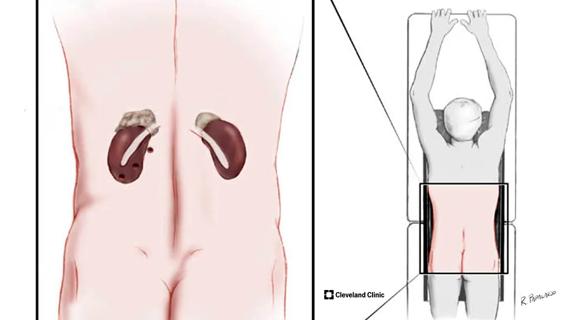
We also want to ensure that patients who can benefit from a minimally invasive operation are able to get it. Cleveland Clinic offers these surgeries using robotic, laparoscopic, lateral and posterior (also known as mini back scope adrenalectomy) techniques, all of which can reduce hospital stays and recovery time.
The average general surgeon does one adrenal surgery a year, but data show that outcomes of adrenalectomy are better when they are done at high-volume centers with experienced surgeons. Doing four to six cases a year is considered “high-volume” adrenal surgery. Cleveland Clinic’s Endocrine Surgery Department does about 150 adrenal surgeries a year, and I do 120 a year.
What is the significance of the Center of Excellence designation?
The designation attests to the expertise, quality of care and patient satisfaction in our adrenal center at Cleveland Clinic. The Pheo Para Alliance is a patient organization, so these designations are bestowed based on the experiences of patients. They evaluate institutions and decide whether to grant them the status.
How difficult is it to qualify?
The group uses a comprehensive process that considers all of the multidisciplinary components that are necessary to treat these tumors properly. They also look at patient outcomes and the overall patient journey.
Once you have the designation, it's also important to continue to maintain the standards that allowed you to earn it. The designation lasts three years and then must be renewed.
What are the key considerations after surgery?
Advertisement
You have to interpret the pathology; about 10% of pheochromocytomas are malignant. We also follow up with patients to make sure that their hormone levels are back to normal. If they're not, then we need to order additional imaging.
About 30% of these tumors have a genetic component, and these patients can develop new or recurrent tumors in challenging locations. So we also need to do genetic testing with an experienced team that knows what tests to order.
The patient also needs lifelong follow-up, with annual imaging and hormonal testing, because it has been shown that the disease can come back as late as 18 years after the surgery. And if a recurrence is identified, then you would have to get other specialties involved, such as radiation oncology, and maybe oncology, to treat these recurrences.
Advertisement
Advertisement

Certain patients likely to benefit from slow-releasing drug
Procedure offers potential for less pain and faster recovery in selected patients
Challenges include multimorbidity, polypharmacy, limited mobility and sarcopenia

Data could help inform policy and patient-provider conversations
Pheochromocytoma case underscores the value in considering atypical presentations

A reconcilable divorce

A review of the latest evidence about purported side effects
High-volume surgery center can make a difference
 Search