Locations:





The Center for Neurological Restoration offers a structured, multidisciplinary approach to conditions that often require longitudinal management and escalation beyond first-line therapies
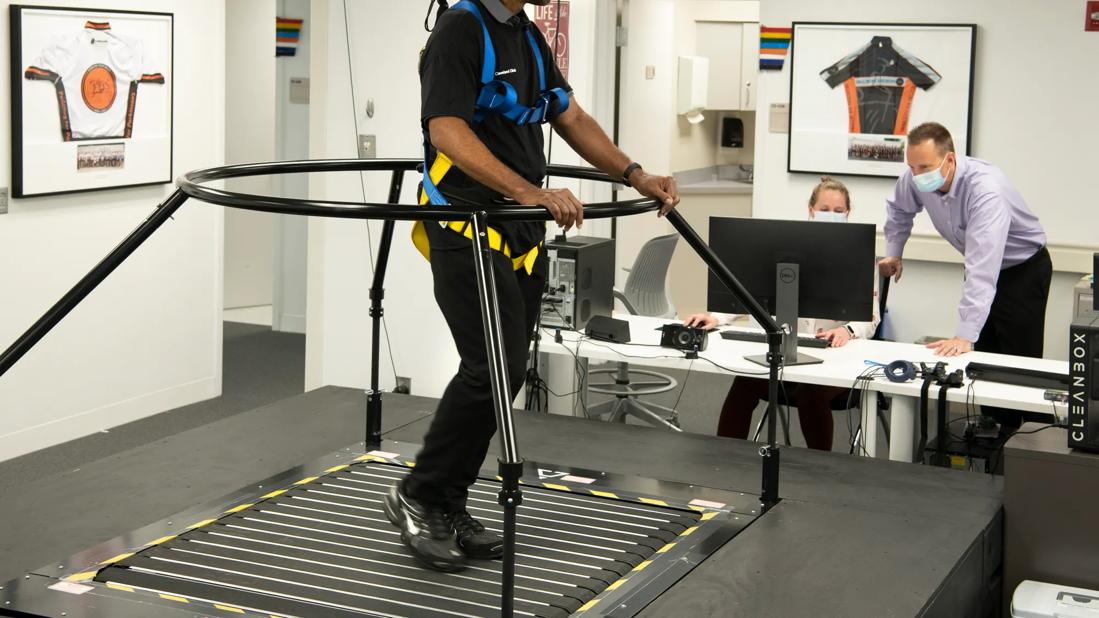
Image content: This image is available to view online.
View image online (https://assets.clevelandclinic.org/transform/53b126d1-11cc-4ad5-9c33-15d898a2a33e/Center-for-Neurological-Restoration)
Patient participants in virtual reality therapeutics in a neurological rehab clinic
Cleveland Clinic in Florida has launched the Center for Neurological Restoration, a multidisciplinary referral program designed to provide advanced evaluation and treatment for patients with complex movement disorders, gait disorders, headache syndromes and facial pain.
Advertisement
Cleveland Clinic is a non-profit academic medical center. Advertising on our site helps support our mission. We do not endorse non-Cleveland Clinic products or services. Policy
The program integrates subspecialty expertise across neurology, functional neurosurgery, headache medicine, neuropsychology, pain management and rehabilitation medicine to support comprehensive care for medically refractory and surgically complex neurological conditions. Based at Cleveland Clinic Weston Hospital, the center also extends across Cleveland Clinic Florida’s regional footprint to improve access for patients and referring providers.
“Neurological disorders such as Parkinson’s disease, trigeminal neuralgia, chronic headache syndromes and gait disorders often require highly specialized, multidisciplinary care that goes beyond conventional treatment pathways,” says Badih Adada, MD, Vice Chief of the Neurological Institute at Cleveland Clinic in Florida and a fellowship-trained cerebrovascular and skull base neurosurgeon. “The Center for Neurological Restoration was developed to provide referring physicians with a streamlined pathway to advanced diagnostics, medical management and surgical intervention — while keeping continuity of care at the center of the patient journey.”
The Center for Neurological Restoration offers a structured, multidisciplinary approach to conditions that often require longitudinal management and escalation beyond first-line therapies. Core clinical programs include:
Advertisement
Conditions treated include Parkinson’s disease and atypical parkinsonism, essential tremor, dystonia, trigeminal neuralgia, hemifacial spasm, Chiari malformations, chronic headache disorders and gait dysfunction.
Patients have access to individualized pharmacologic management, botulinum toxin therapy, infusion-based headache treatments and coordinated rehabilitative services. For patients with refractory symptoms or progressive disease, surgical options include:
The program also addresses non-motor symptom burden, including mood disorders, cognitive impairment and nutritional concerns, which often complicate disease progression and functional decline.
A dedicated care coordinator supports streamlined scheduling, multidisciplinary case review and direct communication with referring physicians. The model is designed to reduce fragmentation for complex neurological patients while supporting continuity between tertiary subspecialty care and community-based management.
“Our goal is not simply to deliver advanced therapies, but to create a collaborative framework where referring physicians remain closely connected throughout the patient’s treatment course,” Dr. Adada says. “That level of coordination is essential for optimizing outcomes in complex neurological disease.”
Advertisement
The center also provides access to clinical trials and translational research, offering additional options for patients who may have exhausted standard therapies.
For neurologists, primary care physicians, pain specialists and neurosurgeons managing advanced movement disorders, facial pain syndromes or complex gait dysfunction, the Center for Neurological Restoration serves as a centralized referral resource for comprehensive diagnostic evaluation and advanced intervention.
Advertisement
Advertisement
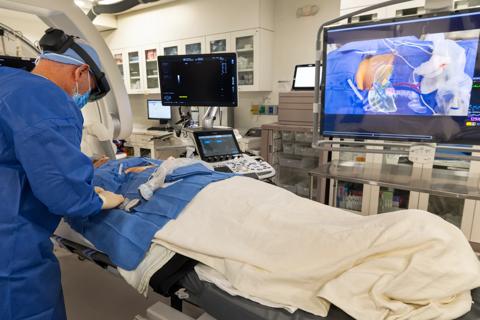
Cleveland Clinic in Florida explores extended reality for multimodality image guidance
The American Society of Clinical Oncology (ASCO) recently released updated guidelines
Cleveland Clinic's transplant team in Florida is using circulatory-death donor hearts to expand transplant opportunities for patients.
Repair of tiny lymphatic vessels offers big relief for patients with lymphedema after cancer surgery
AI-enhanced mammography improves cancer detection and may support more personalized screening strategies
Multidisciplinary expertise provides advanced evaluation, second opinions and personalized treatment planning for patients with challenging cerebrovascular disorders
Study highlights strong predictive value of circulating tumor DNA testing
Researchers with Cleveland Clinic in Florida highlight need for a national registry for gastrointestinal stromal tumors
 Search