Locations:





Multidisciplinary expertise provides advanced evaluation, second opinions and personalized treatment planning for patients with challenging cerebrovascular disorders
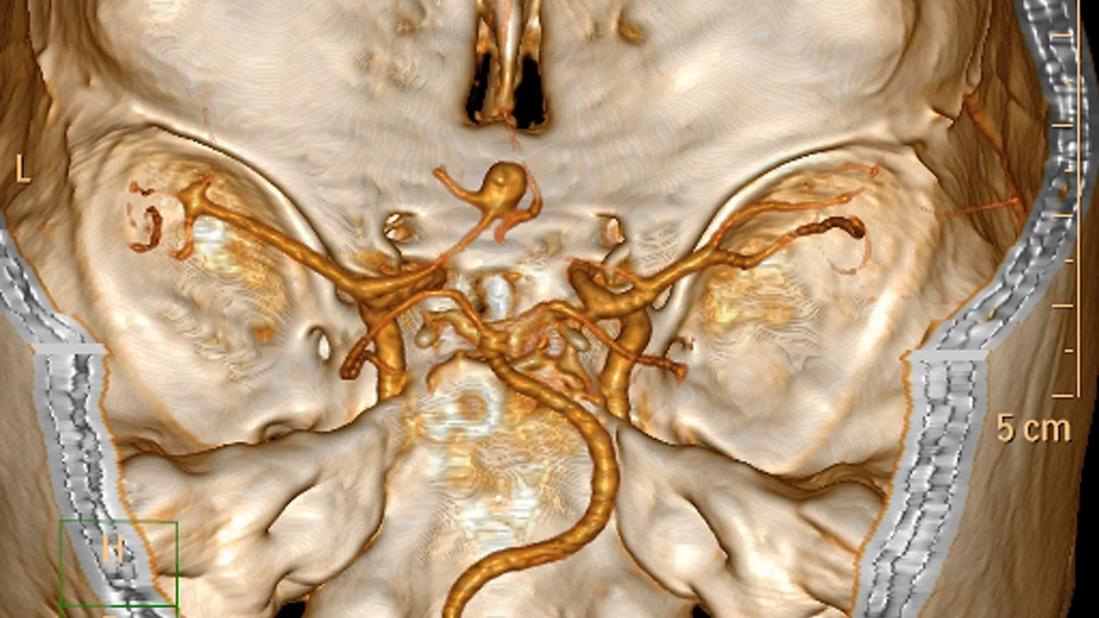
Image content: This image is available to view online.
View image online (https://assets.clevelandclinic.org/transform/fac94b61-5b67-4924-94fc-16f55de5ec87/center-for-cerebrovascular-care-178155777)
Skull image -- medical
Complex cerebrovascular disease rarely fits neatly into a single specialty. Patients with intracranial aneurysms, arteriovenous malformations (AVMs), Moyamoya disease and other complex neurovascular disorders often require coordinated expertise from multiple disciplines to determine the safest and most effective treatment approach.
Advertisement
Cleveland Clinic is a non-profit academic medical center. Advertising on our site helps support our mission. We do not endorse non-Cleveland Clinic products or services. Policy
At Cleveland Clinic in Florida, the Center for Cerebrovascular Care—Complex Cerebrovascular, Neurovascular & Skull Base Referral Program serves as a regional referral destination for physicians seeking advanced evaluation, expert second opinions and comprehensive treatment planning for patients with complex cerebrovascular disease. Bringing together specialists in vascular neurology, cerebrovascular and skull base neurosurgery, neurointerventional surgery, neurocritical care and advanced neuroradiology, the program offers individualized care supported by multidisciplinary decision-making from diagnosis through long-term follow-up.
The program is designed with referring physicians in mind. Through a streamlined referral process, dedicated care coordination and closed-loop communication, physicians receive timely recommendations and ongoing updates while patients benefit from seamless access to the specialists and advanced therapies best suited to their condition.
"Some of the most challenging cerebrovascular conditions don't have a single 'right' procedure—they require the right team," says Badih Adada, MD, Vice Chief of the Neurological Institute for Cleveland Clinic in Florida. "By bringing vascular neurologists, cerebrovascular neurosurgeons, neurointerventional surgeons, neurocritical care specialists and neuroradiologists together from the beginning, we can evaluate every available option and develop a treatment strategy that's individualized for each patient's anatomy, disease complexity and long-term goals."
Advertisement
The Center for Cerebrovascular Care evaluates patients with a broad spectrum of cerebrovascular and neurovascular disorders, including intracranial aneurysms, AVMs and dural arteriovenous fistulas, cavernous malformations, Moyamoya disease and syndrome, cerebrovascular insufficiency, spinal vascular malformations, chronic subdural hematomas and other complex conditions requiring highly specialized evaluation.
In addition to managing these disorders, the program serves as a regional resource for complex second opinions and structured outside-image review. Advanced imaging—including CTA, MRA, MRI, CT, perfusion imaging, diagnostic cerebral angiography and spinal vascular imaging—is reviewed by a multidisciplinary team to help determine the most appropriate management strategy before treatment decisions are made.
Rather than approaching each case from a single specialty perspective, vascular neurologists, cerebrovascular neurosurgeons, neurointerventional surgeons, neuroradiologists, neurocritical care physicians, neuroanesthesiologists, endocrinologists and rehabilitation specialists collaborate to develop individualized treatment recommendations based on each patient's anatomy, disease complexity and long-term goals.
While many cerebrovascular conditions can be managed successfully in the community, certain patients benefit from evaluation at a high-volume multidisciplinary referral center.
Physicians should consider referral for patients with:
Advertisement
The multidisciplinary approach extends beyond diagnosis and procedural planning. Patients requiring hospitalization benefit from coordinated management that includes neurocritical care, ensuring continuity across emergency treatment, surgery, intensive care and recovery.
"Patients with complex cerebrovascular disease often require seamless transitions between emergency treatment, surgery, intensive care and long-term recovery," says Marc Babi, MD, Director of Neurocritical Care at Cleveland Clinic in Florida. "Our neurocritical care team works alongside vascular neurologists, neurosurgeons and neurointerventional specialists from the earliest stages of treatment to optimize neurologic recovery, reduce complications and ensure patients receive coordinated care throughout every phase of their hospitalization."
The Center for Cerebrovascular Care includes specialized clinical programs focused on complex aneurysm and cerebrovascular surgery, Moyamoya disease and cerebrovascular insufficiency, spinal vascular disorders, skull base vascular lesions and multidisciplinary cranial care, as well as comprehensive second-opinion and advanced image-review services.
Advertisement
One of the program's greatest strengths is its ability to offer the full spectrum of treatment options within a single multidisciplinary practice. Because specialists in microsurgery and endovascular intervention evaluate patients together, treatment recommendations are driven by what is best for the patient—not by a single procedural approach.
Depending on the patient's condition, treatment may include advanced microsurgical procedures such as:
For patients who may benefit from minimally invasive techniques, the program also offers:
This breadth of expertise allows physicians across specialties to collaborate on the most appropriate treatment strategy while giving patients access to both established and innovative therapies without requiring referral to multiple institutions.
Beyond clinical expertise, the Center for Cerebrovascular Care is designed around the needs of referring physicians. A dedicated Cerebrovascular Care Coordinator serves as the primary point of contact, facilitating rapid acquisition of outside records and imaging, coordinating multidisciplinary review and expediting patient scheduling.
Advertisement
Advanced practice providers and registered nurses support clinical triage, while direct physician-to-physician consultation is available for urgent or highly complex cases. Following evaluation, referring physicians receive timely recommendations, treatment plans and follow-up communication, helping ensure continuity of care when patients return to their local providers.
"Our commitment is not only to delivering exceptional care for complex patients, but also to being a trusted extension of our referring physicians' practices," says Dr. Adada. "From the initial consultation through treatment and long-term follow-up, we prioritize timely communication, collaborative decision-making and a smooth transition back to the referring provider so patients continue receiving coordinated care close to home."
As cerebrovascular care continues to evolve, Cleveland Clinic in Florida remains committed to advancing the diagnosis and treatment of complex neurovascular disease through multidisciplinary collaboration, innovation and clinical research.
The Center for Cerebrovascular Care provides referring physicians with access to advanced microsurgical and endovascular therapies, sophisticated diagnostic imaging, multidisciplinary expertise and opportunities for participation in clinical research when appropriate. This integrated approach ensures patients benefit from the latest evidence-based treatments while physicians have access to a trusted partner for managing even the most challenging cerebrovascular conditions.
"Innovation is not simply about adopting new technology—it's about bringing together the right expertise to solve increasingly complex clinical problems," says Dr. Adada. "By combining multidisciplinary collaboration, advanced surgical and endovascular techniques, and a commitment to research and education, we continue to expand what's possible for patients with complex cerebrovascular disease while strengthening the partnerships we have with referring physicians throughout the region."
Advertisement
Cleveland Clinic in Florida explores extended reality for multimodality image guidance

The American Society of Clinical Oncology (ASCO) recently released updated guidelines

Cleveland Clinic's transplant team in Florida is using circulatory-death donor hearts to expand transplant opportunities for patients.

Repair of tiny lymphatic vessels offers big relief for patients with lymphedema after cancer surgery
AI-enhanced mammography improves cancer detection and may support more personalized screening strategies
The Center for Neurological Restoration offers a structured, multidisciplinary approach to conditions that often require longitudinal management and escalation beyond first-line therapies
Study highlights strong predictive value of circulating tumor DNA testing

Researchers with Cleveland Clinic in Florida highlight need for a national registry for gastrointestinal stromal tumors
 Search