Locations:





Helping families understand what treatment can and cannot change
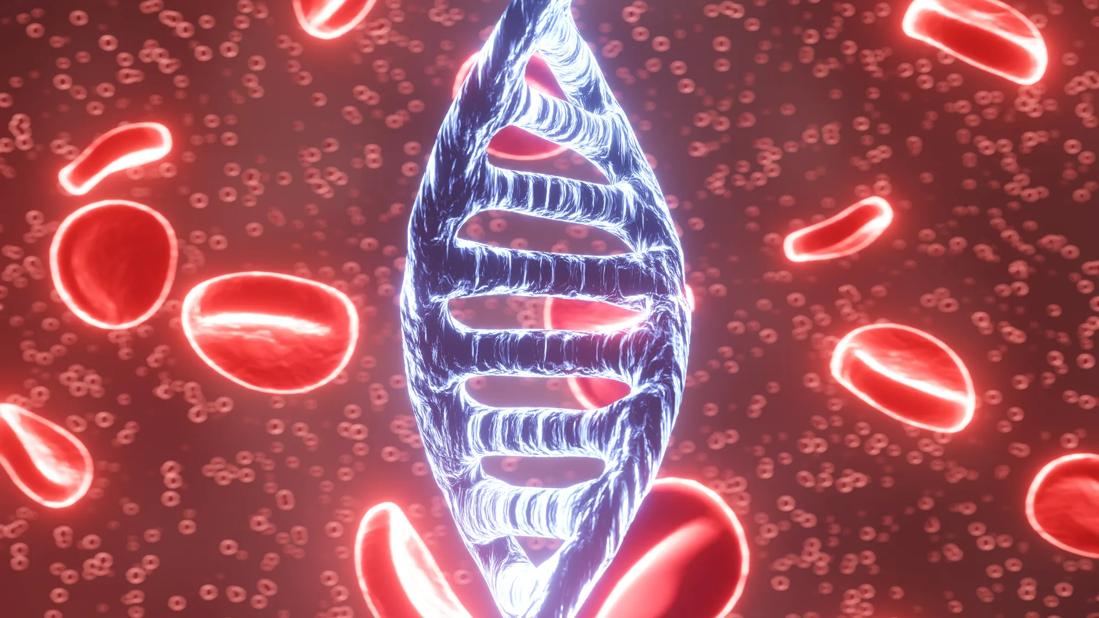
Image content: This image is available to view online.
View image online (https://assets.clevelandclinic.org/transform/e14fc1e2-5d6c-4b90-90b3-8b8df714bc9e/sickle-cell-gene-editing)
sickled blood cells with DNA double helix
For pediatricians caring for children and adolescents with sickle cell disease (SCD), one of the hardest parts of discussing gene therapy may not be explaining the science. It may be choosing words that accurately reflect both its promise and its limits.
Advertisement
Cleveland Clinic is a non-profit academic medical center. Advertising on our site helps support our mission. We do not endorse non-Cleveland Clinic products or services. Policy
Consuela Albright, CNP, a nurse practitioner in Cleveland Clinic’s Sickle Cell Medical Neighborhood, says the word “cure” can overpromise what clinicians do not yet know and what patients may not actually experience, even after successful treatment.
“Describing and discussing this intervention requires a well-balanced approach that specifies the transformative features of gene-editing therapy while acknowledging its limits with regards to the serious realities of SCD,” Albright and her coauthors write in a recently published essay, “Transformed but Not Cured: The Ethics of Describing Gene-Editing Therapy for Sickle Cell Disease.”
Gene therapy for SCD generally involves collecting a patient’s hematopoietic stem cells, modifying them ex vivo and reinfusing them after conditioning therapy. Some approaches use CRISPR-based gene editing. The goal is to enable the body to produce red blood cells that do not sickle.
Two gene therapies have been approved by the U.S. Food and Drug Administration for the treatment of SCD, and others are in development. Early clinical studies have shown substantial reductions in vaso-occlusive events in many patients, although long-term durability remains under study.
“Gene therapy is certainly transformative, and we hope it will be curative, but we don’t yet have long-term data to prove it,” Albright says. “Studies have shown that gene therapies can cause patients’ bone marrow to make hemoglobin that does not sickle, which stops sickle cell crises, but for how long?”
Advertisement
That distinction matters in clinic, she says. A successful biologic response does not necessarily erase the cumulative effects of years of SCD-related injury.
Providers need to help manage families’ expectations, especially for adolescents and adults who may have experienced recurrent episodes of severe pain throughout their lives.
“When patients have had chronic insults to their bodies due to SCD, gene therapy will not remove all residual pain despite possibly stopping the sickle cell crises,” Albright says. “It’s not reasonable to expect that if a patient has developed avascular necrosis, for example, that it will immediately resolve, if it resolves at all. We know that SCD can affect nearly every organ system, and damage that has already occurred can have long-term effects.”
This concern may be somewhat less pronounced in younger patients who have had earlier access to disease-modifying therapy, including hydroxyurea, and therefore may have accumulated less end-organ damage and pain-related morbidity. Cleveland Clinic Children’s offers hydroxyurea to patients as young as 9 months.
When talking with patients and families about the possibilities of gene therapy for SCD, Albright emphasizes five key points.
1. Candidacy for gene therapy is individualized. Gene therapy is appropriate for some patients with SCD, but not all. Families should be encouraged to discuss treatment options with a specialized sickle cell team to better understand candidacy, the treatment process and expected outcomes.
Advertisement
At Cleveland Clinic Children’s, candidates also may be connected with patients who have already undergone gene-editing therapy to hear firsthand about their experiences.
2. Gene therapy is a lengthy process and not without risk. Gene therapy for SCD currently can take about 18 months to two years from initial evaluation to infusion of modified stem cells. Myeloablative conditioning is required before infusion, and clinicians should be clear about the risks, recovery time and treatment burden involved.
3. The therapy will transform a patient’s blood but may not reverse all complications. “There’s a distinction between transforming blood and curing the lived experience of the disease,” Albright says. “Organ damage, some types of chronic pain, mental health effects and other burdens of SCD may persist even after successful gene therapy.”
For clinicians, this is a critical counseling point: Gene therapy may prevent future sickling-related events without reversing complications that are already established.
4. Gene therapy will not change germline genetics. Even though therapy changes hemoglobin and type of red blood cells produced, patients will still pass the sickle cell trait to their offspring.
“They still need to be aware of their partner’s sickle cell trait or disease status,” Albright explains. “A patient may have no pain and no physical evidence of SCD, but their reproductive cells still contain the genetic mutation.”
5. Patients require long-term follow-up. Albright does not describe gene therapy as a “cure” for SCD, but rather as a transformative therapy and an opportunity to eliminate sickle cell crises. She acknowledges that patients may interpret the treatment differently, and many do call it a cure.
Advertisement
Even after successful treatment, however, patients require long-term follow-up to monitor durability, late effects and the ongoing consequences of prior SCD-related complications.
For some patients with SCD, chronic pain has been accompanied by stigma, misunderstanding or distrust related to treatment, Albright says. If clinicians frame gene therapy as a cure, patients who continue to have pain afterward may feel dismissed or misunderstood.
For pediatricians, the goal is not to dampen hope. It is to ensure that hope is grounded in what is known, what is not yet known and what patients may still experience after treatment.
“I am very much a proponent of gene therapy,” Albright says. “It provides great promise for patients with SCD, but we have a responsibility to pair that hope with accuracy so we maintain their trust.”
Advertisement
Advertisement
Cleveland Clinic and Cleveland Clinic Abu Dhabi expand access to potentially curative care

Interim results of RUBY study also indicate improved physical function and quality of life

Integrated care model reduces length of stay, improves outpatient pain management

New course offers insights into clinical, psychosocial and ethical dimensions of care
Watch for sudden unilateral vision loss without pain

Efficacy, safety and tolerability data shared at hematology meeting
Nurses play key role in comprehensive lifetime treatment program

How to combat the rise in mortality when patients become adults
 Search