Locations:





NIMBLE replaces weekly tumor board delays with same-day multidisciplinary recommendations
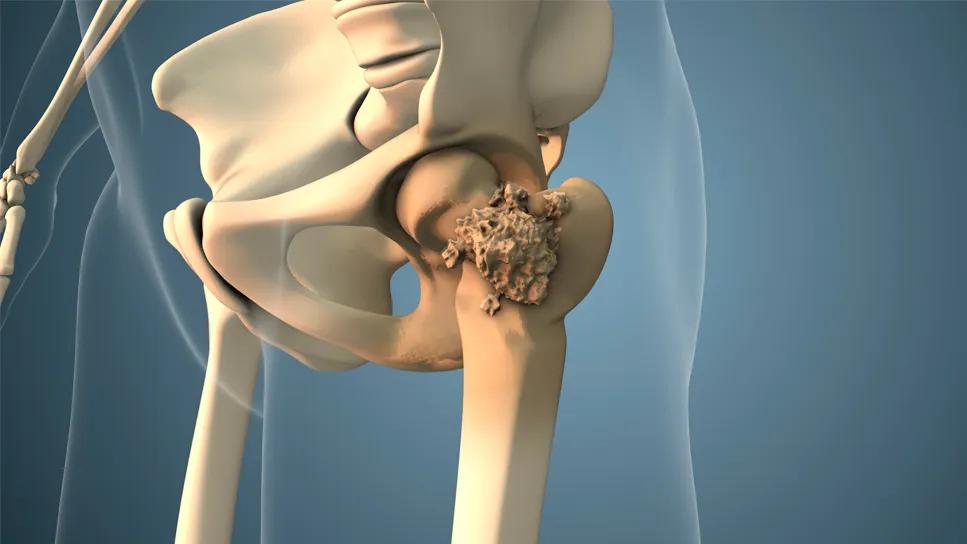
Image content: This image is available to view online.
View image online (https://assets.clevelandclinic.org/transform/84e2d08f-f1e7-4c5a-b7cf-bbc930b31cea/cancer-spreading-along-a-hip-bone-1969359112-1)
Bone metastasis
A structured digital communication platform reduced the time to multidisciplinary treatment recommendation for patients with bone metastases from 24 hours to under two hours, a greater than 90 percent reduction, according to research presented at the 2026 annual meeting of the American Society for Radiation Oncology.
Advertisement
Cleveland Clinic is a non-profit academic medical center. Advertising on our site helps support our mission. We do not endorse non-Cleveland Clinic products or services. Policy
The platform, called NIMBLE (Network for the Integrated Management of Bone Metastases: Linking Experts), replaces the traditional weekly tumor board model with a secure, real-time digital system that connects radiation oncologists, orthopedic surgeons, interventional radiologists and other specialists the moment a patient is referred.
“Historically, multidisciplinary decision-making has depended on a tumor board that meets once a week. We developed NIMBLE because we felt there had to be a better way to bring the right specialists together quickly, make a coordinated recommendation and move the patient toward the appropriate care without unnecessary delays,” says Meena Bedi, MD, Division Chair of Radiation Oncology at Cleveland Clinic Cancer Institute in Florida.
For patients with bone metastases, a multidisciplinary approach to treatment decisions is essential. Under traditional workflows, that coordination is structured around a fixed weekly tumor board meeting, and a patient referred on a Thursday might not receive a recommendation until the following week, with consultation and treatment scheduling extending the timeline further.
In patients with advanced cancer, even short delays can impact outcomes. Among the 127 patients studied, each additional day of delay before treatment was associated with approximately a 6 percent decrease in overall survival, even after controlling for other factors.
“The association between treatment delay and survival was one of our most important findings. Although we cannot establish causation, it reinforces the point that time matters for patients with advanced cancer. If we can eliminate unnecessary delays in care, we should,” Dr. Bedi explains.
Advertisement
From September 2023 to April 2024, 127 consecutive patients were referred to a newly established bone metastasis program. Eighty-one percent were managed through NIMBLE, while the remaining 19 percent were handled through the standard weekly tumor board workflow. Patient and tumor characteristics were comparable between the two groups.
The contrast in timelines was substantial. Median time from intake to a multidisciplinary treatment recommendation was 1.9 hours with NIMBLE versus 24 hours with the traditional approach. Time from intake to radiation consultation was significantly shorter at 8 days versus 18 days. A trend toward earlier treatment initiation, 22 days versus 38 days, did not reach statistical significance.
Patients in the NIMBLE cohort were recommended for conservative management more often: 67 percent versus 33 percent in the standard workflow group. Researchers attribute that finding to improved triage, as the platform’s rapid, coordinated review helped identify patients who did not need an intervention and spared them from unnecessary consultations.
One of the most important findings was that better coordination did not lead to more procedures or more radiation. “In many cases, it allowed us to determine that an intervention was not necessary. For a patient with metastatic cancer who may already be dealing with pain and a tremendous appointment burden, avoiding an unnecessary consultation has value. The goal is not to treat more patients, rather to identify the right treatment for the right patient at the right time,” says Dr. Bedi.
Advertisement
The NIMBLE findings point to a dimension of cancer care improvement that gets less attention than new therapeutics: operational design. The platform uses data infrastructure to shorten the interval between intake and interdisciplinary discussion from up to a week to fewer than 24 hours.
This reduced interval allows radiation oncology programs to manage increasingly complex caseloads in a more agile manner. Patients with metastatic cancer are living longer, and the volume of bone metastasis referrals is growing. Scalable solutions like NIMBLE help maintain care quality across that volume.
“NIMBLE shows that innovation in cancer care does not always require a new drug or treatment device,” says Dr. Bedi. “Other centers could adapt this type of model using secure communication infrastructure and defined multidisciplinary workflows. The key is moving from a meeting-centered model to a patient-centered model, where the discussion occurs when the patient needs it rather than when the next meeting is scheduled.”
The team plans to validate these findings in a larger population and better understand how shortening the time to multidisciplinary decision-making affects downstream outcomes, including time to treatment, resource utilization, patient experience and survival outcomes. The goal is to create a model of multidisciplinary care that is both more efficient and more responsive to the individual patient
Advertisement
Advertisement

Study reinforces the importance of genetic testing prior to local therapy decisions

Understanding expanding treatment options and potential advances

Adding 177Lu-PSMA-617 to ADT plus an ARPI cut the risk of radiographic progression or mortality by 28%

New program will help patients improve fitness and manage weight after cancer treatment

Cleveland Clinic hematologist highlights new guidelines and treatment advances in immune thrombocytopenia

Cleveland Clinic study provides validation for the test, which combines AI and pathological data to predict outcomes in postoperative patients

Advanced imaging technology catches metastases much earlier, allowing treatment with fewer side effects

Reduced radiation for lymph node areas reduces side effects
 Search