Locations:


Real-world, OCT-based data show no difference in lesion growth between patients with and without supplementation
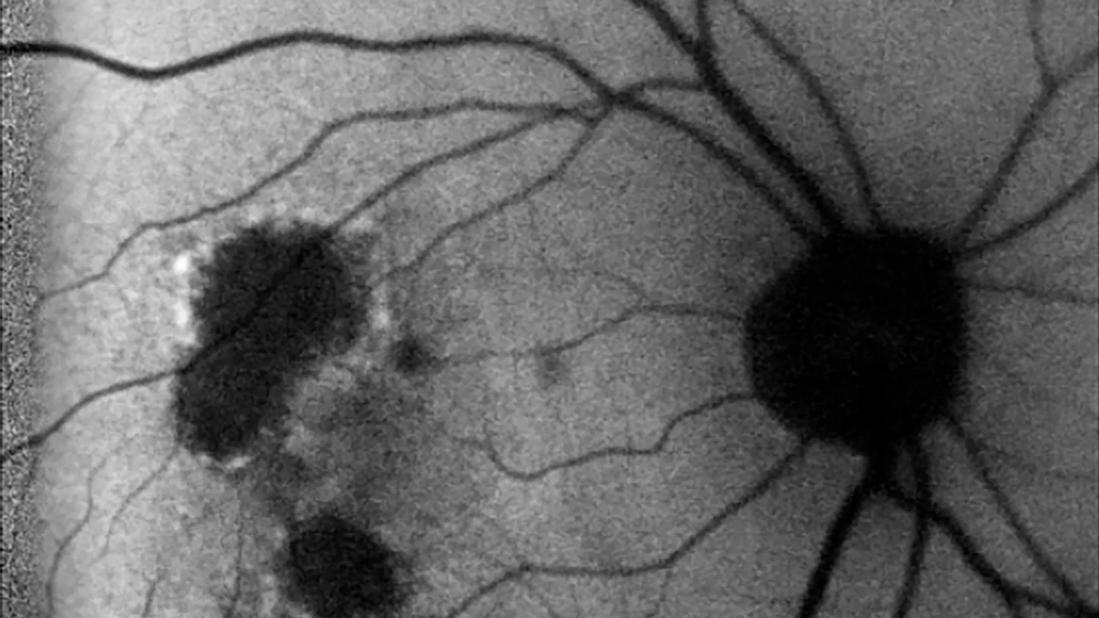
Image content: This image is available to view online.
View image online (https://assets.clevelandclinic.org/transform/9bd28343-ecf3-4b2a-ac85-27caaef7e42e/geographic-atrophy)
A closeup of black blood vessels and large dark spots on a gray background
Although AREDS (Age-Related Eye Disease Study) vitamin supplements remain a cornerstone of age-related macular degeneration (AMD) management, their value in geographic atrophy (GA) — the advanced, irreversible stage of dry AMD — remains uncertain.
Advertisement
Cleveland Clinic is a non-profit academic medical center. Advertising on our site helps support our mission. We do not endorse non-Cleveland Clinic products or services. Policy
A recent study led by Cleveland Clinic Cole Eye Institute sheds new light on this ongoing debate. Presented at the 2026 ARVO Annual Meeting, the research found no significant association between documented AREDS use and GA lesion growth, contributing to mounting evidence that supplementation may not meaningfully slow progression at this advanced stage.
Interest in AREDS for GA has increased since a 2025 National Eye Institute analysis suggested the potential for AREDS supplements to slow GA progression. With FDA-approved therapies for GA currently limited to recurring intraocular injections, a less burdensome treatment sparked hope across the retina community.
“That study generated a lot of interest because it raised the possibility of a much easier intervention for patients,” says Katherine Talcott, MD, a vitreoretinal surgeon at the Cole Eye Institute. “We wanted to explore whether those findings would hold up in a real-world clinic population using OCT-based imaging. In our cohort, we did not observe a significant difference in GA growth rates between patients taking AREDS and those not.”
The original AREDS formula combines high-dose antioxidants and minerals, including vitamin C, vitamin E, beta-carotene, zinc and copper. AREDS2 replaced beta-carotene with lutein and zeaxanthin, improving safety for those at risk for lung cancer.
The landmark AREDS trial demonstrated a 25% reduction in the risk of progression from intermediate to advanced AMD in certain patients over five years. AREDS2 reaffirmed its efficacy.
Advertisement
“We generally recommend AREDS supplementation for our patients with AMD, but not everyone takes it consistently,” notes Dr. Talcott. “For some, the vitamins are costly, cause stomach upset or simply add to an already lengthy list of medications. There are also questions about how much benefit they provide once GA is established, making this an especially important area of research.”
The Cole Eye Institute team analyzed electronic health record data from 2017 to 2022, studying two cohorts:
Researchers compared GA lesion growth over one year and found no significant difference between groups (P = .52).
A regression model adjusting for additional health factors also failed to identify AREDS use as a significant predictor of GA progression. Moreover, the model was limited in its ability to predict individual outcomes.
“One strength of our study is its real-world reflection of clinical practice, leveraging OCT imaging to track GA progression,” Dr. Talcott emphasizes. “But we also recognize its limitations. This was a small, retrospective analysis relying on documentation of vitamin use rather than direct verification. Although we matched patients for baseline disease characteristics, factors such as the timing of GA diagnosis or onset of supplementation may not have been perfectly captured.”
Advertisement
These findings suggest that AREDS does not appear to slow GA lesion progression, despite its widespread application for AMD.
“I continue to recommend AREDS for most patients with AMD, particularly before they reach advanced stages, given the original studies’ benefit in slowing vision loss,” Dr. Talcott says. “However, once patients develop GA, the clinical conversation becomes more nuanced.”
Treatment decisions in advanced GA must often extend beyond available data, she notes. Many patients view AREDS supplementation as an active contribution to their care, even when its efficacy is in question.
“If a patient with advanced GA wishes to remain on AREDS, I support that,” she says. “But if cost, GI side effects or pill burden become significant issues, I feel comfortable counseling patients that discontinuation is reasonable, given our inability to demonstrate a clear benefit at this stage.”
This study adds further real-world evidence to shape expectations around AREDS use, but important questions remain. More robust studies are needed to clarify the role of AREDS in patients with established GA.
“To truly answer this question, we need prospective trials,” says Dr. Talcott. “And as newer formulations like AREDS3 emerge, it will be intriguing to see whether they offer any incremental advantages. For now, though, further data are necessary before making definitive recommendations.”
Advertisement
Advertisement

Can a single subretinal injection provide effective treatment?

Early planning can help prevent disruptions in treatment, medication access and support

Emerging evidence suggests a patient-specific approach

Looking at the real-world impact and the future pipeline of targeted therapies

End-of-treatment VALOR-HCM analyses reassure on use in women, suggest disease-modifying potential

Study reveals key differences between antibiotics, but treatment decisions should still consider patient factors

Findings could help clinicians make more informed decisions about medication recommendations

Observational evidence of neuroprotection with GLP-1 receptor agonists and SGLT-2 inhibitors
 Search