Locations:





Post hoc analysis of SURPASS-CVOT trial has implications for future cardiovascular outcome trials
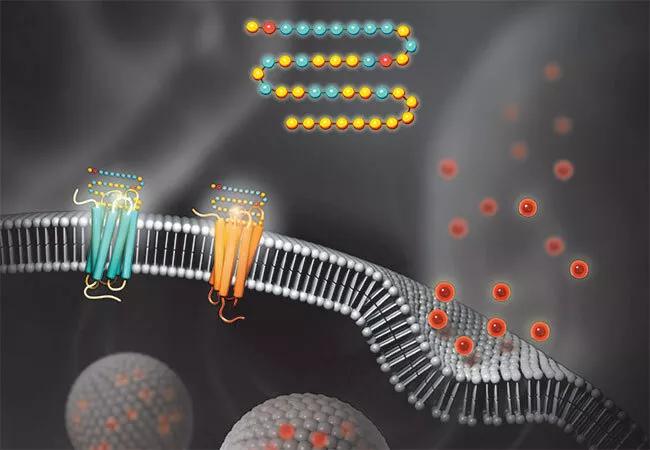
Image content: This image is available to view online.
View image online (https://assets.clevelandclinic.org/transform/996c5449-8e98-472c-ae10-284ff874f865/22-HVI-3411464_GLP-1-and-GIP-dual-agonism_650x450-jpg)
stylized scientific illustration of hormone receptors
For patients with type 2 diabetes and established cardiovascular disease, incretin-based therapy that targets both the GLP-1 and GIP gut hormones is associated with significantly greater cardiorenal benefits than therapy that targets GLP-1 alone. That’s the conclusion of a post hoc analysis of the SURPASS-CVOT randomized controlled trial presented as featured clinical research at the American College of Cardiology’s 2026 Scientific Session and simultaneously published in JAMA Cardiology.
Advertisement
Cleveland Clinic is a non-profit academic medical center. Advertising on our site helps support our mission. We do not endorse non-Cleveland Clinic products or services. Policy
Compared with the GLP-1 receptor agonist dulaglutide, the dual GLP-1/GIP receptor agonist tirzepatide was associated with a 14% lower incidence (P < .001) of a broad six-component cardiorenal end point after four years of treatment. The results demonstrate a greater relative treatment effect with tirzepatide than previously reported for the narrower three-component composite end point (cardiovascular death, myocardial infarction [MI] or stroke) in the primary SURPASS-CVOT analysis, which demonstrated noninferiority between the treatments but not superiority.
“These results are notably different from those of the primary analysis,” says the study’s first and corresponding author, Steven Nissen, MD, Chief Academic Officer of Cleveland Clinic’s Heart, Vascular & Thoracic Institute. “They tell us that targeting both GLP-1 and GIP produces benefits across a broad range of end points. This finding suggests we should be choosing these drugs based on the totality of their effects, not just a single benefit or even a cluster of narrow benefits.”
SURPASS-CVOT, whose primary results were published in The New England Journal of Medicine (2025;393:2409-2420), was a double-blind, active-control, multicenter trial enrolling 13,165 patients with type 2 diabetes and pre-existing atherosclerotic cardiovascular disease across 640 centers worldwide. Participants were randomized 1:1 to receive weekly subcutaneous tirzepatide (up to 15 mg) or dulaglutide (fixed 1.5-mg dose). Key inclusion criteria were age ≥ 40 years, BMI > 25 kg/m² and HbA1c between 7.0% and 10.5%.
Advertisement
“This was the first cardiovascular outcome trial of an incretin-based therapy with an active comparator,” notes Dr. Nissen, who served on the trial’s academic executive committee. He explains that the study’s primary end point — a composite of cardiovascular death, MI or stroke — was chosen because it was the end point of the REWIND trial that supported dulaglutide’s regulatory approval for reduction of major adverse cardiovascular events; as a result, regulatory bodies required its use to determine whether to grant a noninferiority or superiority claim for tirzepatide vis-à-vis dulaglutide.
“However, that three-component end point was narrow,” Dr. Nissen says, “since we know that these incretin-based therapies affect a lot more than just cardiovascular death, MI and stroke. So I proposed this post hoc analysis to look at more of the totality of effects of these two drugs using a six-component composite end point.”
The six components were all-cause mortality, MI, stroke, coronary revascularization, hospitalization for heart failure and a composite of adverse renal outcomes. “The most notable change was assessing all-cause mortality instead of cardiovascular death,” Dr. Nissen observes, “because studies of these drugs for obesity show that they reduce death due to various other causes.”
After median treatment of 47.4 months, the six-component cardiorenal end point occurred in 23.7% of tirzepatide-treated patients versus 27.4% of dulaglutide-treated patients, translating to a hazard ratio (HR) of 0.84 (95% CI, 0.79-0.90; P < .001). The individual components all contributed to the benefit:
Advertisement
| End point component | Incidence with tirzepatide | Incidence with dulaglutide | Hazard ratio (95% CI) |
|---|---|---|---|
| All-cause mortality | 8.6% | 10.2% | 0.84 (0.75-0.94) |
| Myocardial infarction | 4.7% | 5.4% | 0.86 (0.74-1.00) |
| Stroke | 3.5% | 3.8% | 0.91 (0.76-1.09) |
| Coronary revascularization | 8.0% | 9.4% | 0.84 (0.75-0.95) |
| Heart failure hospitalization | 3.0% | 3.1% | 0.96 (0.79-1.17) |
| Composite renal end point | 4.9% | 6.1% | 0.79 (0.68-0.91) |
| End point component | |||
| All-cause mortality | |||
| Incidence with tirzepatide | |||
| 8.6% | |||
| Incidence with dulaglutide | |||
| 10.2% | |||
| Hazard ratio (95% CI) | |||
| 0.84 (0.75-0.94) | |||
| Myocardial infarction | |||
| Incidence with tirzepatide | |||
| 4.7% | |||
| Incidence with dulaglutide | |||
| 5.4% | |||
| Hazard ratio (95% CI) | |||
| 0.86 (0.74-1.00) | |||
| Stroke | |||
| Incidence with tirzepatide | |||
| 3.5% | |||
| Incidence with dulaglutide | |||
| 3.8% | |||
| Hazard ratio (95% CI) | |||
| 0.91 (0.76-1.09) | |||
| Coronary revascularization | |||
| Incidence with tirzepatide | |||
| 8.0% | |||
| Incidence with dulaglutide | |||
| 9.4% | |||
| Hazard ratio (95% CI) | |||
| 0.84 (0.75-0.95) | |||
| Heart failure hospitalization | |||
| Incidence with tirzepatide | |||
| 3.0% | |||
| Incidence with dulaglutide | |||
| 3.1% | |||
| Hazard ratio (95% CI) | |||
| 0.96 (0.79-1.17) | |||
| Composite renal end point | |||
| Incidence with tirzepatide | |||
| 4.9% | |||
| Incidence with dulaglutide | |||
| 6.1% | |||
| Hazard ratio (95% CI) | |||
| 0.79 (0.68-0.91) |
Sensitivity analyses examining slightly narrower composite end points (omitting renal events and both heart failure hospitalization and renal events) yielded consistent hazard ratios of 0.86 (P < .001), and substituting cardiovascular death for all-cause mortality in the six-component end point resulted in a hazard ratio of 0.85; P < .001).
Subgroup analyses showed no significant interactions for the six-composite end point across 12 prespecified clinical and demographic subgroups except for a marginal interaction for BMI subgroups.
Adverse effects were as reported in the study’s primary analysis. Within the tirzepatide treatment arm, the study’s most common adverse effect, gastrointestinal disorders, occurred in 46.0% of patients who experienced a cardiorenal end point versus 41.4% of patients who did not.
“It’s important to remember that the 0.84 hazard ratio observed with tirzepatide — in other words, the 16% relative benefit — was not against placebo but against a very good drug that had already shown cardiovascular benefits,” Dr. Nissen says. “In that context, a 16% benefit is a big deal.”
He notes that these findings were among patients at high risk for a cardiovascular event and may not apply to lower-risk populations. He also acknowledges the limitations of a post hoc analysis like this, which benefits from knowledge of the outcomes of the primary analysis, although he adds that each of the six components of this study’s end point were prespecified, and most were centrally adjudicated.
Advertisement
This analysis is unlikely to have regulatory implications since regulators typically don’t revise drug labels on the basis of secondary post hoc analyses, but Dr. Nissen says its results are likely to steer prescribers and patients toward favoring a dual agonist like tirzepatide. “A P value of less than .001 for end points that are meaningful to patients is not trivial,” he says.
His Cleveland Clinic colleague Leslie Cho, MD, Section Head of Preventive Cardiology, notes that it’s essential to keep in mind an even broader point — that more patients stand to benefit from initiation of GLP-1 receptor agonist therapy of any kind. “This study tested one potent GLP-1 receptor agonist against another that is less potent but still showed an overall reduction in events,” she says. “That’s important, but a more important message is to treat our diabetic patients with this group of agents. This is a drug class that can greatly improve outcomes in patients with diabetes, yet only a quarter of U.S. patients with diabetes are on GLP-1 receptor agonists. At the same time, patients are still being treated with sulfonylureas, which can actually be harmful to our patients. These treatment patterns need to change.”
Meanwhile, more data on tirzepatide’s impact on a broad five-component cardiovascular end point — including all-cause mortality — are expected from the placebo-controlled SURMOUNT-MMO outcome trial in 15,000 patients with obesity but no diabetes. Enrollment in that trial, which is run by the Cleveland Clinic Coordinating Center for Clinical Research (C5Research) and co-chaired by Dr. Nissen, is now completed.
Advertisement
Dr. Nissen notes that SURMOUNT-MMO’s use of all-cause mortality instead of cardiovascular death, consistent with this post hoc analysis, signals a shift for cardiovascular outcome trials. “I think it’s time for this class of drugs to move from cardiovascular death as an end point to all-cause mortality,” he says. “We’ve known for a long time that the effects of obesity and related conditions are broader than simply cardiovascular death. It’s time for outcome trials to better reflect that.”
The SURPASS-CVOT trial was funded by Eli Lilly and Company, the manufacturer of tirzepatide.
Advertisement

Large retrospective analysis may prompt prospective studies

How to talk about lifetime risk, treatment goals, Lp(a) testing, statin skepticism and more
Robust signal from observational study raises prospect of a long-sought medical therapy

Retrospective analysis finds lower mortality rates, fewer hospital visits among patients with Type 1 diabetes using GLP-1 Therapies

Study shows significantly reduced risk of mortality and disease complications in patients receiving GLP-1 agonists

Observational evidence of neuroprotection with GLP-1 receptor agonists and SGLT-2 inhibitors
Study is first to show reduction in autoimmune disease with the common diabetes and obesity drugs

Surgical intervention linked to increased lifespan and reduced complications
 Search