Locations:





Robust signal from observational study raises prospect of a long-sought medical therapy
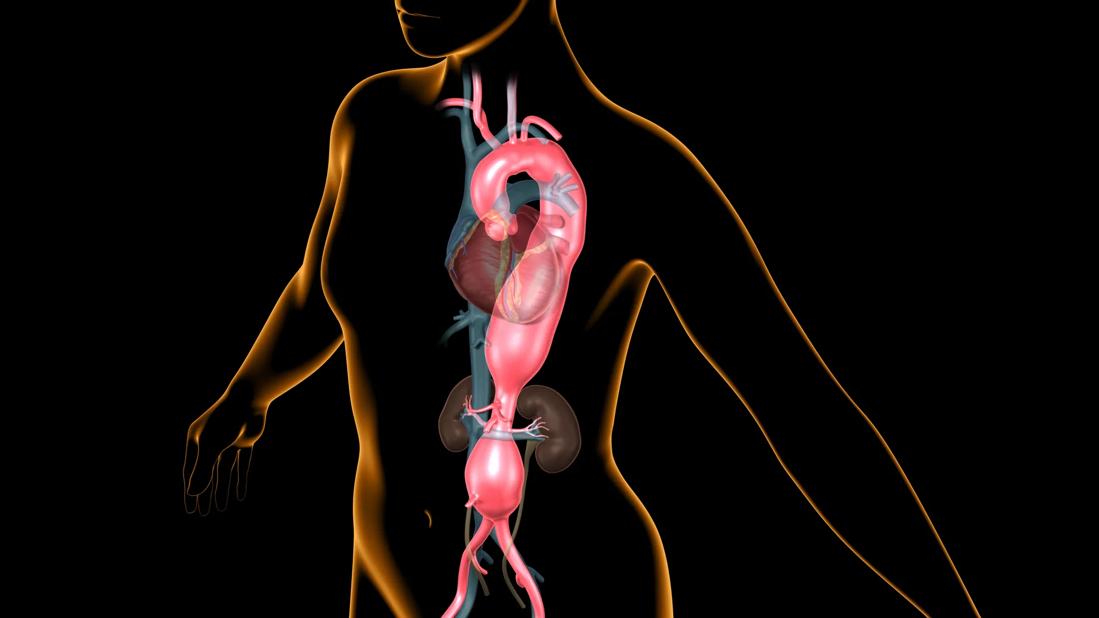
Image content: This image is available to view online.
View image online (https://assets.clevelandclinic.org/transform/ad1d4401-a42f-4be9-af1e-59aa99aa5e09/aortic-aneurysm-cqd)
bulging aorta in stylized illustration of female adult body
The use of glucagon-like peptide-1 receptor agonists (GLP-1RAs) is associated with a significantly lower risk of death and a reduced need for surgical repair in patients with unruptured abdominal aortic aneurysms (AAA), according to a recent observational database study led by Cleveland Clinic researchers and published in the Journal of Vascular Surgery. These protective effects appear to extend to patients both with and without type 2 diabetes (T2D), suggesting that this class of medication — already transformative in metabolic and cardiovascular care — may offer a novel pharmacological strategy for managing aortic disease.
Advertisement
Cleveland Clinic is a non-profit academic medical center. Advertising on our site helps support our mission. We do not endorse non-Cleveland Clinic products or services. Policy
“This study was prompted by my observations among the AAA patients I see in my vascular surgery practice,” says the study’s senior and corresponding author, Francis Caputo, MD, Vascular Surgery Director of Cleveland Clinic’s Aorta Center. “I noticed that the patients who were on GLP-1RA drugs seemed to be doing so well in terms of their diabetes, weight loss and other effects. Given the broad clinical benefits that have been documented with GLP-1RAs and preclinical studies suggesting potential benefits on aortic aneurysms as well, we decided to do a large data analysis to explore their impact on aortic pathology. The resulting observational findings are very encouraging.”
If the findings are validated in prospective controlled trials, GLP-1RAs could fundamentally shift the treatment paradigm for AAA, moving it from a purely surgical wait-and-see approach to one that includes active pharmacological stabilization.
For decades, clinical management of small AAAs has been characterized by watchful waiting. Once an aneurysm is detected, clinicians primarily monitor its diameter through serial imaging, intervening surgically only when the risk of rupture outweighs the risks of repair. While smoking cessation and blood pressure control are standard, there are currently no widely accepted medical therapies specifically indicated to arrest or slow the expansion of the aortic wall.
Interestingly, epidemiologic data have long pointed to a “diabetes paradox”: while diabetes is a major risk factor for most vascular pathologies, it is associated with lower prevalence, and slower growth, of AAAs. This has led researchers to investigate whether glucose-lowering medications, such as metformin, contribute to this stabilization.
Advertisement
“Metformin has been shown to have a protective effect in patients with AAA, which may explain this diabetes paradox,” says Scott Cameron, MD, PhD, Section Head of Vascular Medicine at Cleveland Clinic and a co-author of the new study. This finding prompted the researchers to stratify their analysis by the presence or absence of T2D.
For their investigation, the Cleveland Clinic-led research team used the TriNetX platform, a massive U.S. collaborative database containing de-identified electronic health records for over 120 million patients. They identified adults diagnosed with unruptured AAAs between 2015 and 2020, excluding those with prior repairs, dissections or underlying connective tissue disorders.
The study population was stratified based on T2D status and then divided into those who were prescribed GLP-1RAs and those who were not. To ensure a rigorous comparison, the researchers used 1:1 propensity score matching. This process adjusted for a wide array of potential confounders, including age, sex, tobacco use, body mass index and use of other cardiometabolic medications (e.g., statins, beta-blockers and metformin).
The primary objective was a composite outcome measured over five years, including all-cause mortality, AAA repair (open or endovascular) and acute abdominal aortic syndrome, which encompasses rupture or dissection.
The results revealed a strong association between GLP-1RA use and improved clinical outcomes, as detailed in the table below presenting risk reduction with GLP-1RA use versus nonuse:
Advertisement
| End point | Patients with T2D (1,401 matched pairs) | Patients without T2D (336 matched pairs) |
|---|---|---|
| Composite primary outcome | 44% (OR = 0.56; 95% CI, 0.47-0.66) | 58% (OR = 0.42; 95% CI, 0.28-0.63) |
| AAA repair requirement | 34% (OR = 0.66; 95% CI, 0.45-0.95) | 55% (OR = 0.45; 95% CI, 0.21-0.96) |
| All-cause mortality | 46% (OR = 0.54; 95% CI, 0.45-0.65) | 53% (OR = 0.47; 95% CI, 0.30-0.74) |
| End point | ||
| Composite primary outcome | ||
| Patients with T2D (1,401 matched pairs) | ||
| 44% (OR = 0.56; 95% CI, 0.47-0.66) | ||
| Patients without T2D (336 matched pairs) | ||
| 58% (OR = 0.42; 95% CI, 0.28-0.63) | ||
| AAA repair requirement | ||
| Patients with T2D (1,401 matched pairs) | ||
| 34% (OR = 0.66; 95% CI, 0.45-0.95) | ||
| Patients without T2D (336 matched pairs) | ||
| 55% (OR = 0.45; 95% CI, 0.21-0.96) | ||
| All-cause mortality | ||
| Patients with T2D (1,401 matched pairs) | ||
| 46% (OR = 0.54; 95% CI, 0.45-0.65) | ||
| Patients without T2D (336 matched pairs) | ||
| 53% (OR = 0.47; 95% CI, 0.30-0.74) |
Notably, the benefits of GLP-1RA use were even more pronounced among patients without a diabetes diagnosis, consistent with the diabetes paradox. “Many of the patients with diabetes were on metformin and already had some degree of protection, in terms of slower-growing aneurysms, as a result,” Dr. Cameron observes.
While the analysis showed a delay in the need for intervention, there was no statistically significant difference in rates of acute rupture or dissection between the groups. “This suggests that the likely benefit of GLP-1RA therapy primarily lies in slowing the growth of the aneurysm toward the threshold for elective repair rather than preventing acute events in the short term,” Dr. Caputo notes.
The researchers conclude that their findings provide a compelling rationale for further investigation into GLP-1RAs for medical management of AAA. They note that the vascular benefits of these agents are likely independent of their glycemic effects, as the protective signal remained robust even after adjusting for metformin use and was clearly present in patients without T2D.
“GLP-1RAs clearly have protective effects on blood vessels, but the mechanism for these effects is uncertain,” Dr. Cameron says. “They probably have a receptor protein located directly on the blood vessel that is responsible for this protection, which would be consistent with findings in arterial beds beyond the aorta, such as in the STRIDE study in patients with peripheral artery disease and T2D.”
The researchers note that these observational findings are only hypothesis-generating and require confirmation in a large randomized controlled trial. While planning for such an investigation gets underway, Dr. Caputo says he and colleagues are conducting an additional retrospective analysis of GLP-1RA effects solely in Cleveland Clinic patients with AAA. “We hope to make that study more granular and perhaps identify additional issues for confirmation in an eventual prospective trial,” he says.
Advertisement
Dr. Cameron says the key remaining question from a scientific standpoint is where the GLP-1 receptor is in the blood vessels — smooth muscle versus endothelium — and how it is signaling. But he adds that even while these answers are pursued, there are already implications for clinical practice.
“We know that if you have a patient on a GLP-1 agonist, you can better control their blood sugar, but now we’re seeing there is this additional protective effect,” Dr. Cameron says. “This has already impacted how I treat patients. I will send a note over to the primary care physician and say, I noticed that your patient has diabetes and increased BMI, so it might be worth considering a GLP-1 agonist because they have two indications for it already. And now I’ll add that we have emerging data that these drugs might be protective in patients with AAA. I’ve found physicians to be quite receptive to that.”
Advertisement
Advertisement

Elevated levels of the gut microbial metabolite predict prevalence and adverse outcomes in community-based study
Large analysis adds to evidence that absolute diameter alone may miss vulnerable patients
Height-indexed aortic measurements may better identify risk than diameter alone

New Cleveland Clinic data challenge traditional size thresholds for surgical intervention
Study finds comparable midterm safety outcomes, suggesting anatomy and surgeon preference should drive choice
New review distills insights and best practices from a high-volume center
Blood test can identify patients who need more frequent monitoring or earlier surgery to prevent dissection or rupture
Recent Cleveland Clinic experience reveals hundreds of cases with anatomic constraints to FEVAR
 Search