Locations:





Cleveland Clinic group works toward earlier diagnosis of this rare disease

Image content: This image is available to view online.
View image online (https://assets.clevelandclinic.org/transform/c60fa214-ecb6-487d-90bc-24288389414b/CQD-Related-Disease-Program-1931240594)
Doctor examining patient's lymph nodes
A group of Cleveland Clinic specialists is working to advance research, education and clinical practice around IgG4-related disease (IgG4-RD), a chronic multiorgan fibroinflammatory disease that can be difficult to identify. Without timely diagnosis, IgG4-RD can lead to progressive organ fibrosis.
Advertisement
Cleveland Clinic is a non-profit academic medical center. Advertising on our site helps support our mission. We do not endorse non-Cleveland Clinic products or services. Policy
The group convened to answer a need for programs that would help patients be diagnosed more quickly and provide a seamless care pathway. “We want to develop methods for earlier disease identification, combine that with education of clinicians and patients, and put this disease on the radar screen moving ahead,” says Leonard Calabrese, DO, Director of the R. J. Fasenmyer Center for Clinical Immunology at Cleveland Clinic.
The group is composed of clinicians and researchers in rheumatology, allergy and immunology, gastroenterology, neurology, nephrology, radiology and pathology. Among current projects:
IgG4-RD is among the least diagnosed of the immune-mediated inflammatory diseases seen at the R.J. Fasenmyer Center. The disease itself was not identified until the early 2000s; in 2012, an international committee of experts released consensus guidelines on the pathology of IgG4-RD.
“It has probably been around forever but was it masquerading as a litany of separate syndromes,” says Dr. Calabrese. “People didn't appreciate what they were looking at.”
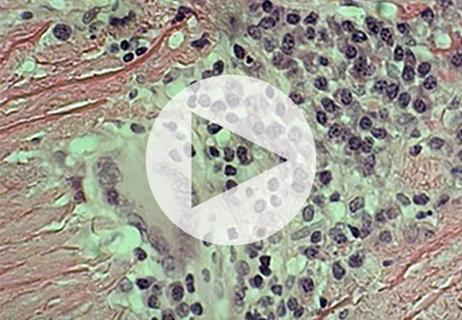
IgG4-related disease causes swelling and inflammation in one or more organs, including the pancreas, kidneys, lungs, retroperitoneum, bile ducts, lymph nodes, salivary and lacrimal glands and blood vessels. It can affect organs successively or concurrently. Because it can cause lesions and organ enlargement, IgG4-RD may look like cancer, infection or other immune-related pathologies. While elevated serum IgG4 concentrations (typically >135 mg/dL) can be an indicator of the disease, serum levels alone are not proof.
Advertisement
“We face a challenge in that people with this condition are not being identified because of its capacity to masquerade in virtually any organ system,” says Dr. Calabrese.
Certain symptoms, such as glandular swelling of the eyes, may more readily raise a flag, but patients with general symptoms like weight loss or back pain often go years without being appropriately evaluated because clinicians are seeing just one element of the syndrome.
“Diagnosis requires the appropriate clinical picture combined with supportive laboratory results plus a compatible radiographic imaging appearance and evidence of the pathology that's characteristic of IgG4,” says Dr. Calabrese. And all three must be combined in most cases, he adds, and common mimics must be ruled out.
IgG4-RD discussions are frequent and awareness high among specialists in rheumatology, allergy, immunology and gastroenterology. Primary care or internal medicine clinicians are less likely to be acquainted with them.
Broader awareness of IgG4-RD and manifestations can help clinicians facing patients with syndromes aligning with the disease. Dr. Calabrese says it can be helpful to consult with colleagues who have more experience with the condition.
For patients who have been diagnosed with severe forms of the disease — autoimmune pancreatitis, inflammation of the aorta and large vessels, retroperitoneal invasion and renal disease — Dr. Calabrese says, “We believe targeted education about IgG4-RD is key for early recognition and prompt therapy. It can be highly effective particularly in the early inflammatory phase of the disease. And we are committed to highlighting this disease in our educational platforms for the foreseeable future.
Advertisement
“While glucocorticoids remain the mainstay of the therapy for IgG4RD there has been great progress in therapeutic development,” Dr. Calabrese adds. “One recently approved biologic already is in use and others are likely to be approved in the near future all. This will allow us to spare our patients long-term high dose glucocorticoid exposure which we know carries a significant toll. It is a serious disease, but one that can be very well controlled if treated early. The big challenge is identifying patients early enough to benefit from it.”
Advertisement
Advertisement

Evidence suggests empathy influences immune function and well-being

Going beyond simple referrals to streamline patient access

From dryness to diagnosis

New clinic meets Hispanic patients where they are

Fellows will train under faculty with broad range of expertise

Collaboration was key to identifying source of nerve condition
When to suspect concurrent giant cell arteritis

New research explores the role of immune cell and blood-brain barrier changes
 Search