Locations:





AR-assisted navigation is closing the gap between surgical planning and implant placement
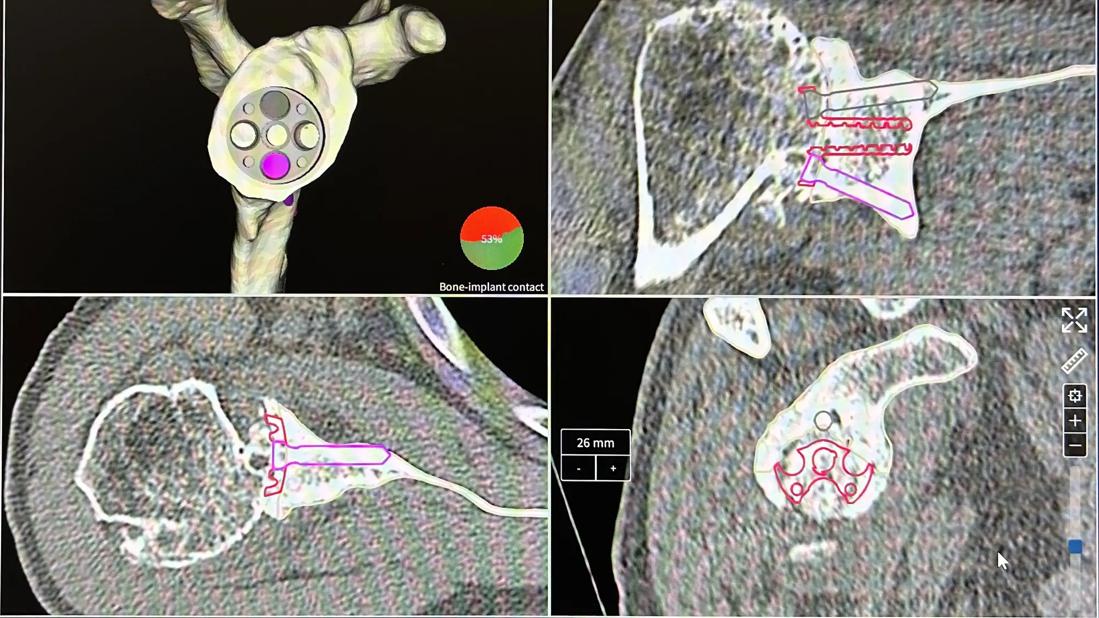
Image content: This image is available to view online.
View image online (https://assets.clevelandclinic.org/transform/b2017a42-d163-4e84-a398-944464f01a63/AR-Enhanced-Shoulder-Images-FL)
How Augmented Reality Is Reshaping Shoulder Replacement Surgery
A few degrees of glenoid component malposition can have significant consequences in shoulder arthroplasty, affecting implant fixation, wear patterns, stability, and long-term survivorship. Yet achieving optimal glenoid positioning remains one of the most technically demanding aspects of shoulder replacement surgery. Augmented reality (AR)-assisted navigation is emerging as one approach to improve implant placement accuracy.
Advertisement
Cleveland Clinic is a non-profit academic medical center. Advertising on our site helps support our mission. We do not endorse non-Cleveland Clinic products or services. Policy
The first AR surgical platform for use in total shoulder replacement was cleared by the FDA in 2021. Since its initial indication for reverse shoulder arthroplasty, the technology has been approved for anatomic shoulder replacement and most recently for complex glenoid deformities and revision surgeries.
Although adoption remains limited, a growing number of centers are incorporating AR-based navigation into shoulder arthroplasty workflows. At Cleveland Clinic Indian River Hospital in Vero Beach, Florida, orthopedic surgeon Carl DiLella, DO, uses the innovative technology for reverse shoulder replacement.
Having instructed others in the surgical platform’s use, Dr. DiLella believes the approach has the ability to improve implant placement accuracy, aid intraoperative decision-making, and promote surgical consistency. He anticipates broader adoption of the technology as it matures and additional outcome data become available.
Reverse shoulder arthroplasty is the most commonly performed shoulder replacement procedure in the United States, accounting for about 75% of cases. It is frequently indicated for cuff tear arthropathy, a degenerative condition resulting from rotator cuff dysfunction.
The procedure reverses native shoulder anatomy by placing the prosthetic socket on the humeral side and the ball component on the glenoid surface of the scapula. This configuration allows the deltoid muscle to compensate for deficient rotator cuff function.
According to Dr. DiLella, he initially reserved AR navigation for complex cases involving substantial glenoid deformity or retroversion. Over time, however, he expanded its use to a broader range of procedures. “I found that it's really applicable to almost all cases of reverse shoulder replacement,” he says.
Advertisement
AR-assisted navigation provides real-time intraoperative guidance, allowing the surgeon to execute patient-specific preoperative plans directly within the surgical field. The workflow begins with a targeted CT scan of the patient's shoulder, which is used to create a highly accurate 3D digital model of the patient's anatomy.
“I use the digital model to select the appropriate implant and determine optimal positioning for the baseplate and screw trajectories,” describes Dr. DiLella. “I can virtually move the patient into flexion and see where the implant will potentially impinge on the coracoid base or tip and move it into abduction to make sure the joint moves smoothly.”
Dr. DiLella is using newly released preoperative planning software made available earlier this year to a limited number of U.S. surgeons. Previously, CT scans required transfer to engineers in Switzerland for surgical planning, creating delays in preoperative preparation.
“The desktop-based planning platform substantially reduces turnaround time,” says Dr. DiLella, noting a process that used to take weeks can now be done in just a couple days.
The next phase of AR-enhanced shoulder arthroplasty entails intraoperative setup and registration. Following surgical exposure, specialized tracking sensors are attached to both the scapula and the surgical instrumentation.
The surgeon then registers the patient's anatomy to the preoperative plan by using a tracked pointer to identify specific anatomical landmarks on the exposed bone. “I use the pointer to register 15 points around the coracoid process and an additional 15 points along the glenoid surface,” Dr. DiLella explains.
Advertisement
Registration aligns the exposed anatomy with the preoperative 3D model, enabling accurate tracking throughout the procedure. The display system, which consists of smart glasses and a freestanding monitor, is then calibrated to synchronize tracking data with the visual overlay.
During implant preparation and placement, the surgeon uses the specialized AR glasses to visualize the preoperative plan superimposed onto the patient's shoulder anatomy. The system also continuously tracks instrument position and orientation, providing real-time guidance throughout the procedure.
“Guide pin insertion into the glenoid represents one of the most critical steps of the procedure because it determines subsequent baseplate positioning, reaming, and screw placement,” says Dr. DiLella. “This system provides guidance during pin placement, on reaming depth and in positioning the screws.”
The platform also permits real-time intraoperative modifications, including adjustments to screw length and implant positioning based on patient anatomy.
“During a procedure, for example, I can choose to use a longer or shorter locking screw for the baseplate, if needed,” Dr. DiLella explains. This flexibility is particularly important in achieving secure baseplate fixation. Insufficient screw length may compromise fixation stability, while excessive screw length risks penetration of the scapula.
By integrating patient-specific planning with intraoperative visualization and navigation, the AR platform enables direct translation of the preoperative surgical plan into the operative environment. For Dr. DiLella, the primary value of AR-assisted navigation lies in improving implant placement accuracy.
Advertisement
“Shoulder surgery is unforgiving, and if something is malpositioned, the ripple effect of that is significant,” he emphasizes.
Published data has demonstrated postoperative glenoid component placement accuracy within 1 degree for inclination and retroversion and 1 millimeter for entry point and depth when compared to planned values.
Dr. DiLella believes AR-assisted navigation has the potential to reshape how shoulder arthroplasty is planned and performed, bringing greater accuracy and consistency and ultimately improving patient outcomes. He points out, however, that further studies are needed to determine whether improvements in component placement translate into superior long-term functional outcomes and implant survivorship.
“It’s become an important accuracy tool that promotes reproducibility of the operation, which is really where I think the technology serves patients and surgeons best,” he adds.
Advertisement
Advertisement
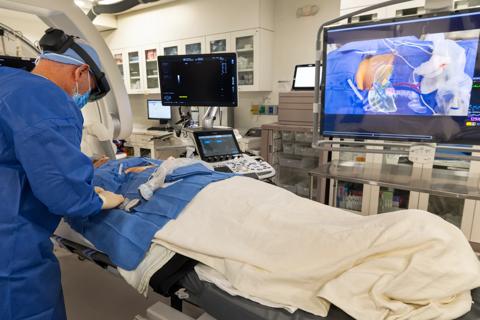
Cleveland Clinic in Florida explores extended reality for multimodality image guidance

The American Society of Clinical Oncology (ASCO) recently released updated guidelines

Cleveland Clinic's transplant team in Florida is using circulatory-death donor hearts to expand transplant opportunities for patients.
Repair of tiny lymphatic vessels offers big relief for patients with lymphedema after cancer surgery
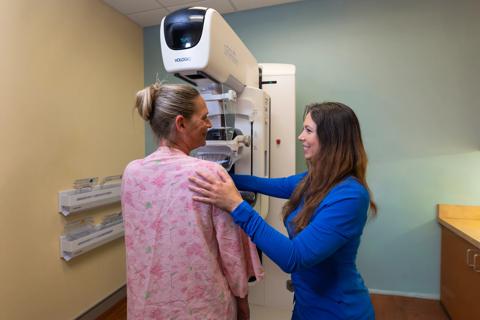
AI-enhanced mammography improves cancer detection and may support more personalized screening strategies
The Center for Neurological Restoration offers a structured, multidisciplinary approach to conditions that often require longitudinal management and escalation beyond first-line therapies
Multidisciplinary expertise provides advanced evaluation, second opinions and personalized treatment planning for patients with challenging cerebrovascular disorders
Study highlights strong predictive value of circulating tumor DNA testing
 Search