Locations:





Study highlights strong predictive value of circulating tumor DNA testing
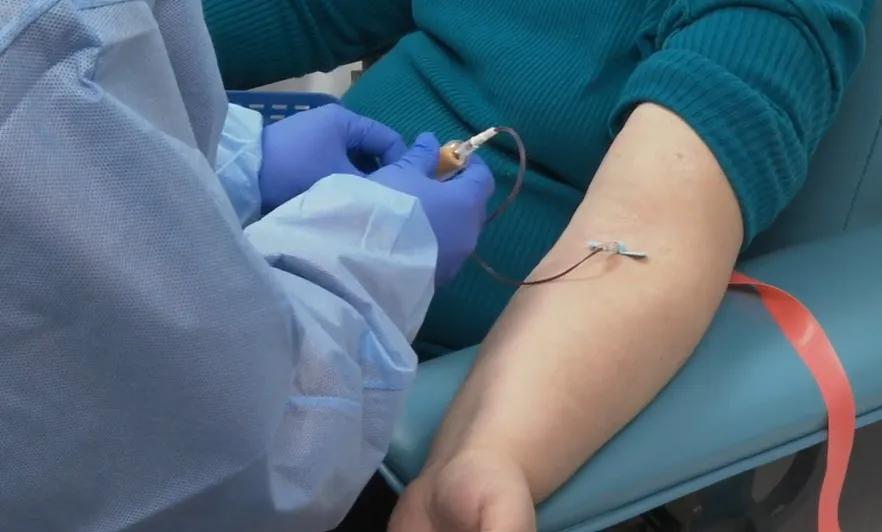
Image content: This image is available to view online.
View image online (https://assets.clevelandclinic.org/transform/050f2d86-a8a7-4072-a4d6-cef739f923d9/Blood-draw)
Blood Test Changing Rectal Cancer Surveillance
By the time recurrent rectal cancer appears on imaging, the disease may have been growing and spreading for months. Circulating tumor DNA (ctDNA) testing is changing that paradigm by giving clinicians a powerful new tool to detect molecular evidence of recurrence long before conventional surveillance methods.
Advertisement
Cleveland Clinic is a non-profit academic medical center. Advertising on our site helps support our mission. We do not endorse non-Cleveland Clinic products or services. Policy
“We are entering a new era of serial, real-time disease monitoring,” states medical oncologist Arun Nagarajan, MD, co-author of a recent study that demonstrated a strong association between post-treatment ctDNA positivity and disease recurrence in both surgical and non-operative patients with locally advanced rectal cancer.
Dr. Nagarajan serves as Section Head of Gastrointestinal Medical Oncology at Cleveland Clinic Weston Hospital. Having incorporated ctDNA testing into the care of more than 1,000 patients over the past five years, he believes serial monitoring for molecular residual disease is poised to reshape cancer surveillance.
For decades, carcinoembryonic antigen (CEA) has served as a standard blood-based tumor marker for gastrointestinal cancers despite well-recognized limitations in sensitivity. The percentage of patients with elevated CEA levels varies widely by disease stage.
Tumor-informed blood assays, which can track fragments of tumor-derived DNA circulating in the bloodstream, offer a more sensitive alternative with greater specificity.
After a rectal tumor is biopsied or removed, the tissue undergoes whole-exome sequencing to identify up to 16 patient-specific somatic variants to create a “DNA fingerprint” of the cancer. A subsequent blood draw searches for those exact fragments, enabling detection of molecular residual disease that would otherwise remain invisible.
“Serial sampling using personalized ctDNA testing achieves approximately 90% sensitivity, while specificity exceeds 98%,” says Dr. Nagarajan. “That makes a positive result a highly reliable indicator of persistent cancer with a very low rate of false positives.”
Advertisement
Dr. Nagarajan joined a team of researchers to evaluate whether ctDNA status after treatment could predict outcomes in patients with locally advanced rectal cancer (stage II and III). The retrospective analysis consisted of 220 patients, including several treated at Cleveland Clinic’s Maroone Cancer Center in Weston, Florida. Following neoadjuvant therapy (NAT), 148 underwent surgery and 72 were treated with non-operative management (NOM).
In the surgery cohort, ctDNA positivity proved to be a powerful predictor of recurrence, with a relapse rate of 88.3% compared with just 11.5% of those who tested negative.
The predictive value was even more striking among patients managed non-operatively. Out of 64 evaluable NOM patients, 14 were ctDNA positive after NAT. All 14 experienced recurrence, with most developing local regrowth. By comparison, only 10% of ctDNA-negative NOM patients developed local recurrence.
“Overall, ctDNA positivity after treatment was associated with significantly worse disease-free survival and emerged as a strong molecular indicator of recurrence risk,” reports Dr. Nagarajan.
According to the researchers, the findings suggest ctDNA may complement radiographic and endoscopic assessments by providing an additional measure of treatment response that could help tailor surveillance and local therapy strategies, though prospective ctDNA-guided trials are needed for further validation.
For clinicians, one of the greatest potential advantages of ctDNA testing is timing, notes Dr. Nagarajan. Molecular recurrence can often be identified months before conventional imaging reveals disease, creating opportunities for earlier intervention with surgery, radiation, or systemic therapy.
Advertisement
He recalls one case in which a patient had surgery for stage I rectal cancer. Pathology showed negative lymph nodes, which would ordinarily have led to routine surveillance alone. However, the patient remained ctDNA positive despite surgery.
Serial testing showed rising tumor DNA levels, prompting a PET scan less than three months after surgery that identified an isolated liver metastasis. The lesion was ablated, chemotherapy was administered, and subsequent ctDNA testing became negative.
In another case, persistent ctDNA positivity after chemotherapy led clinicians to identify an isolated abdominal lymph node recurrence that was successfully treated with radiation. Three years later, the patient remains ctDNA negative and cancer free.
“Being able to identify molecular residual disease represents the potential to fundamentally change cancer management,” observes Dr. Nagarajan.
Although National Comprehensive Cancer Network (NCCN) guidelines for colon and rectal cancer were updated last year and now recognize ctDNA as a high-risk factor for recurrence in the adjuvant setting, its role remains primarily prognostic and supportive rather than determinative. The guidelines currently state ctDNA is not recommended for surveillance and should not be used for treatment decision-making outside of clinical trials.
Dr. Nagarajan emphasizes that he does not use ctDNA alone to decide whether patients should receive or forgo adjuvant chemotherapy. Instead, the test helps stratify recurrence risk and identify patients who may benefit from closer follow-up.
Advertisement
“In our study, patients who were ctDNA positive had very poor outcomes with a high rate of recurrence unlike patients who were ctDNA negative,” he says. “If we monitor ctDNA positive patients more closely, we can potentially catch disease recurrence earlier.”
Dr. Nagarajan also recommends obtaining a baseline ctDNA test at diagnosis before treatment begins, providing an individualized molecular benchmark for future surveillance.
Rectal cancer continues to present evolving challenges, particularly among younger adults, where incidence is rising despite overall declines in colorectal cancer rates.
At Cleveland Clinic in Florida, ctDNA testing is already being used for multiple cancer types, including gastrointestinal, genitourinary, and head and neck malignancies. Meanwhile, ongoing longitudinal studies are evaluating its broader clinical utility and helping define how best to integrate the approach into routine practice.
While prospective trials are still needed before ctDNA can be used to guide treatment decisions independently, Dr. Nagarajan expects ctDNA to become an increasingly valuable tool for personalized surveillance and earlier detection of recurrence.
“Every patient wants to know where they are in their journey,” he adds. “It's only a matter of time before it becomes standard of care.”
Advertisement
Advertisement
Cleveland Clinic in Florida explores extended reality for multimodality image guidance

The American Society of Clinical Oncology (ASCO) recently released updated guidelines

Cleveland Clinic's transplant team in Florida is using circulatory-death donor hearts to expand transplant opportunities for patients.

Repair of tiny lymphatic vessels offers big relief for patients with lymphedema after cancer surgery
AI-enhanced mammography improves cancer detection and may support more personalized screening strategies

The Center for Neurological Restoration offers a structured, multidisciplinary approach to conditions that often require longitudinal management and escalation beyond first-line therapies
Multidisciplinary expertise provides advanced evaluation, second opinions and personalized treatment planning for patients with challenging cerebrovascular disorders

Researchers with Cleveland Clinic in Florida highlight need for a national registry for gastrointestinal stromal tumors
 Search