Locations:





Evidence shows early evaluation improves survival and quality of life – yet many eligible patients are referred too late
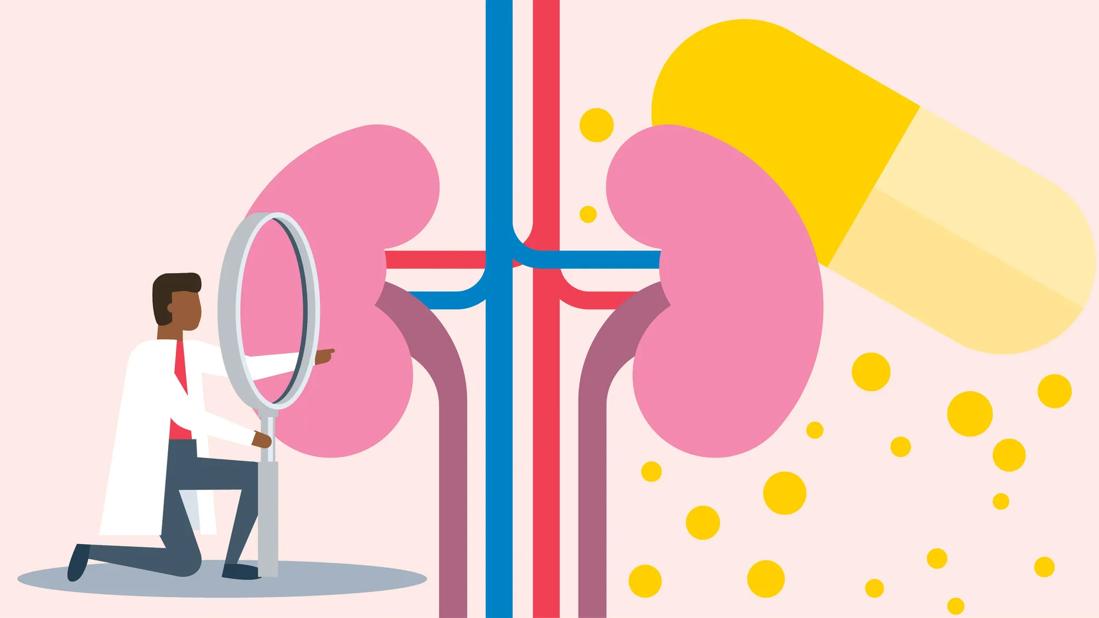
Image content: This image is available to view online.
View image online (https://assets.clevelandclinic.org/transform/adc71644-2561-4413-bd16-9b76abd55c77/doc-checks-kidneys-1479248677)
Early Kidney Transplant Referral: Addressing Common Eligibility Misconceptions
More than 90,000 Americans are currently waiting for a kidney transplant, and most are already on dialysis. But for many patients with chronic kidney disease (CKD), that path could look very different.
Advertisement
Cleveland Clinic is a non-profit academic medical center. Advertising on our site helps support our mission. We do not endorse non-Cleveland Clinic products or services. Policy
Preemptive kidney transplantation – receiving a transplant before starting dialysis – is the optimal treatment for eligible patients with end-stage renal disease (ESRD). It offers better survival, improved long-term outcomes, and a higher quality of life.
Yet, the proportion of patients waitlisted prior to dialysis remained low at just 5.8% in 2024, according to the latest report from the National Institute of Diabetes and Digestive and Kidney Diseases (NIDDK).
“Most patients are referred for transplant evaluation late in the course of their disease,” confirms Neerja Agrawal, MD, Medical Director of the Kidney Transplant Program at Cleveland Clinic’s Transplant Center in Weston, Florida. “We receive over 1,500 kidney transplant referrals each year, and about 60% of patients we evaluate are already on dialysis.”
Patients typically start dialysis therapy when kidney function drops below 15% – a glomerular filtration rate (GFR) of <15 mL/min (stage 5 CKD). Severe symptoms may also require initiation of dialysis, such as trouble breathing from fluid overload, fatigue, loss of appetite, persistent nausea/vomiting, and confusion.
While life-sustaining, dialysis doesn’t replicate normal kidney function. It’s associated with more complications, more hospitalizations, and persistent cardiovascular risk.
Research also has shown pre-transplant dialysis duration is an independent risk factor for patient death and graft failure in deceased donor kidney transplant recipients. “Patients who receive a transplant earlier or preemptively do better across the board,” agrees Dr. Agrawal.
Advertisement
Timely referral for kidney transplant evaluation is a key determinant of access to preemptive transplantation. Referral is recommended when a patient’s GFR reaches 30 mL/min or below (stage 4 CKD).
“This timing allows sufficient opportunity for education, evaluation and eventual waitlisting once GFR declines to 20 or below,” explains Dr. Agrawal. “Early referral ensures patients are prepared to be listed immediately upon reaching this threshold and before reaching end-stage disease or requiring dialysis.”
She also points out that minorities are more likely to be referred late for kidney transplant evaluation and less likely to be listed prior to dialysis. A recent policy change by the Organ Procurement and Transplantation Network, however, has improved equity in transplant access by addressing prior use of race-based estimated GFR calculations (eGFR).
The 2023 update allows Black kidney transplant candidates to backdate their wait time based on race-neutral eGFR calculations. This change has already led to increased transplant rates and shorter wait times, with a reported increase of 5.3 transplants per 1,000 Black candidates.
Living donor kidney transplantation represents another critical opportunity to improve outcomes. According to the NIDDK, one-year allograft survival rates are higher for living donor transplants (98%) compared to deceased donor transplants (94%).
But less than 25% of kidneys transplanted in 2025 were from living donors, reports the United Network for Organ Sharing (UNOS).
Advertisement
“Referring patients early gives them the chance to identify potential donors and complete evaluations, making preemptive transplant more achievable,” emphasizes Dr. Agrawal, who also serves as Director of the Living Donor Kidney Transplant Program at Cleveland Clinic in Florida.
A major barrier to timely referral are persistent misconceptions among providers and patients regarding transplant eligibility.
Patients often share these same misconceptions, assuming they’re “too old” or “too sick.” Dr. Agrawal stresses the importance of shifting this mindset.
“I truly believe every patient with chronic kidney disease deserves an evaluation by a transplant nephrologist,” she says. “Let us make the decision whether a patient is eligible or not.”
Transplant evaluations are a multidisciplinary process conducted by a team of nephrologists, surgeons, pharmacists, social workers, and dietitians. At Cleveland Clinic in Florida, cases are reviewed in weekly selection meetings, with approximately 15-20 patients discussed per session.
Advertisement
“An evaluation typically take 90 days or longer, depending on comorbidities and testing requirements,” adds Dr. Agrawal. “It’s another reason early referral is essential.”
Efforts to improve access to transplantation increasingly focus on reducing logistical and socioeconomic barriers. Strategies used at Cleveland Clinic in Florida include:
“We are focused on earlier engagement and ways to determine candidacy efficiently, particularly for patients in remote or underserved areas,” Dr. Agrawal notes.
Optimal transplant outcomes depend on coordinated care across the clinical continuum. Primary care physicians play a critical role in early CKD detection and timely referral to nephrology.
Nephrologists, in turn, must initiate transplant referral at the appropriate stage. In addition to a GFR of 30 mL/min or below, other important referral indicators include:
“Early recognition, early education and early referral gives the patient the best chance for a preemptive kidney transplant with fewer complications and better long-term survival,” says Dr. Agrawal.
Preemptive kidney transplantation remains underutilized despite clear evidence of its benefits. Delayed referral – often driven by misconceptions about eligibility – continues to limit patient access to optimal care.
Advertisement
For physicians managing patients with CKD, the message is clear: refer early, ideally once the patient has a GFR of 30 or below. Transplant centers are best equipped to determine candidacy, guide patients through the evaluation process, and expand access to both deceased and living donor transplantation.
Advertisement
Cleveland Clinic in Florida explores extended reality for multimodality image guidance

The American Society of Clinical Oncology (ASCO) recently released updated guidelines

Cleveland Clinic's transplant team in Florida is using circulatory-death donor hearts to expand transplant opportunities for patients.

Repair of tiny lymphatic vessels offers big relief for patients with lymphedema after cancer surgery
AI-enhanced mammography improves cancer detection and may support more personalized screening strategies

The Center for Neurological Restoration offers a structured, multidisciplinary approach to conditions that often require longitudinal management and escalation beyond first-line therapies
Multidisciplinary expertise provides advanced evaluation, second opinions and personalized treatment planning for patients with challenging cerebrovascular disorders
Study highlights strong predictive value of circulating tumor DNA testing
 Search