Locations:





Physical therapy before surgery is intended to optimize outcomes after surgery
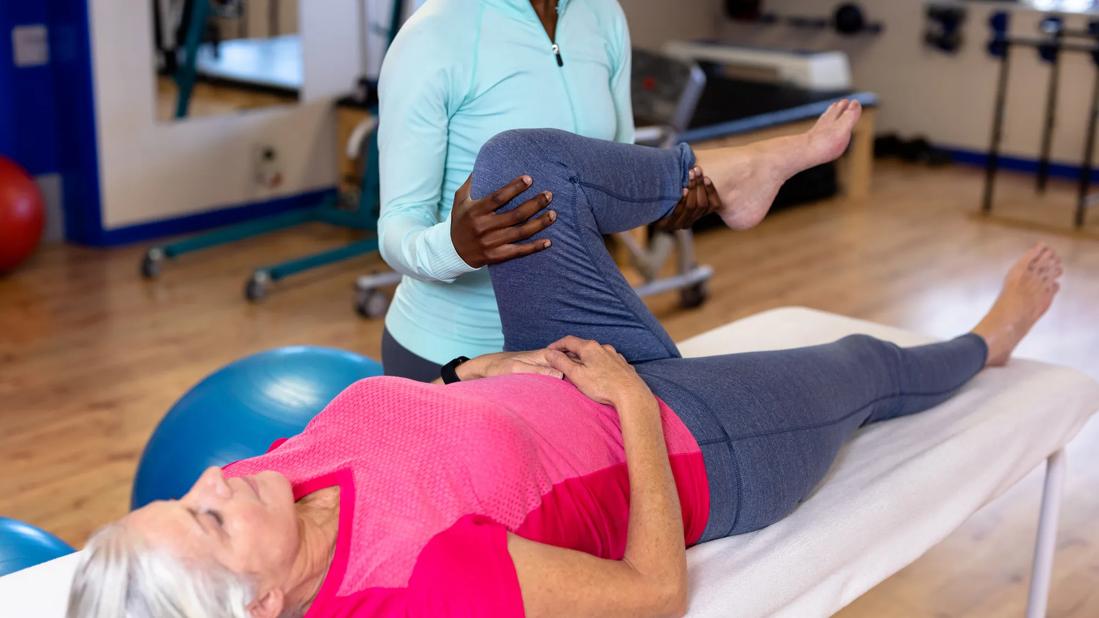
Image content: This image is available to view online.
View image online (https://assets.clevelandclinic.org/transform/79d4b09e-50b4-4906-b44c-ff09187c339b/elderly-woman-knee-rehab-1166594906)
Woman with a physical therapist moving her knee
Prehabilitation — optimizing a patient’s condition before surgery to help optimize their outcomes after it — is especially important in total joint replacement, says Gary Calabrese, DPT, Senior Director of Rehabilitation and Sports Therapy at Cleveland Clinic.
Advertisement
Cleveland Clinic is a non-profit academic medical center. Advertising on our site helps support our mission. We do not endorse non-Cleveland Clinic products or services. Policy
Patients needing total joint replacement typically have adapted to reduced joint function and increased pain over time. Prehabilitation can help them begin to undo these adaptations by optimizing tissues and modifying behaviors, preparing their body for restoration after surgery.
“The goal of prehabilitation is to help patients reduce complications and length of stay postoperatively, as well as enhance overall quality of life and function,” says Dr. Calabrese. “This involves gathering baseline information and designing a program to maximize their functional capabilities and strength and prepare them mentally for what to expect regarding their pain level, function and stages of recovery.”
Prehabilitation is offered to all patients preparing for total replacement of any joint at Cleveland Clinic.
“When someone tears their ACL, the repair and recovery process is usually a lot like what others go through with the same injury,” says Dr. Calabrese. “For a total joint replacement, however, no patient is the same. Every starting point is different. Every trajectory is different. To plan a patient’s return to function and prepare the patient for what to expect in the short-, mid- and long-term, we must conduct an individual assessment.”
Cleveland Clinic uses a systematic approach to assess patients. For example, this battery of tests is used for patients planning a hip or knee replacement:
Advertisement
Physical therapists also review patient-reported outcome scores to assess health-related quality of life.
The combination of these data helps physical therapists customize a patient’s prehabilitation regimen.
“Our goals are to evaluate each patient’s preoperative pain, fitness level and impairments that might affect their functional outcome of total joint replacement,” says Dr. Calabrese. “Then, to offset these, we design a custom physical therapy program, including type, intensity and duration of exercise.”
While interventions are always individualized, there are some standards.
For knee replacement, programs typically include:
For hip replacement, programs usually add strengthening exercises for hip abductors and adductors, as well as stretching to improve lower back flexibility.
For shoulder replacement, depending on the type of surgery and plan for recovery, prehabilitation can include postural and scapular exercises as well as isometric rotator cuff exercises as tolerated.
“Patients may see us for only one or two prehabilitation visits, but then we follow them through electronic health record messaging, wearable technologies and apps where they can input metrics as they complete the program on their own,” Dr. Calabrese says.
Advertisement
Patients with preoperative pain or mobility limitations still can complete a prehabilitation program.
In addition to advising use of cold therapy and nonsteroidal anti-inflammatory medications, physical therapists teach patients isometric exercises, which can reduce perceived pain in a joint. They also advise patients to move within their pain-free range of motion (e.g., knee flexion within a range of 30-60 degrees).
Manual distraction of a joint also can help relieve pain by creating space between articular surfaces. Patients can be taught self-mobilization of a painful joint, using a roller, ball or other tools.
“The success of a prehabilitation program depends on engaging the patient,” Dr. Calabrese says. “We can set a recovery plan and explain to a patient how we’ll help them, but the patient needs to accept their role in the process. A well-educated patient who follows through on the plan is key.”
Advertisement
Advertisement

PTs’ roles as educators and translators make them a natural fit for informatics

Recognizing mobility as a human right is instrumental to change

Even patients with reported penicillin allergies can receive it without increased complications

Recognition could help guide health policy, workforce development and resource allocation worldwide

Infants with > 30° of cervical tightness were also more likely to be younger at evaluation
Multidisciplinary care can make arthroplasty a safe option even for patients with low ejection fraction
Dr. Piuzzi wins 2025 Kappa Delta Young Investigator Award for pioneering work
Fellows’ research shows quality of arthroplasty training
 Search