Locations:





Reimagining the outpatient neurological visit with routine capture of neuroperformance data
Podcast content: This podcast is available to listen to online.
Listen to podcast online (https://www.buzzsprout.com/2243576/19391857)
When Cleveland Clinic’s new 1-million-square-foot Neurological Institute building opens in early 2027, it will integrate all the neurological care offerings on the organization’s Main Campus under one roof — inpatient and outpatient care, surgery and interventional procedures, imaging and rehabilitation therapy.
Advertisement
Cleveland Clinic is a non-profit academic medical center. Advertising on our site helps support our mission. We do not endorse non-Cleveland Clinic products or services. Policy
“The building will have some spaces that look familiar to people along with some really novel spaces that are going to facilitate unique work and yield unique insights on patients’ health,” says Robert Bermel, MD, a Cleveland Clinic neurologist who’s been closely involved in the building’s design and planning.
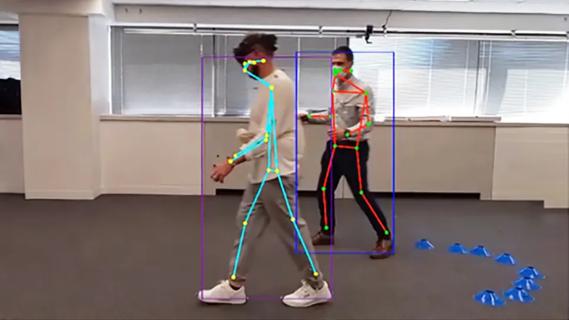
One of those novel spaces is the neurological assessment center, a centralized area where patients arriving for ambulatory visits will complete a series of neuroperformance modules to objectively assess some key measures of neurological function, including:
Data captured in the assessment center will be immediately transferred to the patient’s electronic medical record so that it’s at their treating physician’s disposal at the patient visit a few minutes later. The physician can then review it with the patient and use it to inform management right away.
Advertisement
The rationale behind this first-of-its-kind integration of neuroperformance assessment into routine outpatient practice is the focus of the latest episode of Cleveland Clinic’s Neuro Pathways podcast, which also explores how this assessment will enhance clinical care at the patient level and neurological research at the population level.
The episode’s featured guest is Dr. Bermel, who serves as Director of Cleveland Clinic’s Mellen Center for Multiple Sclerosis Treatment and Research. During the discussion he touches on the following:
Click the podcast player above to listen to the 29-minute episode now or read on for an edited excerpt of its transcript. Check out more Neuro Pathways episodes at clevelandclinic.org/neuropodcast or wherever you get your podcasts.
This activity has been approved for AMA PRA Category 1 Credit™ and ANCC contact hours. After listening to the podcast, you can claim your credit here.
Podcast host Glen Stevens, DO, PhD: Rob, I’ve heard you say that the new Neurological Institute building, including this neurological assessment center, is designed to be a partner in patient care. I think that’s a great concept — that the actual building is a partner in caring for patients.
Advertisement
Robert Bermel, MD: That’s right. The building should contribute to the care of the patient. It should make people feel better as they walk through it. There should be natural light. There should be spaces for family members to gather and be able to spend the night with their loved one if they’re in the hospital. There should be spaces that actually facilitate the care. The spaces should be designed in a way that’s safe for patients. The building should actually be a partner with us and should be a caregiver in itself.
Dr. Stevens: I understand an important part of that is that the building is set up to integrate with the patient to collect data, independent of what clinicians like you or I might do with the patient. Tell us more about that.
Dr. Bermel: Very true. At Cleveland Clinic we’re fortunate to have extremely skilled clinicians, people who have more knowledge in their heads about certain disorders than pretty much anyone else in the world. For patients who have the opportunity to sit down with those providers and the providers who have the time to assess those patients, it’s a wonderful thing.
What we’re trying to do now is to put more information in the hands of those incredible providers and not start the visit with a collection of information where the provider spends most of the visit collecting data about how the patient is doing. Instead, thanks to the patient data captured up front in the neurological assessment center, the provider will be able to spend the time sitting side by side with the patient, actually making treatment decisions and recommendations and assessing how well a treatment may be working. The idea is to turn the provider from a collector of information — using tools like a stethoscope or reflex hammer, where they have to deduce and figure everything out themselves — to an integrator of data and information so they can be a better decision-maker in collaboration with the patient. The aim is to empower providers to use their expert knowledge and the expert tools they have to thoroughly explain things to the patient and better help the patient.
Advertisement
Advertisement
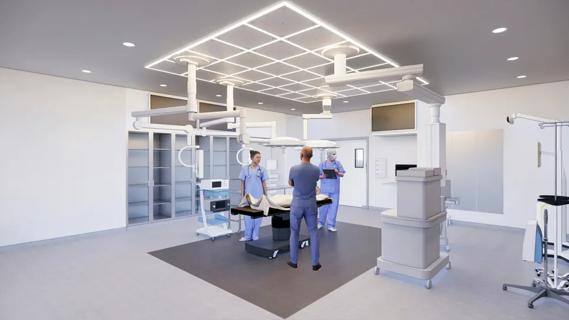
Expanded bevy of dedicated ORs will feature customized designs, leading-edge technology, optimized workflows
Routine capture of standardized neuroperformance data may expand and refine investigations

Advanced surgical suite in our soon-to-open facility promises to redefine care standards
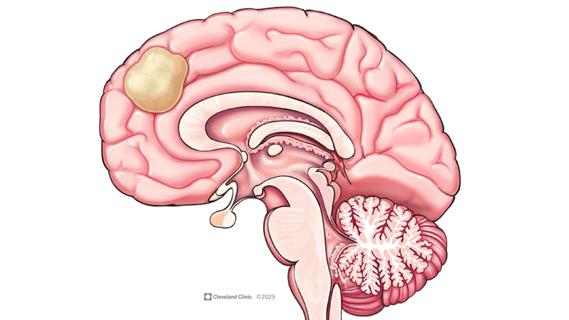
Phase 3 STELLAR trial underscores role of molecular stratification in glioma care
A passionate specialist surveys the field’s past, present and future
Today’s research helps illuminate tomorrow’s needs
Novel ‘assessment center’ will be a partner in care by serving as an engine of structured data collection

What it’s like working in neurology critical care and what to consider before entering the specialty
 Search