Locations:





Symptom burden at presentation is a potent predictor of long-term survival, large analysis shows

Image content: This image is available to view online.
View image online (https://assets.clevelandclinic.org/transform/386ad7d4-2844-439f-b6ad-1d0540fbe9f3/CQD-Long-term-myectomy)
surgical team operating below monitors in an operating room
For patients with obstructive hypertrophic cardiomyopathy (HCM), deciding when to shift from medical management to definitive surgical intervention can be critical. While current guidelines generally reserve septal reduction therapy for patients who remain symptomatic despite optimal drug therapy, a large new analysis of recent Cleveland Clinic experience suggests that earlier intervention may be more beneficial than previously thought.
Advertisement
Cleveland Clinic is a non-profit academic medical center. Advertising on our site helps support our mission. We do not endorse non-Cleveland Clinic products or services. Policy
The study, published in Cardiovascular Research, reveals that a patient’s symptom burden at the time of referral is a powerful predictor of long-term survival following surgical myectomy. “The takeaway is clear: Delaying surgical referral until a patient reaches advanced functional decline is associated with less favorable long-term outcomes, even when the subsequent surgery is a technical success,” says corresponding author Milind Desai, MD, MBA, Director of Cleveland Clinic’s Hypertrophic Cardiomyopathy Center.
Surgical myectomy has long been recognized for its ability to provide definitive relief from dynamic left ventricular outflow tract (LVOT) obstruction in HCM, thereby improving quality of life and survival. However, optimal timing for this procedure has remained uncertain.
Cleveland Clinic researchers sought to find out whether the approach promoted by both European and U.S. guidelines — i.e., watching and waiting for symptoms to become refractory to medical therapy — might inadvertently miss a critical window for intervention. They hypothesized that the physiologic toll of chronic pressure overload, which includes myocardial fibrosis, atrial remodeling and progressive diastolic dysfunction, may become irreversible if allowed to progress too far before the LVOT obstruction is relieved.
In one of the largest analyses of its kind, the researchers retrospectively examined 3,546 patients with obstructive HCM who underwent surgical myectomy at Cleveland Clinic from 2002 to March 2021. “This period preceded the widespread use of cardiac myosin inhibitors, which allowed a clearer look at the disease course and surgical outcomes of these patients,” Dr. Desai explains.
Advertisement
Patients were categorized according to their New York Heart Association (NYHA) functional class at the time of initial referral to the Hypertrophic Cardiomyopathy Center — 361 were in class I, 1,433 in class II and 1,752 in class III or IV.
The primary end point was a composite of all-cause mortality, heart transplantation or appropriate ICD discharge. Multivariable Cox proportional hazard analysis was used to adjust for variables such as age, sex and comorbidities, with myectomy treated as a time-dependent covariate.
Over mean follow-up of 12 years, rates of the composite end point were significantly lower in patients who were referred while in NYHA class I or class II compared with those referred in NYHA classes III/IV:
Even after adjustment for baseline risks, presenting in NYHA class III or IV conferred a 44% higher risk for the composite end point (hazard ratio [HR] = 1.44; 95% CI, 1.13-1.92) and a 37% higher risk of death in particular. Results showed that even patients who initially appeared asymptomatic (i.e., in NYHA class I) eventually developed significant symptoms (class II or III) and substantial gradients by the time of myectomy.
Notably, the rate of the composite end point in the overall cohort during the follow-up period was comparable to that of the age- and sex-matched general U.S. population, whereas the rate among those referred in NYHA classes III or IV was statistically worse than that of the general population.
Advertisement
The analysis demonstrated the overall safety of the myectomy procedure: In-hospital mortality for the entire cohort was low, at 0.3%, with no significant differences seen among the NYHA groups. “This bolsters the observation that the worse outcomes in the patients with advanced symptoms were likely due to an adverse disease substrate rather than to aspects of the operation itself,” says co-author Nicholas Smedira, MD, MBA, Surgical Director of the Center for Hypertrophic Cardiomyopathy.
Another notable finding was that 17% of cases required surgically addressing the mitral valve or the mitral valve and papillary muscles in addition to the septum. This underscores the importance of taking a tailored approach to myectomy, which Dr. Smedira says is critical for completing eliminating the obstruction.
“We’ve learned that patients tend to have a primary septal problem, a primary mitral problem or a combination of the two,” Dr. Smedira explains. “We use imaging and additional intraoperative testing to determine the best operative approach to take.”
The analysis also revealed significant sex-based differences in presentation and outcomes. Women were more likely to present with advanced symptoms and faced a higher adjusted risk for the composite end point (HR = 1.52; 95% CI, 1.30-1.81). The authors note that these findings suggest a potential diagnostic delay or barrier to referral for female patients, highlighting a need for heightened clinical suspicion and earlier evaluation in this population.
Advertisement
The authors note that the results of this observational study are hypothesis-generating and ultimately require prospective confirmation. They also note that in the current era of cardiac myosin inhibitors, the decision between earlier referral for surgical myectomy or first starting therapy with mavacamten or aficamten needs to be balanced — again, ideally with guidance from a prospective controlled trial.
Despite these caveats, the researchers conclude that this analysis provides a compelling argument for proactive management strategies in obstructive HCM. “Surgical myectomy at high-volume centers remains extremely safe, but its ability to modify long-term survival is greatest when performed before the onset of advanced heart failure symptoms,” Dr. Desai says.
He continues: “Our data suggest that once clear symptoms and LVOT obstruction are present, the clock is ticking. Progression to NYHA class III or IV disease is often accompanied by comorbidities like atrial fibrillation and advanced mitral regurgitation, which further complicate the clinical course. For this reason, NYHA class II symptoms should generally be viewed not as a stable state to be managed indefinitely but as a potential sign to begin the conversation about definitive intervention.”
The study was funded by unrestricted philanthropic gifts, with no industry support.
Advertisement
Advertisement
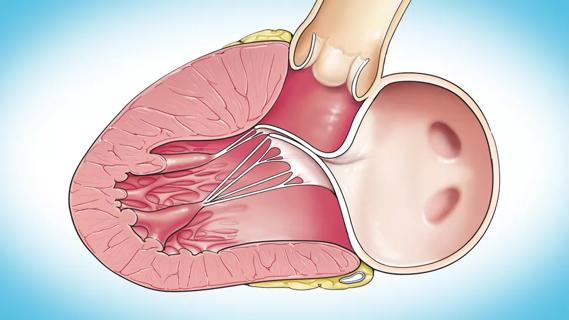
Large single-center series demonstrates safety and efficacy for extending procedure
But improvements didn’t correlate closely with physician-assigned NYHA class, study finds
A snapshot of key stats from one of the world's busiest centers

End-of-treatment VALOR-HCM analyses reassure on use in women, suggest disease-modifying potential

Cardiac imaging substudy is the latest paper originating from the VANISH trial

Vigilance for symptom emergence matters, a large 20-year analysis reveals
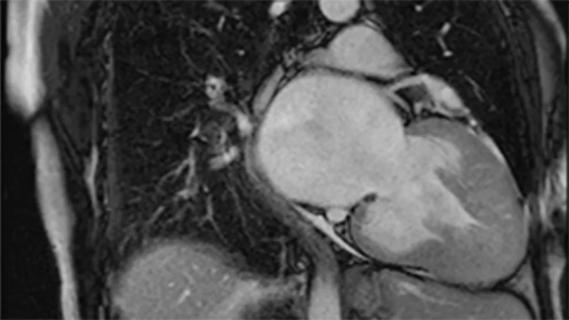
Phase 3 ODYSSEY-HCM trial of mavacamten leaves lingering questions about potential broader use
Our latest performance data in these areas plus HOCM and pericarditis
 Search