Locations:


Cleveland Clinic program combines traditional pulmonary care with integrative strategies to treat disease and improve breathing, movement and function
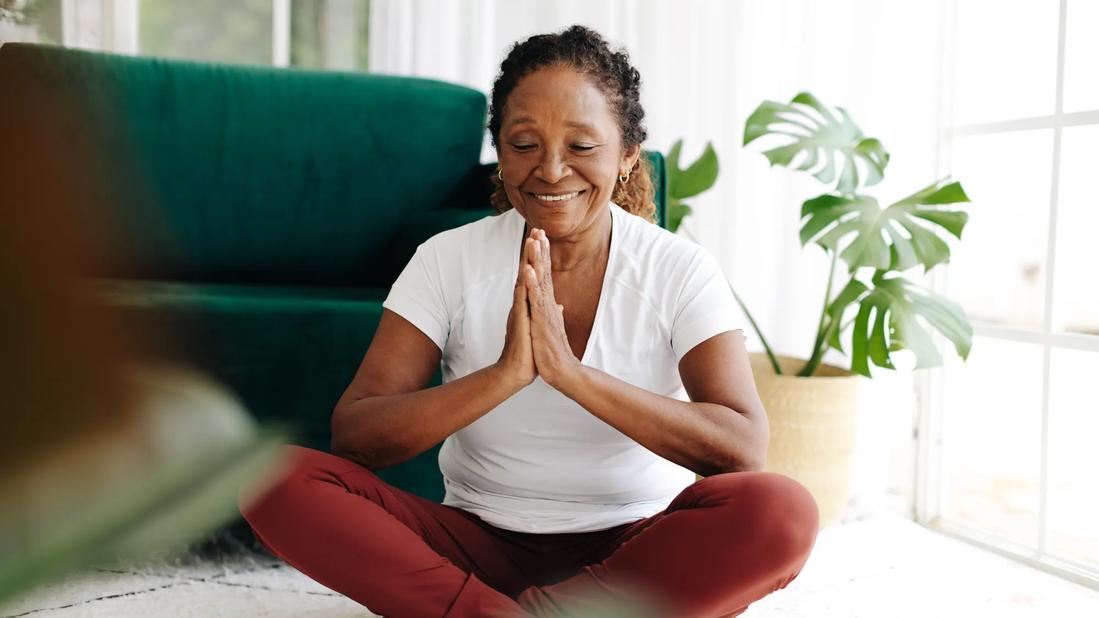
Image content: This image is available to view online.
View image online (https://assets.clevelandclinic.org/transform/8093e580-6ba0-4fe9-8bb4-003ce0cacf92/Lung-Disease-1682189063)
Patient doing yoga
Although evidence-based medications are central to pulmonary care, Angela Wang, MD, saw that many of her patients continued to experience debilitating breathlessness and other symptoms that reduced their quality of life despite appropriate treatment. She felt that while medications treat specific pulmonary diseases, they did not usually improve symptom burden or quality of life. In fact, some drugs actually made patients feel worse due to side effects.
Advertisement
Cleveland Clinic is a non-profit academic medical center. Advertising on our site helps support our mission. We do not endorse non-Cleveland Clinic products or services. Policy
“Lung wellness is broader than disease management: it’s about helping patients breathe better, function better and feel better through a comprehensive, integrative approach,” says Dr. Wang, Director of Cleveland Clinic Lung Wellness Clinic. Many patients are suffering from pain and other comorbidities that affect their breathing. It’s important to address these issues as part of a broader treatment program that actually improves patient well-being.
This broader view of pulmonary care led to the development of Cleveland Clinic’s Lung Wellness Clinic, which focuses not only on fundamentals such as diet, exercise and sleep but also incorporates complementary therapies such as breath training and osteopathic manipulative medicine to support respiratory wellness and improve breathlessness.
“The main tenet of our clinic is a focus on what else can be done to help patients breathe better and function better,” she explains. “Because of our approach towards individualized care for each patient, we accomplish this in a variety of ways.”
Dr. Wang, who co-founded and directed the Long COVID Clinic at UC San Diego Health, treated patients with persistent dyspnea even when traditional pulmonary testing did not initially reveal clear abnormalities. By more thoroughly analyzing Pulmonary Function Testing and imaging, she was able to come up with findings that at least partly explained patients’ breathlessness and working with colleagues, design an innovative, holistic approach designed to support patients with chronic respiratory symptoms.
Advertisement
She saw that these therapies could be applied to patients with chronic lung diseases as well. “Patients with chronic lung disease may receive inhalers or other therapies, but, at the end of the day, they still felt poorly,” she says. “We know that pulmonary rehab is the single most effective therapy for patients with COPD and other chronic lung diseases, but it’s not always available or reimbursed for every patient. I knew we could be doing more for patients, and Cleveland Clinic brought me here in 2025 to help build that model through its Lung Wellness Clinic.”
Dr. Wang explains good candidates include patients with chronic lung disease who need or want a broader care plan or who continue to experience dyspnea or poor quality of life despite treatment. The clinic also sees patients with unexplained dyspnea, symptoms that seem disproportionate to test results, chronic cough or other respiratory concerns who want a more in-depth, comprehensive approach to care.
For Dr. Wang, lung wellness starts with evaluating the full set of factors that can contribute to breathlessness, from breathing mechanics and physical conditioning to diet, sleep and stress.
Just as gait can be retrained after a foot injury, breathing patterns and mechanics can be observed and optimized.
“Most people don't think about how they're breathing and whether they're using their respiratory muscles most efficiently,” explains Dr. Wang.
Diet is another major tenet of lung wellness, and Dr. Wang recommends an anti-inflammatory diet to help lower lung inflammation and improve overall (respiratory) health. Many patients suffer from chronic GI issues, arthritis or back pain. Dietary changes can also contribute to weight loss, which can reduce shortness of breath in patients with chronic lung disease.
Advertisement
“A healthy, anti-inflammatory diet can help reduce reflux, which is commonly associated with chronic lung disease and can worsen breathing discomfort,” she explains.
Exercise helps by improving strength and fitness so muscles work more efficiently and patients can tolerate more activity. For patients with chronic lung disease, improving strength and endurance can help break the cycle in which breathlessness leads to inactivity, deconditioning and even greater symptom burden.
Finally, sleep helps the body restore and regulate itself, which matters for energy, healing, inflammation, mood and overall resilience. In the context of lung wellness, poor sleep can worsen fatigue and diminish a patient's tolerance for activity.
“Sleep is when our bodies and brain restore themselves,” says Dr. Wang, noting that quality of sleep — not just quantity — is critical to overall health and wellness.
During a patient’s initial visit to the Lung Wellness Clinic, Dr. Wang first goes over the patient's history.
“Their history is the most important part of the visit, because if you do a good history, the patient will literally tell you what they have; 90% of diagnoses is made during the history. There is a “language of dyspnea” — distinctions such as difficulty breathing in versus breathing out or chest tightness that will tell you what the diagnosis is.
“I like to hear in patients' own words about what has been going on, what has been tried and what has or has not helped them,” she says.
Because dyspnea is not always explained by lung function alone, breathing mechanics are an important part of the evaluation—How well and efficiently are they using their respiratory muscles?
Advertisement
“Even before I put my stethoscope on them, I observe how they breathe,” explains Dr. Wang. “I’m looking at how they're using their neck muscles, their shoulder muscles, their rib cage, their diaphragm and their abdomen. It's all one system.”
After the physical exam, she’ll review any prior tests that have been done. From there, she’ll develop a treatment plan.
“It has to be a treatment plan that works for the patient,” she says. “It’s not me telling them what to do. It’s us talking about what their goals are and working with them to develop a feasible and actionable plan.”
That often means starting with small, realistic changes that help patients build confidence and momentum before progressing further.
Follow-up visits include both in-person and virtual options when appropriate.
Dr. Wang explains that one of the ways the Lung Wellness Clinic differs from traditional pulmonary care is its use of integrative therapies. Acupuncture, osteopathic manipulative treatment/chiropractic medicine, physical therapy and individualized yoga therapy are all incorporated into treatment when appropriate.
“These therapies are intended to help patients move more comfortably and breathe more efficiently, particularly when pain, muscle tension or deconditioning are contributing to their symptoms,” says Dr. Wang.
For many patients, pain and breathlessness reinforce each other: when a patient hurts or feels short of breath, they move less. When they move less, they become deconditioned, which can worsen symptoms. The Lung Wellness Clinic uses these integrative therapies to help break that cycle by improving comfort, mobility, breath awareness and coordination between breathing and movement.
Advertisement
“Yoga therapy, which is led by Paula Brown, MBA, C-IAYT, E-RYT500, really encompasses this,” says Dr. Wang. “It helps patients build breath awareness, coordinate breathing with movement and develop strategies to breathe more efficiently during activity.”
While the Lung Wellness Clinic shares some goals with pulmonary rehabilitation, Dr. Wang says the two approaches are distinct but complementary. Pulmonary rehab is highly effective and focuses primarily on exercise training, including cardiovascular conditioning and strengthening, along with education about breathing techniques, nutrition and disease management.
The Lung Wellness Clinic takes a broader, more individualized approach that may include pulmonary medications, lifestyle changes, breathing retraining, nonpharmacologic pain strategies and integrative therapies. It also may be an option for patients who do not qualify for pulmonary rehab or whose symptoms require a more comprehensive evaluation.
Dr. Wang also explains that at the Lung Wellness Clinic, success is measured less by a single test result and more by whether the patient feels and functions better. That may include improvements in breathlessness, activity tolerance, confidence, outlook and quality of life.
“A lot of my patients are just appreciative because they feel hopeful that there's a way forward,” says Dr. Wang.
That sense of possibility, she says, is central to the clinic’s mission: helping patients look beyond disease control and toward better function, comfort and quality of life.
Advertisement

Well-being initiative aims to prevent chronic disease

When to refer your patient and other considerations for care

How to create a culture of mobility and safe patient handling

Music therapists provide solace, help patients meet therapeutic goals

Highest response rates seen with stress-lowering techniques like yoga, meditation and mindfulness

A look at the emerging link between intermittent hypoxia and broader health effects in COPD

The Center for Environment, Place and Health Research connects clinicians with mapping tools and other real-world data resources to help guide medical insights

How wellness habits help nurses flourish
 Search