Locations:





Phase 1 trial shows up to 97% decrease through 48 weeks with good tolerability

Image content: This image is available to view online.
View image online (https://assets.clevelandclinic.org/transform/fd8d9ef3-3b18-4e17-ae2d-470c0da8a07d/LpA_Cover_19HVI1792159-jpg)
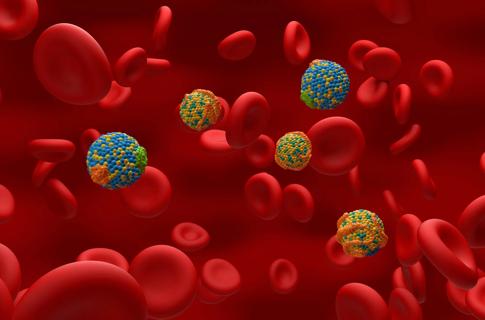
stylized illustration of cholesterol particle floating in bloodstream
A single dose of a novel long-duration small interfering RNA (siRNA) was well tolerated and associated with profound and extremely durable reductions in serum lipoprotein(a) levels in a phase 1 trial.
Advertisement
Cleveland Clinic is a non-profit academic medical center. Advertising on our site helps support our mission. We do not endorse non-Cleveland Clinic products or services. Policy
Results of this first-in-human study of the agent, known as Kylo-11, were presented in a late-breaking science session at the European Society of Cardiology Congress 2026 and simultaneously published in The Lancet.
The greatest reductions in lipoprotein(a), or Lp(a), were seen with Kylo-11 doses of 225 mg or higher, with the 600-mg dose yielding a 97% median reduction from baseline at 48 weeks following a single injection.
“This may be the longest-duration Lp(a) lowering of this magnitude that’s been observed in a clinical trial to date,” says the study’s first author, Ashish Sarraju, MD, staff physician in Cleveland Clinic’s Section of Preventive Cardiology. “If Kylo-11’s potential is borne out in subsequent studies and clinical outcome trials, its long-acting nature may help overcome the adherence or logistical issues we see with other dyslipidemia therapies that require much more frequent dosing.”
“A single moderate dose of 225 mg reduced Lp(a) to very low levels, with no evidence of a return toward baseline all the way out to 48 weeks,” adds senior author Steven Nissen, MD, Chief Academic Officer of Cleveland Clinic’s Heart, Vascular & Thoracic Institute. “It’s among the best Lp(a) reduction we’ve seen yet.” As a leader of the Cleveland Clinic Coordinating Center for Clinical Research (C5Research), he has been involved in clinical trials of several other investigational therapies for Lp(a) lowering.
Elevated Lp(a) is genetically determined and strongly associated with risk of atherosclerotic cardiovascular disease (ASCVD) and aortic stenosis. Current therapies, including lifestyle modification, statins and PCSK9 inhibitors, have limited or modest effects on Lp(a) levels, and no pharmacologic treatment has been approved for lowering Lp(a) to reduce cardiovascular events independently of LDL cholesterol reduction.
Advertisement
A number of siRNA therapies are in clinical development to treat elevated Lp(a). Kylo-11 stands out from the others in that it is uniquely conjugated with four GalNAc moieties — two on each strand— which is thought to potentially enhance its hepatic uptake. “This structure with GalNAc conjugation on the sense and antisense siRNA strands may help the liver retain the drug, which may promote resistance to degradation and confer its strong durability,” Dr. Sarraju explains. “That’s the working hypothesis.”
The trial included 70 healthy individuals aged 18 to 55 years with elevated Lp(a) concentrations. Participants were randomized in a double-blind fashion to receive a single subcutaneous dose of Kylo-11 or placebo across seven dosing cohorts. Those with baseline Lp(a) levels of 75 to 200 nmol/L were randomized to Kylo-11 doses of 9, 30, 75, 225, 450 or 600 mg (n = 8 for each dose) or placebo (n = 14); an additional eight participants with baseline Lp(a) levels greater than 200 nmol/L were assigned to a second cohort receiving a dose of 225 mg.
The primary end point was safety, assessed in terms of incidence and severity of adverse events through 24 weeks. Secondary end points included absolute and percent changes in serum Lp(a) levels at 48 weeks.
The study was conducted at a single site in China, the home country of the company developing Kylo-11. Cleveland Clinic’s C5Research was invited by this company to serve as the academic research organization for the study. In this role, Drs. Sarraju and Nissen and others at C5Research provided input on trial design and interpretation as well as independent analysis of trial data using C5Research statisticians.
Advertisement
Median participant age was 27 years. Median baseline Lp(a) level ranged from 103.7 to 134.5 nmol/L across the various cohorts with Lp(a) of 200 nmol/L or less; it was 217.7 nmol/L among the eight participants in the cohort with high baseline Lp(a) ( >200 nmol/L).
The study drug was well tolerated. Adverse events occurred in 52.9% of participants by 24 weeks (61.4% by 48 weeks), were mostly mild to moderate (grade 1 or 2) and showed no dose-related increase. There were no serious adverse events, no injection-site reactions and no deaths. The study’s three transient grade 3 or higher-grade events (one in the placebo arm) were deemed to be unrelated to study drug. Immunogenicity was low and comparable between the Kylo-11 and placebo groups.
Kylo-11 was associated with dose-dependent and enduring reductions in serum Lp(a) levels through 48 weeks, as detailed in the table below.
| Dose | Median percent change in Lp(a) | Median absolute change in Lp(a) |
|---|---|---|
| Placebo | 6.6% | 9.9 nmol/L |
| 9 mg | –53.2% | –70.9 nmol/L |
| 30 mg | –77.6% | –84.2 nmol/L |
| 75 mg | –89.3% | –103.0 nmol/L |
| 225 mg | –94.6% | –108.6 nmol/L |
| 450 mg | –96.3% | –120.9 nmol/L |
| 600 mg | –97.0% | –129.1 nmol/L |
| 225 mg in high Lp(a) cohort | –95.6% | –207.7 nmol/L |
| Dose | ||
| Placebo | ||
| Median percent change in Lp(a) | ||
| 6.6% | ||
| Median absolute change in Lp(a) | ||
| 9.9 nmol/L | ||
| 9 mg | ||
| Median percent change in Lp(a) | ||
| –53.2% | ||
| Median absolute change in Lp(a) | ||
| –70.9 nmol/L | ||
| 30 mg | ||
| Median percent change in Lp(a) | ||
| –77.6% | ||
| Median absolute change in Lp(a) | ||
| –84.2 nmol/L | ||
| 75 mg | ||
| Median percent change in Lp(a) | ||
| –89.3% | ||
| Median absolute change in Lp(a) | ||
| –103.0 nmol/L | ||
| 225 mg | ||
| Median percent change in Lp(a) | ||
| –94.6% | ||
| Median absolute change in Lp(a) | ||
| –108.6 nmol/L | ||
| 450 mg | ||
| Median percent change in Lp(a) | ||
| –96.3% | ||
| Median absolute change in Lp(a) | ||
| –120.9 nmol/L | ||
| 600 mg | ||
| Median percent change in Lp(a) | ||
| –97.0% | ||
| Median absolute change in Lp(a) | ||
| –129.1 nmol/L | ||
| 225 mg in high Lp(a) cohort | ||
| Median percent change in Lp(a) | ||
| –95.6% | ||
| Median absolute change in Lp(a) | ||
| –207.7 nmol/L |
Lower doses showed some attenuation of effect over time, whereas doses of 225 mg or higher maintained near-peak Lp(a) reductions through 48 weeks. Near-maximal reductions were generally achieved by four weeks after dosing.
“In addition to providing reassurance from the absence of any drug-related serious adverse events, these results reveal a very high level of Lp(a) reduction and a very prolonged reduction following a single dose of Kylo-11, especially at doses of 225 mg or more,” says Dr. Sarraju.
Despite this promise, much future study remains, including assessment of repeated dosing, use in heterogeneous populations and, ultimately, evaluation of clinical outcomes. A larger phase 2 trial is already underway, assessing three different dose strengths of Kylo-11 against placebo among adults with ASCVD and elevated Lp(a) (NCT07327840). Cleveland Clinic’s C5Research is again providing academic leadership for that trial, which includes sites in the U.S. and China.
Advertisement
For now, Dr. Sarraju says the most notable finding seen with Kylo-11 may be the duration of its Lp(a)-lowering effect, which could potentially enable dosing on an annual basis. “That could be very useful from the standpoint of patient acceptance and adherence,” Dr. Sarraju notes. “Based on adherence rates with statins and PCSK9 inhibitors, we need to be cognizant of taking adherence into account when we’re developing new therapies for new targets.”
The study was funded by Kylonova Biopharma, which is developing Kylo-11.
Advertisement
Advertisement

Post hoc ALPACA analysis boosts biological rationale for ongoing outcomes trial of lepodisiran

How to talk about lifetime risk, treatment goals, Lp(a) testing, statin skepticism and more

Phase 3 TANDEM study may help pave way to first approval of a CETP inhibitor

Yet 21.4% of tested individuals had Lp(a) elevation
Small interfering RNA lowered lipoprotein(a) by 94% during six-month follow-up after a single dose

Phase 2 trial of zerlasiran yields first demonstration of longer effect with each dose of an siRNA

Reassurance from the lipid outcomes trial with the highest percentage female enrollment to date

Tech-assisted self-selection concurred with clinician-assessed eligibility in >90% of cases
 Search