Locations:





Creativity and perseverance help scrub tech transform a simple surgical cup into a patented medical device
Image content: This image is available to view online.
View image online (https://assets.clevelandclinic.org/transform/9b89eb10-9323-4ed9-a0a7-206e285fa143/Nurse-Inventor-Guillermo-Ortiz-Blanco-CQD_967x544)
Portrait of Guillermo Ortiz Blanco, CST
The Nurse Inventor Spotlight series features Cleveland Clinic caregivers who have embarked on the innovation journey. Here, they share what they find inspiring about their role, how they identified an unmet need, what innovation means to them and how their solution could affect both patients and caregivers.
Advertisement
Cleveland Clinic is a non-profit academic medical center. Advertising on our site helps support our mission. We do not endorse non-Cleveland Clinic products or services. Policy
This installment features inventor Guillermo Ortiz Blanco, CST, a Certified Surgical Technologist whose extensive neuro-orthopaedic experience inspired him to rethink the collection of bone-graft materials for spinal fusion procedures. Here, he shares how his collaboration with Cleveland Clinic Innovations helped transform a simple surgical cup into a patented medical device designed to enhance patient outcomes and surgical efficiency worldwide.
Prior to joining Hillcrest Hospital 24 years ago, Ortiz Blanco served as a medic in the United States Army. He credits his active-duty experience with teaching him the value of teamwork and perseverance — skills he's found invaluable during his innovation journey.
Q: What problem were you seeking to solve with your invention?
A: I realized we didn't have a good way to effectively or easily collect bone dust and shavings in the operating room for bone grafts. So in 2017, I came up with a unique solution that I thought could solve a huge problem. I tapped into my creative side and immediately started piecing a device together from sterile surgical supply packs. I eventually made a rough prototype, which has evolved into a patented product in its first phase.
I initially shared my prototype with John Butler, MD, a neurosurgeon who gave me the green light to use it in an upcoming case. The case involved a spinal decompression, which allowed me to work on improving and testing the device. The first time the surgical cup was used in the OR, I was amazed by how easy it made things.
Advertisement
I later tweaked the design to better filter out fluids while preserving the bone dust particles.
Q: How did your innovation journey unfold?
A: I started collaborating with Cleveland Clinic Innovations in 2019, which was a little nerve-racking at first. I didn't expect a yes; I expected a maybe or a no. But I followed my gut instincts based on the reactions I was getting from surgeons. There was definitely a "wow factor" when they saw the amount of bone the device could collect.
Unfortunately, the COVID-19 pandemic delayed my innovation journey. In 2021, I started working with Bill Kolosi from Cleveland Clinic's Business Development and Licensing team, and the process gained momentum. When he told me that my device could be patented, it went from a vision to a solid yes.
My invention was eventually put on the Patent Prosecution Highway — an expedited patent application process based on the potential my invention possessed. It’s a cool feeling to have the organization's support and know there's no other device like it out there.
Q: Where does your invention stand now?
A: The device is now patented through Cleveland Clinic. The next steps are to license and manufacture it, and eventually make the product commercially available. My goal is for it to be used during spinal fusions and any other procedures that require the collection of bone-grafting materials. I envision one day holding it and saying: Wow, can you believe this came from a sterile surgical pack? It was once a basic cup, but look at it now!
Advertisement
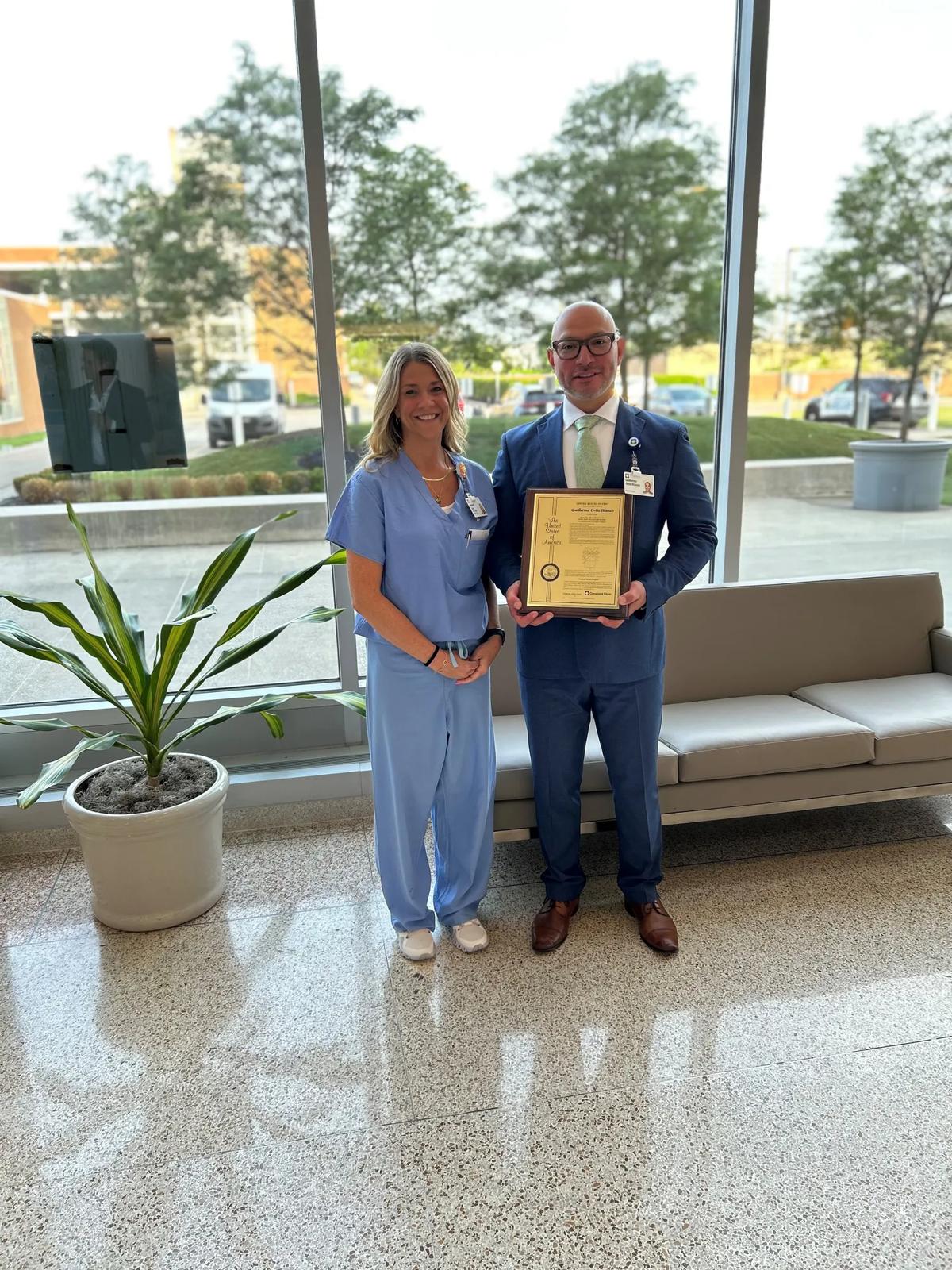
Image content: This image is available to view online.
View image online (https://assets.clevelandclinic.org/transform/aef8bb52-cdd3-4a78-9779-a20d1b59b51a/Guillermo-Ortiz-Blanco_Patent-Plaque-Presentation_4)
Ortiz Blanco poses with Kimberli Cole, MBA, BSN, RN, Nurse Manager, Cleveland Clinic Hillcrest Hospital Surgery Department.
Q: Can you describe what the innovation process has meant to you personally?
A: It's been surreal. The patent plaque presentation made me feel like I was on a cloud (pictured above). Having my family there with the surgeons who have supported me — words can't describe the feeling. It was almost like winning an Academy Award!
I came to the United States in 1986 from a small village in Guatemala. I landed in Cleveland and grew up in a rougher neighborhood on the east side. It wasn't easy, but I discovered my strengths once I joined the military. That experience led me to healthcare and to the invention of this device. Even though I don't have an engineering background, the innovation experience has allowed me to tap into a whole new mindset. It's been amazing.
Q: How do you hope your invention will impact caregivers and patients?
A: Autologous grafting is the gold standard for spinal fusions, and this device has a high success rate. It allows surgeons to avoid the need for biologics and other foreign materials and instead give patients their own bone, cells, blood and morphogenic proteins.
My role doesn’t allow me to follow up with patients post-surgery, but physicians often provide me with updates. They'll say: "Do you remember that difficult fusion we did? The patient's spine is fused, and their outcome is excellent." It's all about giving everyone the best chance for success.
Q: What advice would you provide a colleague who's interested in innovating?
A: Lay hold of your dream and envision it. Don’t give up and quit while you're in the process. You will have periods of doubt — a lot of ups and downs — but keep moving forward. It's all worth it when you hear that your invention has a patent number!
Advertisement
Advertisement
Translating clinical questions into meaningful, sustainable change
Guidance for creating a relevant framework that reflects organizational values, supports professional practice
Helping patients recognize respiratory changes, navigate treatment barriers and stay connected to their clinical team
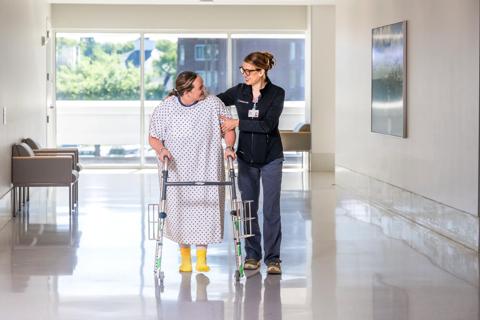
Initiative provides hands-on opportunities to promote early, progressive activity
Continuing to grow by following the right path at the right time
Teaching caregivers to recognize warning signs, de-escalate difficult situations and maintain professional boundaries

Veteran caregivers offer practical wisdom for building confidence and practicing with purpose
Skill, dedication and a passion for women and children inspire this joy-filled specialty
 Search