Locations:





Skill, dedication and a passion for women and children inspire this joy-filled specialty
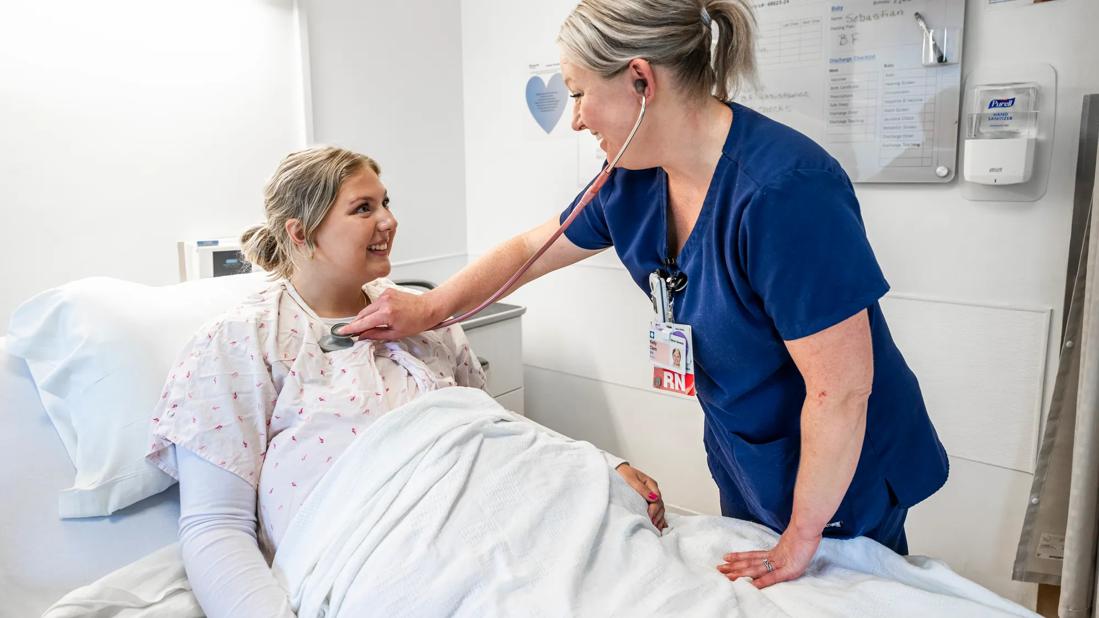
Image content: This image is available to view online.
View image online (https://assets.clevelandclinic.org/transform/5af725f1-9bf4-4f79-b91f-5b1d875e56e9/NUR_4050261_07-18-23_264_MLC-jpg)
Nurse with pregnant patient
Cleveland Clinic Fairview Hospital is the second-busiest obstetrics (OB) hospital in the state of Ohio, delivering more than 5,600 babies in 2025 alone. The hospital’s Birthing Services — which include a triage area, three operating rooms, three PACU beds, 35 postpartum beds, 13 high-risk OB beds, a natural low-risk birthing unit and more — offer abundant opportunities for OB nurses.
Advertisement
Cleveland Clinic is a non-profit academic medical center. Advertising on our site helps support our mission. We do not endorse non-Cleveland Clinic products or services. Policy
“Working in OB is like working in a small hospital within a hospital,” explains Nora Knipper, MSN, RN, NEA-BC, who has been the Nursing Director of Women’s and Children’s Service at Fairview since 2021. “The specialty offers a wide variety of ways for nurses to embrace their desire to care for women and newborns.”
Knipper knew she wanted to work in the OB environment at a young age. “I’ve loved being around pregnant women and babies since I was a little girl,” she says. “When I turned 14, I began volunteering as a hospital candy striper and would race to get to the labor and delivery unit. It’s always been my calling.”
Veteran nurse Syddora Ray, BSN, RN, who has worked in OB for nearly two decades, agrees there’s a special draw to this line of work. “There’s so much joy in this field,” she says. “Being there to help welcome a new baby into the world is incredibly rewarding. Every day is a birthday!”
With specialized training in women's reproductive health, pregnancy and childbirth, OB nurses are crucial members of the healthcare team. They assist physicians and midwives and serve as the primary point of contact for patients and their families.
Knipper emphasizes the great value that OB nurses add to the clinical team. “We are always there, know exactly what’s happening in the room at all times and continuously advocate for our patients,” she says.
OB nurses manage patients through all reproductive phases, including the prenatal period, labor and delivery and postpartum recovery.
Advertisement
“Some OB environments, including labor and delivery, are quite intense – while others (like the postpartum setting, for example) are slower-paced and more focused on patient education,” Knipper explains.
Reflecting on one of her first shifts in the high-stress labor and delivery unit, she says, “I came in, checked in on my patient and immediately identified a medical emergency. I explained what was happening to the patient and her family, hit the red button – and off we went to the OR.”
Regardless of the setting, Knipper stresses that preparedness is key. “There are two patients at all times — mom and baby — and keeping both of them safe is our top priority,” she notes.
In the event of an emergency, national guidelines encourage emergency cesarean delivery within 30 minutes to preserve the neonate’s oxygen supply. The average time to delivery at Fairview is 9 minutes.
“We’re really proud of our decision-to-incision rate,” Knipper says. “Our team is a well-oiled machine — nurses, physicians, anesthesiologists, pharmacists, everyone — all working together to provide the best possible outcomes.”
Fairview’s OB team adheres to TeamBirth, a clinical approach that places pregnant patients at the center of shared communication and decision-making with their caregivers. Because plan-of-care huddles are central to the model, all members of the clinical team meet with the patient giving birth and their support person upon admission to the labor and delivery unit and at regular intervals. Ray says this approach ensures that the team is “in sync” regarding the patient’s preferences and condition and can establish clear expectations.
Advertisement
TeamBirth huddles are also standard practice at Cleveland Clinic's Akron General, Hillcrest and Union hospitals.
Knipper says this collaborative spirit has served her team well. Several years ago, a group of Fairview nurses developed and implemented an initiative to address unsafe co-sleeping practices — an understudied problem, she notes.
“Parents will unintentionally fall asleep with the baby in the bed, posing a fall risk,” she shares. “We introduced ‘What a Catch’ to encourage all staff who enter the room – from dietary aides to environmental services personnel to direct caregivers – to speak up if they notice an unsafe sleep practice. The program has really taken off, and we’ve had zero falls this year.”
Knipper and Ray agree that communication is among the most critical skills for an OB nurse to possess.
“You need to be a good listener and understand how to communicate clearly,” Ray advises. “I want my patients to know that I’m their cheerleader, that they are important to me and that I will do everything I can to ensure they receive safe, quality care.”
She notes that strong critical-thinking skills, adaptability, empathy and a passion for the unique OB patient population are equally important.
“Childbirth is a vulnerable, deeply personal experience for patients,” she says. “Some patients have a traumatic backstory or struggle with their mental health – and others may not get the happy ending they are hoping for. In difficult situations, OB nurses must rely on their self-awareness and empathy to connect with the people in the room.”
Advertisement
Knipper adds, “Although we witness moments of tragedy and sadness, the good days far outweigh the bad. It’s an honor to be a part of something so special.”
Advertisement
Advertisement

Using meticulous preparation and teamwork to manage critically ill patients in constantly changing environments

Translating clinical questions into meaningful, sustainable change
Guidance for creating a relevant framework that reflects organizational values, supports professional practice

Helping patients recognize respiratory changes, navigate treatment barriers and stay connected to their clinical team
Initiative provides hands-on opportunities to promote early, progressive activity

Continuing to grow by following the right path at the right time

Teaching caregivers to recognize warning signs, de-escalate difficult situations and maintain professional boundaries

Veteran caregivers offer practical wisdom for building confidence and practicing with purpose
 Search