Locations:





Types and presentation may differ from adults, but early recognition and intervention are just as key
Podcast content: This podcast is available to listen to online.
Listen to podcast online (https://www.buzzsprout.com/2243576/18900101)
Stroke in pediatric patients can look substantially different from stroke in adults. Presenting symptoms may differ, and whereas 80% of adult strokes are ischemic, stroke distribution in pediatric patients is roughly half ischemic and half hemorrhagic. Stroke is also much rarer at young ages: pediatric stroke (i.e., from 28 days of life to age 18 years) occurs at a rate of one to six cases per 50,000 people, and perinatal stroke (from 28 weeks of gestation until 28 days of life) at a rate of about one in 3,000 fetuses or neonates.
Advertisement
Cleveland Clinic is a non-profit academic medical center. Advertising on our site helps support our mission. We do not endorse non-Cleveland Clinic products or services. Policy
In the latest episode of Cleveland Clinic’s Neuro Pathways podcast, these and other aspects of pediatric and perinatal stroke are the focus of guest expert Kriti Bhayana, MD, MBBS, a pediatric neurologist with Cleveland Clinic Children’s.
“Stroke etiology and risk for recurrence varies in the youngest age groups,” Dr. Bhayana notes. “For perinatal stroke, the most common causes are maternal conditions such as preeclampsia, infections, hypercoagulability or issues with the placenta. For pediatric stroke, the leading cause is cardioembolic sources, often related to congenital heart disease. But etiology is unclear in about 25% to 30% of pediatric stroke cases.”
In the new podcast, Dr. Bhayana also addresses the following topics:
Click the podcast player above to listen to the 29-minute episode now or read on for an edited excerpt of its transcript. Check out more Neuro Pathways episodes at clevelandclinic.org/neuropodcast or wherever you get your podcasts.
This activity has been approved for AMA PRA Category 1 Credit™ and ANCC contact hours. After listening to the podcast, you can claim your credit here.
Advertisement
Podcast host Glen Stevens, DO, PhD: In adults, for the most part, we can rely on taking a good history. I imagine that’s much more complicated in younger children, because they can only give you so much information and there is concern that you can miss something. What are some red flags you look for to help decide when to look deeper to determine whether or not the patient had a stroke?
Kriti Bhayana, MD, MBBS: In those situations I start off by looking at risk factors. For example, if somebody has a complex cardiac history, a complex cardiac anatomy, a history of hypercoagulation or a history of recent infection, those are red flags in my head. And what I try to look for and tease out from families is the acuity of onset and the specific changes they are noticing in their child.
I have come to realize that if you sit with parents long enough, they will tell you, “This is the change that happened with my child.” It could be that they’re not walking. Or they’re refusing to be touched. Or they’re inconsolable. Or they’re suddenly sleeping more. And I just try to tease out those types of observations. It’s difficult sometimes, especially when we're trying to look for a last known well, because unfortunately we’re not able to decipher that very clearly in very young patients, which leads us to excluding them from thrombolysis because we don’t have a last known well available. But these are some of the things or some of the red flags that I try to talk about.
I also try to ask very specific questions of the patients. I have seen that kids who are around 5 or 6 years old are sometimes able to answer my questions about what exactly happened, such as vision changes, for example. I try to avoid open-ended questions with them and try to explain to them exactly what I’m asking. To my surprise, they often are actually able to tell me that this is exactly what happened.
Advertisement
Also, during the observation, I try to use a toy they may have with them in order to see if they’re reaching for it, if they’re favoring one or the other arm or how they’re reacting or assessing their vision.
Advertisement
Advertisement
Large study shows rural patients are less apt to be discharged to inpatient rehab, hampering outcomes

Inferior clinical outcomes continue into mechanical thrombectomy era, large analysis finds

OCEANIC-STROKE results represent long-sought advance in secondary stroke prevention
Aim is for use with clinician oversight to make screening safer and more efficient

Increasing treatment options are extending the window for continued functional gains
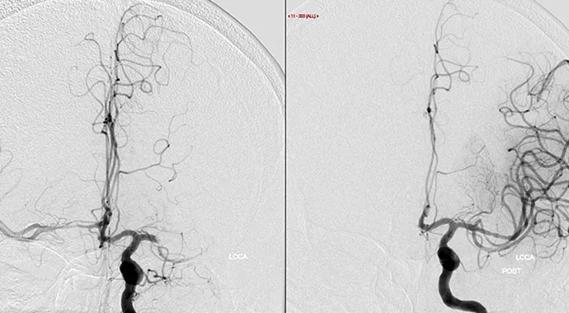
Study links large artery atherosclerosis and delayed presentation to poorer treatment results
$3.2 million grant will fund use of calcium-based imaging to record neuronal activity in ischemia model
Findings from large cohort analysis can guide ongoing quality improvement initiatives
 Search