Locations:





Study identifies patient and procedural factors associated with missed endoscopy appointments
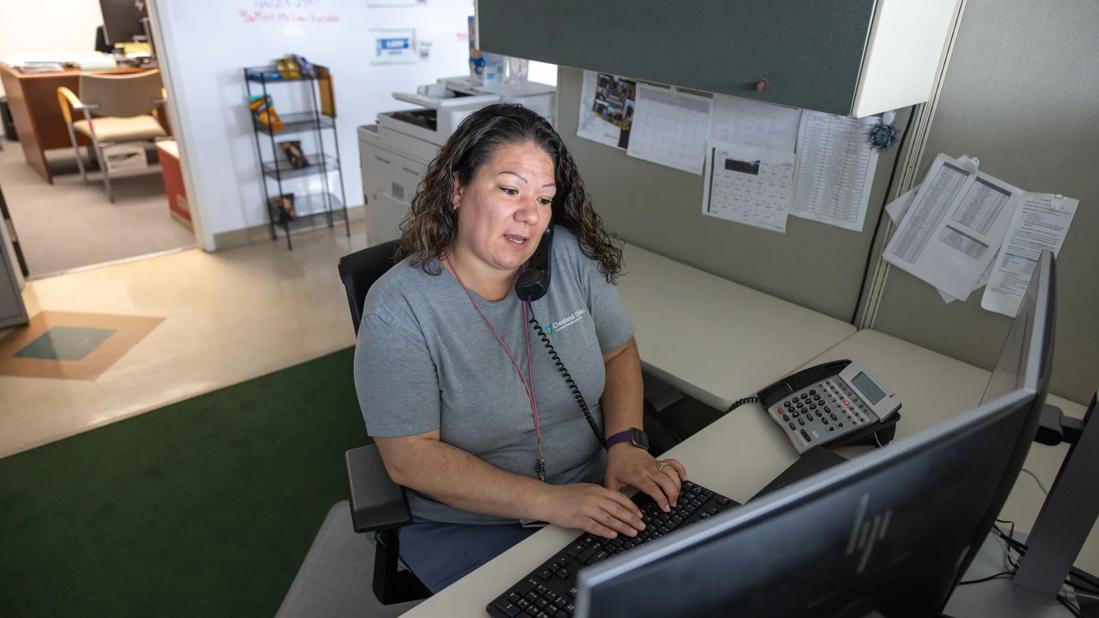
Image content: This image is available to view online.
View image online (https://assets.clevelandclinic.org/transform/03e7086e-7320-41c3-9714-699074f5d26d/CCC_4007446_06-26-23_1202_AMO-jpg)
nurse on phone with patient
Last-minute cancellations and no-shows can leave costly endoscopy rooms unused, reduce access for other patients and delay care.
Advertisement
Cleveland Clinic is a non-profit academic medical center. Advertising on our site helps support our mission. We do not endorse non-Cleveland Clinic products or services. Policy
A Cleveland Clinic study of more than 45,000 scheduled outpatient endoscopic procedures found that these disruptions were particularly common at a tertiary academic center, where nearly one-third of procedures were canceled within seven days or resulted in a no-show. Researchers also identified patient and procedural characteristics associated with cancellations, laying the groundwork for more targeted efforts to prevent missed care.
“We wanted to better understand an evolving challenge that medical centers across the country are facing with last-minute cancellations and date-of-service no-shows,” says Brian Baggott, MD. “It’s a significant issue, and our goal is to identify the populations most at risk so we can better serve them with resources that help them complete their procedures or, when appropriate, offer alternative testing strategies.”
The retrospective study included all outpatient endoscopic procedures scheduled from January 2024 through October 2025 at two Cleveland Clinic sites: a tertiary academic center and a community-based endoscopy unit. Investigators defined last-minute cancellations as procedures canceled within seven days of the scheduled appointment or recorded as no-shows.
The researchers compared demographic, procedural and scheduling characteristics between completed and canceled procedures and then performed separate multivariable logistic regression analyses for each site to identify factors independently associated with cancellation. Variables examined included procedure type, sex, race, ethnicity, insurance status, appointment timing and age. Model performance was assessed using the area under the receiver operating characteristic curve (ROC AUC).
Advertisement
Among 34,129 procedures scheduled at the academic center, 23,821 were completed and 10,308 were canceled at the last minute, yielding a cancellation rate of 30.2%. The rate was substantially lower at the community site, where 9,653 of 11,772 scheduled procedures were completed and 2,119 were canceled, for a cancellation rate of 18.0%.
The marked difference between sites highlighted the scale of last-minute cancellations, particularly at the academic center, and reinforced the importance of understanding which factors may contribute to missed procedures.
For health systems, the consequences are both operational and clinical. Endoscopy requires considerable staffing and resources, meaning an unexpectedly empty procedure room can carry substantial costs. At the same time, an unused appointment represents a missed opportunity for another patient to receive care, an especially important consideration when access is already constrained.
“It’s a huge driver in the lack of access,” Dr. Baggott notes. “It might take a couple of months to get in for an endoscopy, and if a third of people don’t show or cancel late, that delays the people who can show and need the test.”
Socioeconomic disadvantage emerged as an important factor associated with last-minute cancellations, particularly at the academic center. The researchers assessed this using the Area Deprivation Index (ADI), a neighborhood-level measure based on patients’ residential ZIP codes that incorporates factors such as income, education, employment and housing quality. Higher scores indicate greater socioeconomic disadvantage.
Advertisement
At the academic center, each 10-point increase in ADI was associated with 33% higher adjusted odds of cancellation (OR 1.33), compared with a 7% increase at the community center (OR 1.07). By contrast, greater comorbidity burden, measured using the Charlson Comorbidity Index, showed a much smaller association with cancellation.
For Dr. Baggott, the ADI findings point toward the broader socioeconomic and logistical circumstances that may make it difficult for some patients to complete a scheduled procedure. These can include financial constraints, difficulty taking time away from work or challenges arranging transportation.
“The ADI captures many of the socioeconomic factors that can affect a patient’s ability to complete a scheduled procedure,” Dr. Baggott says. “Can they take time off from work? Can they find someone to drive them? As deprivation increases, so does the likelihood of a late cancellation or no-show.”
Other factors were consistent across the two sites. Medicaid coverage was associated with 82% higher odds of cancellation at the academic center and 44% higher odds at the community center compared with other insurance. Procedure type also mattered: colonoscopy was associated with 42% higher odds of cancellation than EGD at the academic center and 21% higher odds at the community site.
Identifying these associations is only the first step. The larger goal is to determine which barriers are driving missed procedures and use that information to better support patients. That could ultimately mean directing resources where they are most needed or, when clinically appropriate, offering alternative screening strategies, according to Dr. Baggott.
Advertisement
The retrospective analysis is only the first phase of a broader research effort. The investigators are preparing to launch a prospective, IRB-approved study that will go directly to patients to determine why scheduled procedures are not completed.
The team will compare patients scheduled for endoscopy one week before their procedure with those who ultimately complete it. Patients who cancel late or do not show will be contacted and asked a detailed series of questions about what prevented them from receiving care.
That next phase could help researchers move beyond predicting who may miss a procedure to understanding why, providing a clearer foundation for interventions that address potentially modifiable barriers to care.
For Dr. Baggott, that effort reflects a broader connection between how care is delivered and how patients ultimately fare. “The more you work in this area, the more you realize that one of the key factors driving outcomes, whether that’s patient experience, completion of a scheduled procedure or public health outcomes, is access,” he notes. “Access is very central to not just financial performance, but healthcare outcomes—how patients actually do.”
Advertisement
Advertisement

Opportunities and impacts of a growing surgical approach

Expertise can travel even when the patient and their care cannot

How we’re efficiently educating patients and care partners about treatment goals, logistics, risks and benefits
Multidisciplinary framework ensures safe weight loss, prevents sarcopenia and enhances adherence

Advanced connectivity and technologies build on a foundation of teleneurology leadership

Remote caregivers allow bedside nurses to breathe easier when out of a patient’s room

Nurses are well-positioned to appraise and integrate evidence into clinical practice to provide quality patient care
Phone triage system reduces call backs and delays in care
 Search