Locations:





Opportunities and impacts of a growing surgical approach
Podcast content: This podcast is available to listen to online.
Listen to podcast online (https://www.buzzsprout.com/2243576/19248104)
Endoscopic spine surgery is transforming how surgeons approach spinal pathology, offering substantially reduced invasiveness plus optimal surgical precision through enhanced visualization.
Advertisement
Cleveland Clinic is a non-profit academic medical center. Advertising on our site helps support our mission. We do not endorse non-Cleveland Clinic products or services. Policy
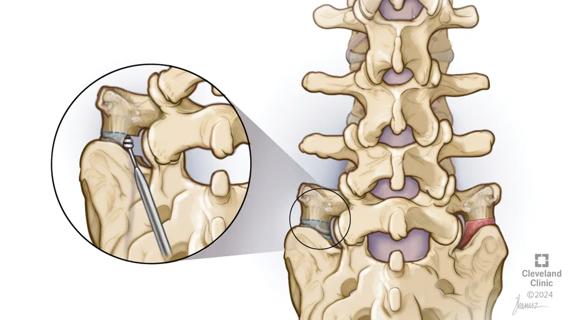
“Endoscopic spine surgery involves an incision about the width of a No. 2 pencil, through which we put a camera to provide visualization that surpasses what we can see with surgical loupes or microscopes,” says spine surgeon Osama Kashlan, MD. “Those are the key differences from open surgery and other types of minimally invasive spine surgery — a much smaller incision and the ability to bring your eyes and instruments right next to where the pathology is.”
Dr. Kashlan is a leading practitioner of endoscopic spine surgery in the Center for Spine Health within Cleveland Clinic’s Neurological Institute. In the latest episode of Cleveland Clinic’s Neuro Pathways podcast, he provides an overview of this emerging approach to spine surgery, covering the following topics (among others):
Click the podcast player above to listen to the 31-minute episode now or read on for an edited excerpt of its transcript. Check out more Neuro Pathways episodes at clevelandclinic.org/neuropodcast or wherever you get your podcasts.
This activity has been approved for AMA PRA Category 1 Credit™ and ANCC contact hours. After listening to the podcast, you can claim your credit here.
Advertisement
Podcast host Glen Stevens, DO, PhD: Who’s a good candidate for endoscopic spine surgery?
Osama Kashlan, MD: If someone comes to me initially with symptoms, the most important thing to note is that the percentage of patients who end up needing surgery, even if it is endoscopic, is very small. Most of the time, people can feel better with physical therapy and other nonsurgical measures, without the need for surgery. That’s worth emphasizing because, at the end of the day, even though endoscopic spine surgery is much less invasive, it is still surgery and it still has risk.
In terms of pathology that can be treated with endoscopy, it’s really any pathology that causes compression on the nerve roots, whether it’s a disc herniation, whether it’s ligamentous hypertrophy, whether it’s bony hypertrophy causing central stenosis, lateral recess stenosis or foraminal stenosis. All of those pathologies can be treated with the endoscope.
What’s currently holding endoscopy back from being used for everything is the fact that not all spine surgeons are trained in it. Also, sometimes the surgeries do take a little bit longer with an endoscopic approach. So if you have, let’s say, three or four sources of compression, sometimes it’s just better for the patient to have a nonendoscopic procedure because it simply gets them on and off the table faster.
Dr. Stevens: Can you do fusions endoscopically?
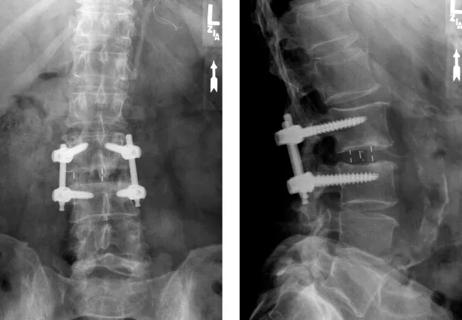
Dr. Kashlan: You can do fusions with the endoscope. As of now, in my opinion, the delta — meaning the difference between what we’re currently doing with traditional minimally invasive fusions and what can be done with an endoscopic fusion — is not so large that it’s one of the top things that I would offer to my patients. But there are other pathologies where the delta is super high, and that's why I would urge spine surgeons to learn endoscopy.
Advertisement
Advertisement
Study identifies patient and procedural factors associated with missed endoscopy appointments
How ongoing efforts will be bolstered by Cleveland Clinic’s new Neurological Institute building
Expanded bevy of dedicated ORs will feature customized designs, leading-edge technology, optimized workflows
The steep learning curve is easing as robotics, VR and improved imaging technologies enhance precision and surgeon confidence
Study finds broadly similar outcomes between MIS and open surgical approaches

Success for these complex operations requires judicious patient selection and presurgical patient optimization
Meta-analyses signal an opportunity to reshape risk stratification and surgical protocols for these comorbidities

A host of factors shape when to intervene and which of three primary procedures to use
 Search