Locations:





 Search
Researchers confirm underlying contributors to success
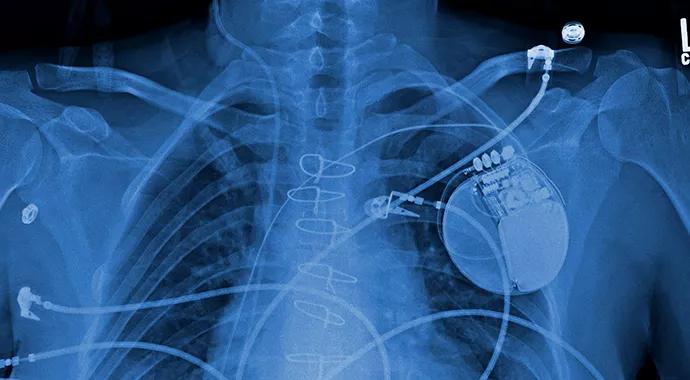
Congenital heart disease (CHD) has surpassed cardiomyopathy as the leading indication for heart transplantation in children in the United States. Currently, three of four CHD patients with end-stage heart failure, listed for heart transplant survive to transplant.
Advertisement
Cleveland Clinic is a non-profit academic medical center. Advertising on our site helps support our mission. We do not endorse non-Cleveland Clinic products or services. Policy
Improved medical and surgical transplant care, revisions to the pediatric heart allocation policies and improved ability to support children with CHD using a ventricular assist device (VAD) were thought to contribute to success. By analyzing data on all children listed for transplantation in the U.S. from January 1999 through December 2019 (n = 5,183), pediatric heart failure and transplant cardiologist Shahnawaz Amdani, MD, and colleagues at Cleveland Clinic Children’s confirmed the benefit of these factors. Their study, published in the Journal of Cardiac Failure, also revealed why waitlist outcomes remain inferior to those of children with cardiomyopathy.
The researchers divided the pediatric heart transplant cohort into four eras characterized by changes in UNOS’ pediatric heart allocation policy: prioritization of pediatric donor organs to pediatric recipients in 2009, U.S. Food & Drug Administration approval of the Berlin VAD for children in 2011 and prioritization of CHD patients as status 1A in 2016. These revisions were associated with continual improvement in 12-month waitlist survival, from 59% in the era spanning 1999 to 2008 to 76% in the current era.
Notably, the researchers found that CHD patients with end-stage heart failure are less acutely ill at the time of listing than in previous eras. They also are more likely to be supported with a VAD. “This seems to suggest clinicians are better at identifying CHD patients in need of transplantation before they are in extremis,” says Dr. Amdani.
Advertisement
“Improved outcomes also suggest we are getting better at managing CHD patients medically, surgically and nutritionally, so they are in better shape going into transplant,” he adds.
With the latest change in organ allocation policy, about 70% of children with CHD are listed as status 1A. However, all are not equally sick. Additional revisions to the allocation policy to elevate the status of the sickest patients could further boost survival, the researchers suggested.
“The risks for waitlist mortality are very different for patients with CHD on inotropic support, compared to those with end-organ dysfunction on a ventilator or ECMO. In fact, we found that mechanical ventilation and ECMO double the risk of waitlist mortality, and hypoalbuminemia and poor kidney function raise the risk by 1.5 fold. Since the purpose of the allocation policy is to improve waitlist survival, the next policy change should prioritize CHD patients with these risk factors,” says Dr. Amdani.
Another factor contributing to improved waitlist outcomes is increased use of VADs in CHD patients with end-stage heart failure.
As VAD technology has improved, and physicians’ expertise and comfort level with using these devices has increased, the advantages have become clear.
“Recent national reports have shown promising outcomes with VADs in this challenging cohort,” says Dr. Amdani. “VADs enable us to take the children off a ventilator and allow them to feed. As a result, they are better rehabbed and stronger at the time of transplant, which translates to improved post-transplant outcomes.”
Advertisement
The level of sophistication required to manage VAD patients is undeniably a factor in successful use of these devices.
“At Cleveland Clinic Children’s, patients waiting on VADs are supported by heart failure/transplant physicians and dedicated anticoagulation and ICU teams. When you have specialty care teams, you have better outcomes,” says Dr. Amdani.
Nevertheless, physicians have been slow to embrace VADs in patients with CHD. Usage remains low at 6% in this patient population, compared to 30% of patients with cardiomyopathy awaiting heart transplantation.
Although three in four children with CHD survive to transplant, the current waitlist survival for children with cardiomyopathy is 84%. Dr. Amdani is confident that waitlist survival for CHD patients will continue to improve.
“We feel that further refinements to the heart allocation policy and more widespread use of VADs would enable us to match, if not surpass, our success rate with cardiomyopathy patients.”
Advertisement
Advertisement

Findings hold lessons for future pandemics

One pediatric urologist’s quest to improve the status quo
Overcoming barriers to implementing clinical trials
Interim results of RUBY study also indicate improved physical function and quality of life
Innovative hardware and AI algorithms aim to detect cardiovascular decline sooner
The benefits of this emerging surgical technology

Integrated care model reduces length of stay, improves outpatient pain management

A closer look at the impact on procedures and patient outcomes