Locations:





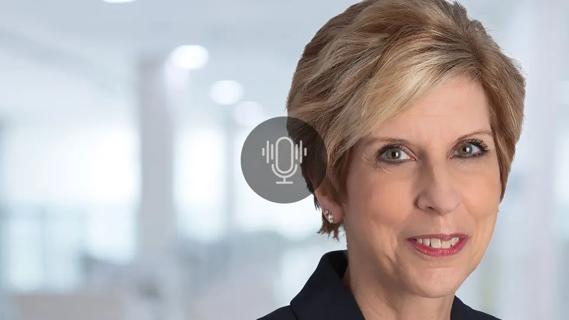
Podcast content: This podcast is available to listen to online.
Listen to podcast online (https://www.buzzsprout.com/2256206/19486619)
In January 2026, the Centers for Medicare & Medicaid Services (CMS) removed 285 procedures from its list of surgeries requiring inpatient admission due to complexity, patient safety or the need for extended postoperative monitoring. These changes are posing new challenges for ambulatory surgical nurses, who are increasingly managing cases that once required an overnight hospital stay.
Advertisement
Cleveland Clinic is a non-profit academic medical center. Advertising on our site helps support our mission. We do not endorse non-Cleveland Clinic products or services. Policy
"Ambulatory surgical nurses care for patients undergoing a wide range of procedures, often with limited time to build rapport before surgery and prepare them for recovery at home," says Wendy Simmons, MSN, RN, Perioperative Nursing Director for Cleveland Clinic Outpatient Surgery & Endoscopy. "More than ever before, our caregivers must balance streamlined workflows with individualized treatment to ensure every patient receives the attention and education needed for a safe surgical experience and successful recovery."
In this episode of Nurse Essentials, Simmons explores the evolution of outpatient surgery centers and the changing expectations and responsibilities of nurses.
Click the podcast player above to listen to the episode now, or read on for a short, edited excerpt. Check out more Nurse Essentials episodes at https://my.clevelandclinic.org/podcasts/nurse-essentials or wherever you get your podcasts.
Podcast host Carol Pehotsky, DNP, RN, NEA-BC: CMS has made dramatic cuts to its list of inpatient-only procedures. What do you think that means for the future of ambulatory surgery?
Simmons: The payers are going to drive a lot of these changes, so it's important for leaders to maintain an open mind.
It's also critical to hire caregivers from a variety of backgrounds...including those who are comfortable in higher-acuity settings. The anxiety level rises when you're adding increasingly complex cases to your load. But nurses who have already worked in inpatient care, for example, are like, "High five! Been there...done that. I'll help you."
Advertisement
I also encourage leaders to form and learn from internal partnerships and [model] openness. Encourage caregivers to ask those "what about" questions, and answer honestly. It's okay to say, "You know what? I hadn't thought about that yet. Let's write that down and investigate it." Strong teamwork and open communication are going to help us get through these challenges.
Pehotsky: What skills and competencies are most important when preparing for a successful career in ambulatory surgery?
Simmons: Ultimately, we're looking for people who are good fit...who share our same chemistry. If they have the [right temperament], we can teach them the technical skills they need to succeed in this environment.
Another thing [our nurses need] is emotional intelligence. How do they respond in tense situations? The cavalry's not coming, so it's important to know how to lean into your peers in a professional way, even in high-stress moments.
We're also looking at "AQ" — a nurse's adaptability quotient. We serve many service lines, and every day is different. Our caregivers have to be willing to walk through that door and adapt to what's on the other side. If you're looking for a work setting where every day is routine, it's not us. The pace and volume of patients can be intimidating...there's no time to sit down. We're always moving. I have one center that does between 50 and 70 cases a day.
Unfortunately, some people think this could be their retirement job — but once they get here, they realize: This is not for me.
Advertisement
Advertisement

Translating clinical questions into meaningful, sustainable change
Guidance for creating a relevant framework that reflects organizational values, supports professional practice

Helping patients recognize respiratory changes, navigate treatment barriers and stay connected to their clinical team
Initiative provides hands-on opportunities to promote early, progressive activity
Continuing to grow by following the right path at the right time

Teaching caregivers to recognize warning signs, de-escalate difficult situations and maintain professional boundaries

Veteran caregivers offer practical wisdom for building confidence and practicing with purpose
Skill, dedication and a passion for women and children inspire this joy-filled specialty
 Search