Locations:


3 tips for incorporating biosensors in practice
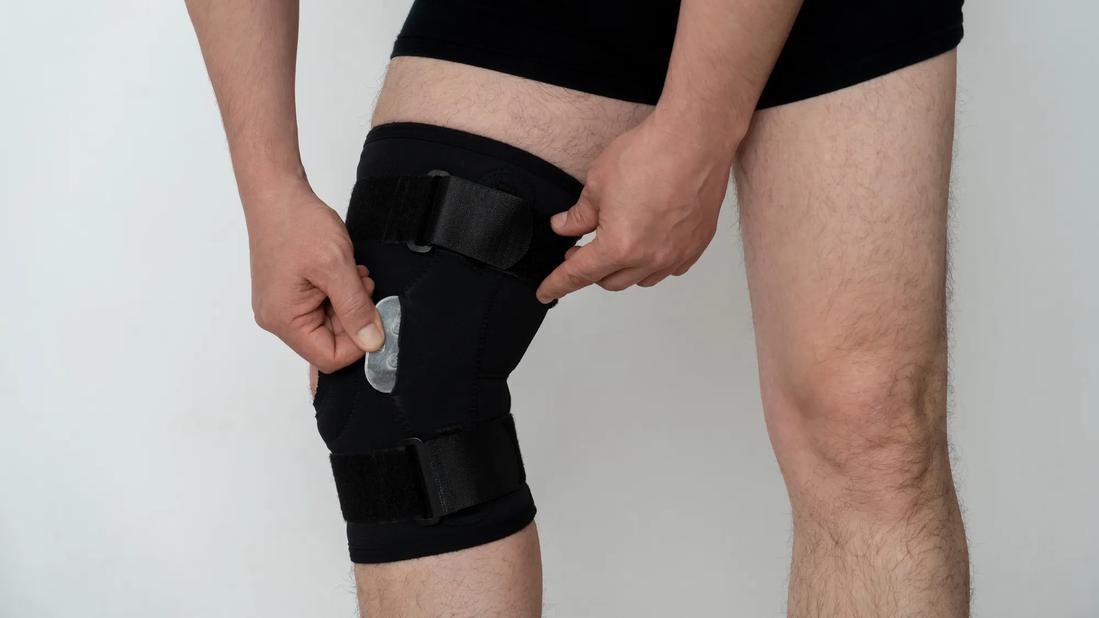
Image content: This image is available to view online.
View image online (https://assets.clevelandclinic.org/transform/612675b6-9472-4bb3-bdc1-c2944d194549/medical-wearable-1316672046)
man sliding a tracking device into a sleeve on his knee
Wearable biosensors are giving rehabilitation clinicians a more precise, objective view of how patients move and where movement quality may break down during recovery.
Advertisement
Cleveland Clinic is a non-profit academic medical center. Advertising on our site helps support our mission. We do not endorse non-Cleveland Clinic products or services. Policy
“Technologies that incorporate wearable gyroscopes, accelerometers and motion-tracking garments provide quantifiable data on joint motion, muscle function and movement mechanics,” says Gary Calabrese, DPT, Senior Director of Rehabilitation and Sports Therapy at Cleveland Clinic. “This information can help us individualize care and assess patients more objectively, rather than relying primarily on visual observation.”
That capability is especially valuable in today’s healthcare environment, where patients often have fewer in-person rehabilitation visits. After ACL reconstruction, for example, therapy that once included 30 or more visits may now average 10 to 12, Dr. Calabrese notes.
“It was not uncommon in some practices to see patients in the rehab clinic three times a week, giving therapists frequent opportunities to monitor recovery visually,” he says. “Now that patients are seen in person less often, wearable devices can capture meaningful information about their progress and help refine the treatment plan.”
Wearable biosensors can be used across a range of orthopaedic rehabilitation settings. Most are compact, no bigger than a smartwatch, and attach with a strap to a bony landmark or muscle group or fit into a garment sleeve worn on the arm or leg.
Therapists pair the sensors with a mobile app or digital platform that captures movement during exercises or therapy sessions. Depending on the injury and phase of recovery, systems may track range of motion, foot strike, gait speed, hip rotation, acceleration, cutting mechanics, workload and estimated joint torque.
Advertisement
For patients recovering from Achilles tendon repair, for example, in-shoe sensors can assess gait mechanics such as foot strike and hip rotation.
In knee rehabilitation, biosensor use often begins with range-of-motion assessment and basic gait analysis. As patients progress, the focus may shift to acceleration, deceleration and cutting to identify compensatory movement patterns and assess readiness to return to sport. Therapists may use only a few sensors at a time, placing them at the foot, ankle or proximal thigh depending on the data needed.
After shoulder surgery, gyroscope-based sensors can quantify motion such as flexion and rotation. For throwers and other overhead athletes returning after ulnar collateral ligament injury or reconstruction, sleeve-based systems can measure joint motion and estimate elbow torque and workload during activity.
These measurements can help clinicians assess force transfer across joints and identify mechanics or workloads that may stress healing tissue. Used appropriately, biosensors offer an objective way to monitor progress, guide return-to-sport decisions and manage workload during recovery.
For rehabilitation teams considering wearable biosensors, Dr. Calabrese offers three recommendations:
“With many sensor options available, focus on those most relevant to your practice,” he says. “If you primarily treat hip, knee, ankle or foot conditions, look for systems that assess gait, biomechanics and torque. If you see more patients with back conditions, look for sensors that assess balance, coordination and trunk movement. For practices with more upper-extremity patients, especially throwing athletes, a sleeve-based system may make the most sense.”
Advertisement
Most sensors include accelerometer and gyroscope capabilities, he notes. For general orthopaedic practices, a basic sensor placed on specific joints or muscle groups may be sufficient to assess movement speed, positional control and function against gravity. These data can help determine whether a patient is ready to progress in therapy.
Cleveland Clinic began incorporating biosensor technology in physical therapy roughly a decade ago.
“We have evaluated probably five to seven systems and now routinely use only two or three, mostly for the lower extremity,” Dr. Calabrese says.
One challenge with wearable technology is the volume of available data, making it essential to focus on the metrics most relevant to care.
“The amount of data can be overwhelming, and it’s only increasing,” Dr. Calabrese says. “As apps become smarter, they allow us to choose from a menu of data-acquisition options instead of displaying everything. Don’t overcomplicate a patient’s care. Focus on specific, relevant measures, such as gait, cadence or stride length. Keep it simple so you can clearly explain what the data mean to the patient and set understandable goals for improvement.”
Wearable biosensors provide objective information that helps rehabilitation teams individualize treatment progression, Dr. Calabrese says.
After ACL reconstruction, for example, sensors can assess knee angle during gait to determine whether the patient is achieving full knee extension. Patients who continue to walk with a flexed knee may lose quadriceps strength and be at risk for postoperative complications. They may need to return to the clinic for soft tissue mobilization, education and exercise modifications to restore consistent knee extension.
Advertisement
Although wearable biosensors are used predominantly in the clinic, some patients — particularly highly motivated athletes — use commercially available devices on their own. Dr. Calabrese expects remote monitoring to expand, allowing clinicians to track home exercise and recovery between visits and determine when to progress care remotely or schedule an in-person evaluation.
He has already seen remote monitoring reduce in-clinic visits for some patients recovering from rotator cuff repair because shoulder motion is simpler to measure than lower-extremity movement.
“There’s no loading component like there is with walking or running,” he says. “We haven’t yet seen biosensors reduce visits in other areas of rehabilitation, but that will likely change as the technology evolves.”
Advertisement
Advertisement

Tasked-based therapy improves social connection and quality of life
New oncologic rehab program is tailored to managing the effects of cancer and its treatments

New program provides prehabilitation and rehabilitation services to help patients with cancer maintain and regain function
A closer look at select programs and services

Advanced technologies are changing expectations about what’s possible
Strong bonds and momentous milestones fuel life-changing work
Today’s research helps illuminate tomorrow’s needs
Clinical trial to assess the value of nutritional, physical therapy and social supports prior to preoperative chemotherapy
 Search