Locations:


Advanced technologies are changing expectations about what’s possible
Podcast content: This podcast is available to listen to online.
Listen to podcast online (https://www.buzzsprout.com/2243576/20033088)
The outlook for many patients with neurologic disease has changed dramatically over the decades thanks to technological advances and research that has improved the understanding of what’s possible. Cleveland Clinic physical therapists who work in neurorehabilitation see the evidence in their research and in their daily work.
Advertisement
Cleveland Clinic is a non-profit academic medical center. Advertising on our site helps support our mission. We do not endorse non-Cleveland Clinic products or services. Policy
“It's been a myth for a long time in rehabilitation that there's a very limited time to improve the function of patients after they've experienced something like a stroke,” says Karen J. Green, PT, DPT, Senior Director of Rehabilitation. “We're learning more and more every year that the neuroplasticity window is open for a very long time. Stroke patients even three, four and five years out are still making gains with really targeted approaches to changing their function.”
In the latest episode of the Neuro Pathways podcast, Green and Susan Linder, PhD, Director of Clinical Research in Physical Medicine and Rehabilitation, discuss how neurorehabilitation has advanced.
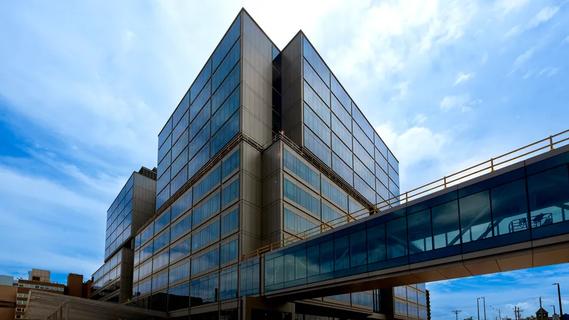
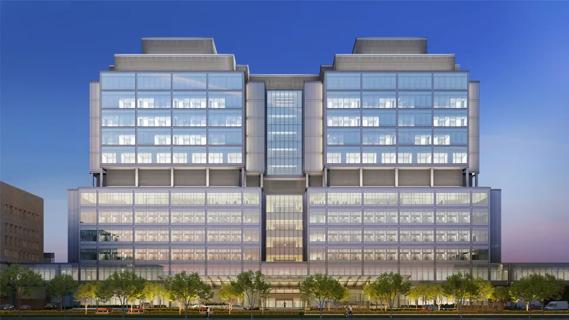
In January 2027, Cleveland Clinic’s new Neurological Institute building will open, bringing physicians, therapists, researchers, imaging specialists and others under one roof to improve outcomes with people who have conditions that affect the brain, spine and nervous system.
“This is not just a new building, it's a building that has been designed for this purpose of really integrating research and clinical practice so we can give our patients the best access to new technologies and the most advanced rehabilitation strategies that we're developing actively,” says Dr. Linder.
The podcast conversation also covers:
Click the podcast player above to listen to the episode now, or read on for a short, edited excerpt. Check out more Neuro Pathways episodes at clevelandclinic.org/neuropodcast or wherever you get your podcasts.
Advertisement
This activity has been approved for AMA PRA Category 1 Credit™ and ANCC contact hours. After listening to the podcast, you can claim your credit here.
Podcast host Glen Stevens, DO, PhD: In the old days, if you had a stroke, you were in the hospital and we'd put you in bed for 10 days and give you a cigarette. I think we all realize that's probably not a good thing to do nowadays, and it's sort of “get up and get moving.” Talk to me about the concept of neuromodulation.
Susan Linder, PhD: Neuromodulation has really exploded over the last 10 to 15 years, but it's not fully integrated into clinical practice yet. It's truly in the research stages despite showing effectiveness or efficacy. At Cleveland Clinic, we have a few neuromodulation studies and we are looking at the effects of TMS or transcranial magnetic stimulation. We're also looking at the effects of deep brain stimulation in a first in human clinical trial.
Those are in stroke. And we are also looking at the effects of aerobic exercise, which might not seem like a neuromodulator, but aerobic exercise really changes the physiology of the brain to improve neuroplasticity.
A few of these approaches we can already integrate into clinical practice — aerobic exercise, for example. The other two are still in the investigation phases. However, there is an approach that has been FDA approved and that's vagus nerve stimulation. So we worked to implement vagus nerve stimulation into the clinical setting in rehabilitation at the Mellon Center.
Advertisement
Dr. Stevens: Well, we've talked again on this podcast about it before, but I think it's quite fascinating that you'll get patients with Parkinson's disease and you'll have them doing cycling exercises and their Parkinson's symptoms are better for some period of time after the treatment. It's really quite amazing, right?
Dr. Linder: It's fascinating. We've looked at the effects of aerobic exercise on cardiovascular function for so long, but really only recently looked at the effects on brain function. And it's tremendous with respect to things like rehabilitation, but certainly for brain health longitudinally.
Advertisement
Advertisement

Milestone case report expands understanding of infectious risks for those on immunomodulatory therapies
Multidisciplinary, proactive approach also improved discharge outcomes
Designed for digitization, distance health, discovery and more
Combining customized care, research capabilities and flexibility for the future
Expanded bevy of dedicated ORs will feature customized designs, leading-edge technology, optimized workflows
Routine capture of standardized neuroperformance data may expand and refine investigations
Reimagining the outpatient neurological visit with routine capture of neuroperformance data
Advanced surgical suite in our soon-to-open facility promises to redefine care standards
 Search