Locations:





Akron General project highlights the benefits of doula partnerships
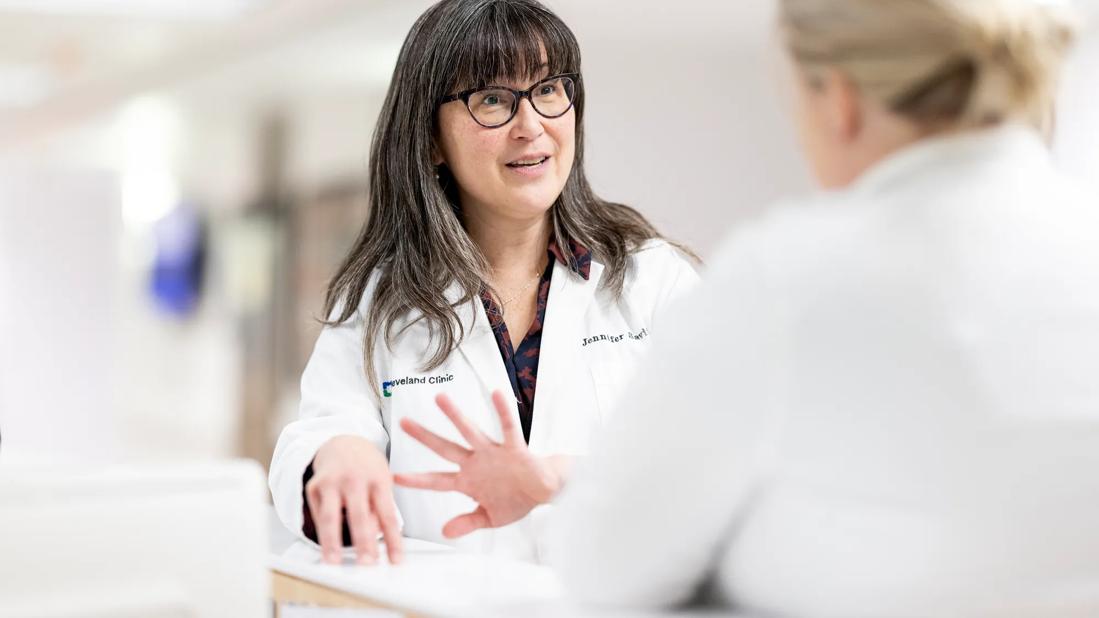
Image content: This image is available to view online.
View image online (https://assets.clevelandclinic.org/transform/f0739650-7651-4928-87dc-503e432c99d4/teambirth-doula-accreditation)
Photo of Dr. Savitski
Relationships between birthing doulas and clinicians have historically been rocky, but doula services during pregnancy and the perinatal period can help improve infant and maternal outcomes. That’s why Cleveland Clinic Akron General Hospital is participating in the Doula Friendly® Initiative, a program designed to improve patient care through supporting doulas a members of pregnancy care teams.
Advertisement
Cleveland Clinic is a non-profit academic medical center. Advertising on our site helps support our mission. We do not endorse non-Cleveland Clinic products or services. Policy
The process will include a two-year period of assessment, planning and implementation. Successful completion results in the Doula-Friendly designation.
Obstetrician/gynecologist Jennifer Savitski, MD, who leads the project at Akron General, says the founders of the Doula-Friendly Initiative recognized the need to standardize the process for incorporating doulas in health systems.
“Hospitals need to understand what doulas do and have realistic expectations, because we're all working toward the same goal,” says Dr. Savitski. “We also need to have policies that are inclusive of doulas and have them recognized as part of the healthcare team so that we can optimize their practice within hospitals.”
That recognition matters in part so that doulas aren’t treated like visitors during labor and delivery, she notes. In some cases, patients have had to choose between having their doulas or partners in the room.
The Doula Friendly Initiative process will include measuring maternal outcomes for patients who have doulas and surveying patients, healthcare teams and doulas about their experiences.
A 2013 study published in The Journal of Perinatal Education compared birthing outcomes for 97 socially disadvantaged mothers in North Carolina who received doula assistance with 128 who did not. Doula-assisted mothers were four times less likely to have a low-birth-weight baby, two times less likely to experience a birth complication, and significantly more likely to initiate breastfeeding.
Over centuries and across culture, doulas have been supporting people during childbirth and other health-related processes, including death. Today’s professional doulas are non-medical personnel who clients hire to offer physical and emotional support. No standard certifying organization exists, but most doulas go through training programs.
Advertisement
In the realm of childbirth, doulas may offer help for pregnancy, labor, the postpartum period or all three. They work closely with their clients to understand values that inform their wishes for pregnancy and birthing. That might include providing help for first-time birthing moms as well as supporting birthing women who have experienced trauma.
And because they have time to get to know the client well, they also build a relationship of trust that can enhance communication and shared decision making between medical staffs and patients.
Dr. Savitski recently encountered a doula who helped a patient with previous birth-related trauma create a birthing plan that contained visual aids for use during labor and delivery.
“It was this one-pager that had little icons on it, and underneath the icon it described what she wanted or what she didn't want. We actually taped it onto our team birth board,” she says. “They very succinctly described what she needed, what her issues were last time, and how we could help this time. The patient was anxious, but the doula could speak for her or help her to articulate in that very stressful time. It was really amazing.”
For the most part, doulas are a fee-for-service business. In Ohio, doulas may apply through the Ohio Board of Nursing as a State of Ohio Certified Doula, which allows them to become eligible for Medicaid reimbursement. Not only does reimbursement ensure that doulas are paid for their work, but individuals who may most need doula support have access.
Advertisement
The history of the clinician-doula relationship has been marked by philosophical differences and turf wars. The dynamic is described in a 2023 article in Quality Research in Health, “An extra layer of pressure to be my best self.”
But there have been advances over the years. The article cites survey results indicating that many clinicians “described positive experiences working with doulas and expressed desire for more patients to have access to doula services.”
And Savitski has seen for herself how the dynamic has improved.
“The clinical teams recognize that there are things that the doulas can do — the time that the doulas can spend with the patients,” she says. “The doula is able to establish trust and then to advocate for their patients, which many times means helping patients understand why they're being given certain options, whether it's a C-section or labor induction or management of hypertension or something else. They're helping the patient understand what is happening and ensuring that the patient's values and preferences are guiding the clinical care.”
In August 2026, the American College of Obstetricians and Gynecologists released a statement recommending that Ob/Gyn practitioners educate themselves about the scope of practice of doulas and build teams that include doulas.
“Doula support aligns with evidence-based outcomes and reduces costs to the overall health system,” the authors write. “Barriers to doula-clinician partnerships may be addressed with training and policy as well as approaches that promote collaboration, communication and accountability.”
Advertisement
Rising maternal and infant morbidity and mortality have highlighted the value of what doulas provide, says Dr. Savitski.
“Despite the fact that we live in a developed country with access to incredible medical care, we're not seeing the outcomes in maternal and infant care that we expect we should see. So a lot of work has been done over the course of the last couple of decades here to try to figure out why this is happening and what systems and supports we can put in place to try to mitigate it,” she says. “When individuals have doulas, they actually have better outcomes.”
For medical teams that are new to developing relationships with doulas, Dr. Savitski says the place to start is “just talk to them. They want to talk to your health systems. They want to follow the rules of your health system.”
The shift from old-school attitudes about doulas to understanding them as part of a multidisciplinary care team benefits everyone.
“It's better if we work together than working independently,” she says. “It's so much better to build communication streams where we can provide feedback to them and they can provide feedback to us. We can share in celebrations and work together to improve maternal healthcare.”
Advertisement
Advertisement

ACOG-informed guidance considers mothers and babies

Psychological care can be a crucial component of medical treatment

A Q&A with Cara King, DO, MS, on the upleveling power of coaching
Surgical video highlights techniques for optimizing myomectomy

New guidelines let the patients steer the process
Specialized unit provides patients with faster, more targeted care
Coordinated care for patients with placenta accreta or a history of abdominal surgeries
Clinical mentors and job rotations provide a view of opportunities
 Search