Locations:





One of first reported uses of the technology for a cerebrovascular malformation
In April 2019, clinicians in Cleveland Clinic’s Cerebrovascular Center performed one of the first reported brain aneurysm repairs guided by preoperative and intraoperative use of a 3D-printed replica of the aneurysm.
Advertisement
Cleveland Clinic is a non-profit academic medical center. Advertising on our site helps support our mission. We do not endorse non-Cleveland Clinic products or services. Policy
The patient was an otherwise healthy man in his 50s with a large (12-mm) aneurysm of the anterior communicating artery. He underwent a complication-free open craniotomy with clipping and was on track to a full functional recovery several weeks after the surgery.
The 3D-printed model (shown with a clip in photo below) was produced at actual size based on angiograms of the aneurysm processed by radiologists and other members of a multidisciplinary team in Cleveland Clinic’s Lerner Research Institute. To date, the team has generated over 100 3D-printed anatomic models to help guide complex surgeries ranging from liver transplants to congenital heart defect repairs.
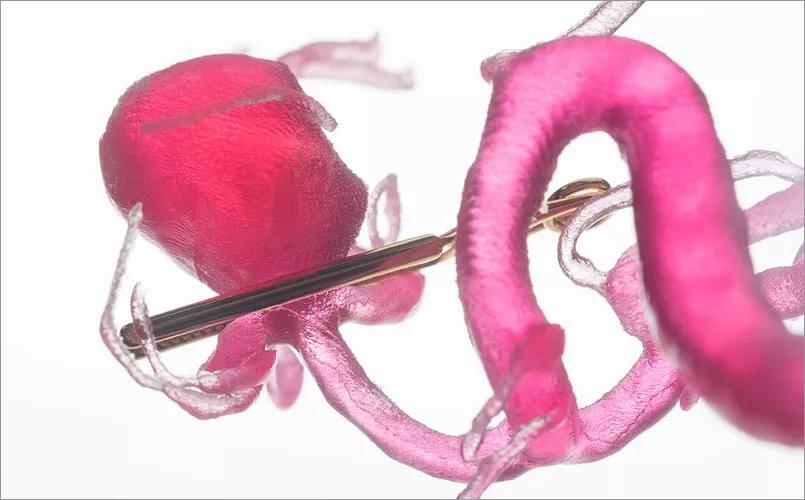
Image content: This image is available to view online.
View image online (https://assets.clevelandclinic.org/transform/0a9695ba-a7f6-434e-a17d-b6b2c35768fc/19-NEU-517-3D-Printed-Aneurysm-Inset-2_jpg)
“I was able to hold the aneurysm model in my hand, which greatly enhanced my understanding of the patient’s anatomy and enabled us to develop a truly patient-specific surgical plan,” says Mark Bain, MD, MS, Head of Cerebrovascular and Endovascular Neurosurgery and lead surgeon on the case.
“The 3D-printed model allowed me to visualize the surgical approach before I made a single incision,” he continues, “enabling me to select the clip size in advance and know the exact location of the important daughter branches coming out of the aneurysm.”
The model also gave Dr. Bain a preoperative heads-up about an artery that was stuck to the aneurysm, which allowed him to determine that it was clear of the neck of the aneurysm where the clip would be applied. “It was really helpful to know that going in and not be blindsided by that artery at the time of surgery,” he shares. “I was genuinely surprised by how helpful the model was.”
Advertisement
That utility continued into the intraoperative phase, where the model was at the surgical team’s side for reference throughout the procedure, Dr. Bain notes, “allowing us to check and recheck the anatomy.”
Dr. Bain identifies at least five distinct benefits that 3D-printed anatomical replicas promise for appropriate future cases.
1) Better operative planning, with potential for fewer complications. Dr. Bain’s comments above illustrate the clear benefits for preoperative planning and intraoperative visualization. Whether these lead to improved outcomes is something his group is eager to study in the months and years ahead. “We’re starting a couple of studies of this question,” he says.
2) Potential for reduced operative time. He estimates that the advance planning made possible by the model in this first case shortened the operative time by about half “because I knew exactly where to go and where to put the clip, and I already had the clip selected.”
3) Better patient education. Before his operation, the case patient and his family members were able to hold the model in their hands while Dr. Bain explained the procedure. “It was very valuable in helping them fully understand why we were choosing the procedure we did,” he says, adding that this promises to enhance patient satisfaction.
4) Value for resident and fellow training. “Residents present for this case said the anatomy of the aneurysm was so much clearer to them during the procedure by dint of having the model as an intraoperative reference,” notes Dr. Bain, shown in the photo below holding the model in hand as he discusses the procedure with trainees. “And one of our departing fellows raved about how much clearer she could see the anatomy thanks to the 3D model and how valuable this will be for training new physicians.”
Advertisement
5) Likely utility in procedure selection. Although the 3D replica didn’t influence procedure choice in this case, Dr. Bain says 3D-printed models likely will for some future patients. “I can foresee instances where the replica will reveal, for example, that a particular branch would not be appropriate for planned stenting or that a particular spot would be unlikely to hold a coil well,” he explains. “This may help improve our selection of cases or choice of procedure.” He adds that this includes decisions on when to use an endovascular versus open surgical approach. To that end, his team plans to generate hollow 3D-printed aneurysm replicas to help explore catheter navigation inside vessels for cases where endovascular procedures are planned.
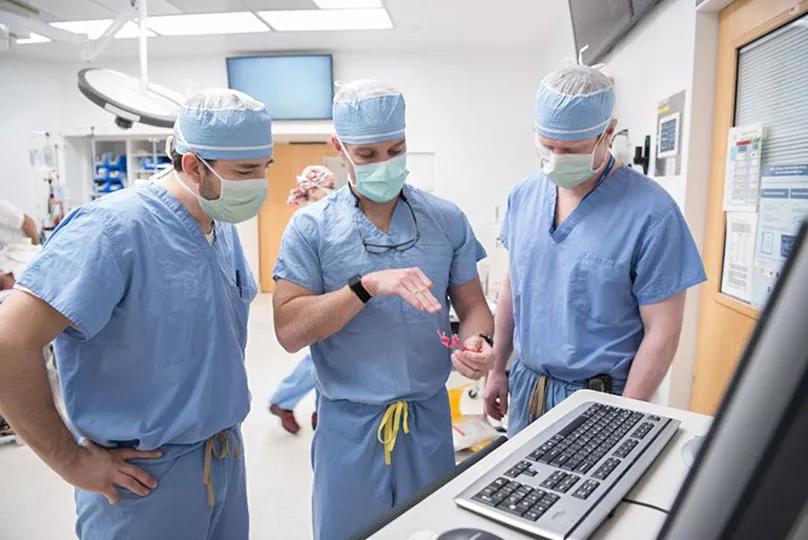
Image content: This image is available to view online.
View image online (https://assets.clevelandclinic.org/transform/1533cbbf-2c1c-49b2-a662-f004100d2abd/19-NEU-517-3D-Printed-Aneurysm-Inset_jpg)
While the case above was ideal for introducing 3D printing technology because of the large size of the aneurysm (12 mm), Dr. Bain says the technology can be used to replicate aneurysms of sizes down to 5 mm or even smaller. “Some of the branches in this first model were under 1 mm and we could still see them well,” he notes. “This technology has the resolution to pick up details at very small scale.”
So if aneurysm size is not much of a limiting factor, how will his team decide when to use this technology moving forward? “That’s one of the things we’ll be looking to explore in the studies we’re getting underway surrounding this,” he says. He explains that his team is pursuing grant funding to continue generation of 3D-printed replicas so they can accumulate enough data to begin to assess effects on outcomes and overall costs.
Advertisement
The cost of 3D printing is one limiting factor, as is time. Because it typically takes a couple of weeks to generate a replica, the technology is limited to nonurgent elective cases.
In an ideal world, Dr. Bain says, “I’d love to take every vascular malformation for which we get good imaging — arteriovenous malformations, fistulas, aneurysms — and send those images off for 3D printing. But we’ll have to see where the data fall to determine how broadly this should be applied.”
Advertisement
Advertisement

The selective D1/D5 dopamine agonist provides symptom relief and improves daily function.
5-year funding award supports cohort expansion and deep phenotyping of AD and related dementias

Highest response rates seen with stress-lowering techniques like yoga, meditation and mindfulness
Digital subtraction myelography unveils often-overlooked but highly treatable underlying defect
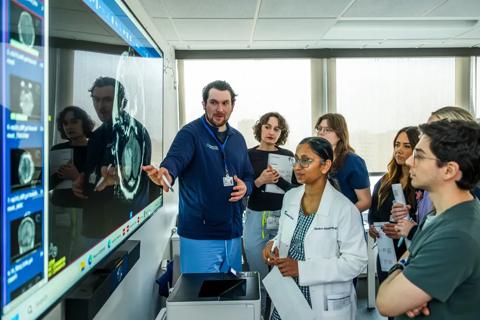
Housing multidisciplinary clinicians in one leading-edge facility can transform GME along with patient care
How ongoing efforts will be bolstered by Cleveland Clinic’s new Neurological Institute building
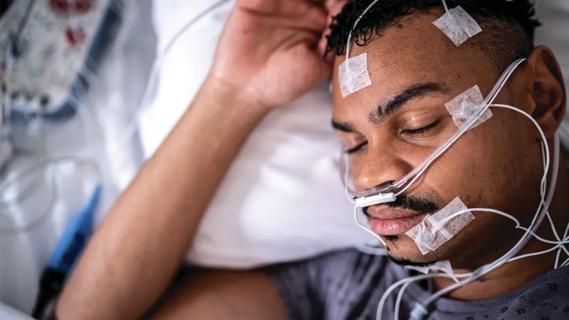
Foundation model reveals latent risk structures in sleep physiology that elude conventional metrics

Where the field is moving and what Cleveland Clinic has in the works
 Search