Locations:





Updates on this fast-evolving therapeutic landscape from a leading trialist
Podcast content: This podcast is available to listen to online.
Listen to podcast online (https://www.buzzsprout.com/2243576/19311901)
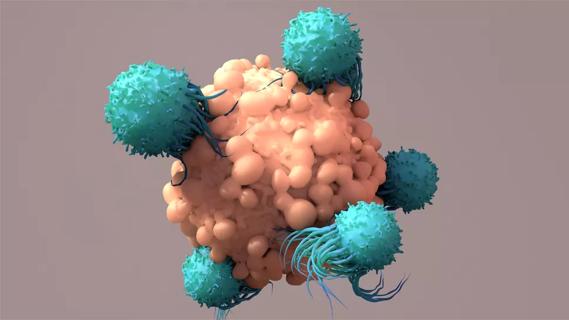
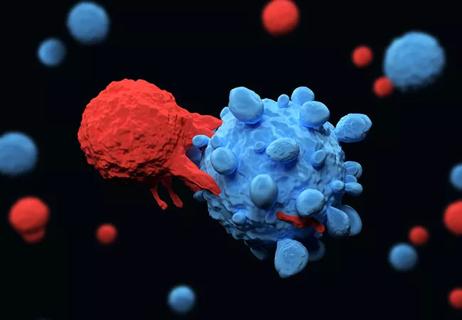
Over the past few years, the seven commercially available CAR T-cell therapies have transformed the treatment of various hematologic cancers with B-cell lineage. Now, given their unique actions on the immune system, these agents are drawing considerable interest as potential therapies for multiple sclerosis (MS) and other neurologic as well as rheumatologic immune disorders.
Advertisement
Cleveland Clinic is a non-profit academic medical center. Advertising on our site helps support our mission. We do not endorse non-Cleveland Clinic products or services. Policy
“One of the main advantages of CAR T cells is that they migrate throughout the body and can kill their target cell not only in the blood but also within tissue,” says neurologist Jeffrey Cohen, MD, Director of the Experimental Therapeutics Program in Cleveland Clinic’s Mellen Center for Multiple Sclerosis Treatment and Research. “The rationale for using CAR T cells in MS is that they very effectively deplete B cells not only in the blood but also in the peripheral lymphoid tissues and within the nervous system. That leads to rapid and potent initial efficacy. Then, as the B-cell populations come back, they are likely to come back in a more normal fashion, which we hope can lead to durable efficacy.”
Dr. Cohen is involved in numerous clinical trials of CAR T-cell therapy for patients with MS, and he shares insights about this promising new therapeutic approach in the latest episode of Cleveland Clinic’s Neuro Pathways podcast. In the discussion he touches on the following:
Click the podcast player above to listen to the 29-minute episode now or read on for an edited excerpt of its transcript. Check out more Neuro Pathways episodes at clevelandclinic.org/neuropodcast or wherever you get your podcasts.
Advertisement
This activity has been approved for AMA PRA Category 1 Credit™ and ANCC contact hours. After listening to the podcast, you can claim your credit here.
Podcast host Glen Stevens, DO, PhD: Tell us about the ongoing trials of CAR T-cell therapy for multiple sclerosis.
Jeffrey Cohen, MD: There’s a tremendous interest in CAR T-cell therapy in autoimmune diseases. It’s being explored in lupus, a variety of other rheumatologic conditions, multiple sclerosis, neuromyelitis optica, myelin oligodendrocyte glycoprotein-associated disease, autoimmune encephalitis, myasthenia gravis.
It’s still relatively early days in all those conditions, but in some of the diseases — for example, lupus and myasthenia gravis — the results have really been spectacular. There have been patients with treatment-refractory myasthenia or lupus who rapidly go into remission, and a few patients now have had follow-up for a couple of years with sustained remission. The results in MS are still somewhat preliminary, but in the patients we’ve treated — as well as other patients in the trials in which we’re participating and then some of the other trials that are being done — there’s been very rapid discontinuation of relapses and, in people with more progressive disease, either stabilization or improvement in disability that has persisted in some of our patients for a year now.
Dr. Stevens: Are these phase 1 studies?
Dr. Cohen: There’s a large number of phase 1 trials that are ongoing, and then some of the CAR T-cell products are now moving into phase 2 trials.
Advertisement
Dr. Stevens: Who is an ideal candidate for these trials? Is it someone who’s been through a lot of treatments, or who has not been through a lot of treatments, or has had frequent relapses? You mentioned earlier that you increasingly look at relapsing disease and chronic progressive disease as separate entities.
Dr. Cohen: We are still working to determine for whom CAR T is most beneficial, at least in the MS sphere. Current trials include some cohorts with active treatment-refractory relapsing MS — that is, people who have failed typically at least one of the high-efficacy therapies like B-cell-depleting monoclonal antibodies — and then also people with non-active progressive MS. That is actually the group where there’s a big unmet need, and we have many people who have approached us with interest in participating in those trials because current treatments are not very consistently effective in that group.
Dr. Stevens: Throughout the country, is it hard for patients to get into these trials if they want to?
Dr. Cohen: Currently, most of the trials are relatively small phase 1 studies with only a few slots per center and fairly restrictive eligibility criteria, but there are a large number of trials that are either underway or planned. We are, for example, currently involved in five trials — one that’s finished recruiting, one that’s almost finished recruiting and three more in start-up. The field is moving very quickly. Most of the current trials are with older CAR T-cell products, ones that have been around for a while, but the other area in which the field is progressing very quickly is in the development of more sophisticated, more advanced CAR T constructs.
Advertisement
Advertisement

Age alone should not rule out patients from potentially curative treatment

Higher type 2 immunity observed in persistent CAR T cells
Real-world study shows high response rates that are durable with commercial lisocabtagene maraleucel
Minimal residual disease testing shows promising results
Dispelling myths and sharing practical experiences
Combining customized care, research capabilities and flexibility for the future

Nearly one-fifth of such cases fulfill 2024 McDonald criteria based on biomarkers

Drug-free remission holds more than a year after treatment
 Search