Locations:





One in four experience reduced anxiety
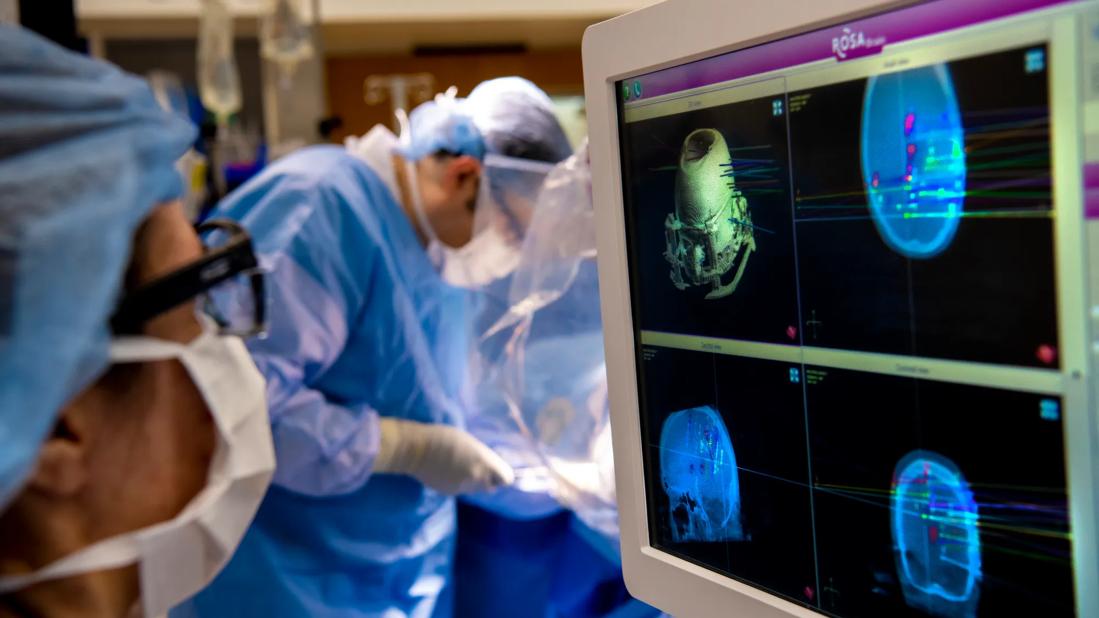
Image content: This image is available to view online.
View image online (https://assets.clevelandclinic.org/transform/5a23662c-064c-442b-9b64-5df0a23d75dd/NEU_2865231_04-21-22_131_DG-jpg)
epilepsy surgery
Patients with temporal lobe epilepsy (TLE) experience disproportionately high rates of anxiety, a comorbidity increasingly recognized as intrinsic to the disease process. A systematic review and meta-analysis led by senior author Badih Adada, MD, and Mohammadmahdi Sabahi, MD, MPH, researchers at Cleveland Clinic in Florida, now suggests that surgical treatment may reduce anxiety in approximately one-quarter of patients.
Advertisement
Cleveland Clinic is a non-profit academic medical center. Advertising on our site helps support our mission. We do not endorse non-Cleveland Clinic products or services. Policy
“Previous studies have shown that epilepsy surgery can improve quality of life, mood, and overall psychiatric symptoms,” says Dr. Adada, Chair of the Neurological Institute at Cleveland Clinic in Florida and Chair of the Department of Neurosurgery. “We believe this to be the first systematic review and meta-analysis looking specifically at anxiety changes after temporal lobe epilepsy surgery.”
The Cleveland Clinic-led team conducted a systematic review of the literature spanning 1989 to 2024, identifying 18 studies across 11 countries that included a total of 1,403 patients with refractory TLE who underwent surgical treatment.
Anxiety was measured using eight different scales across the included studies and varied widely before surgery, ranging from 5.3% to 35.1%. The most frequently utilized assessment instruments were the Hamilton Anxiety Rating Scale (HARS), the Spielberger State-Trait Anxiety Inventory (STAI), and the Hospital Anxiety and Depression Scale (HADS).
Only nine studies met criteria for inclusion in the meta-analysis. The remaining studies were excluded due to missing data or the use of uncommon anxiety assessment tools.
The team’s analysis demonstrated that surgical resection of abnormal temporal lobe structures was associated with improvement in anxiety levels. “Approximately 25% of patients experienced a reduction in anxiety following surgery,” reports Dr. Adada.
Studies using the HARS and the HADS observed a significant reduction in anxiety after surgery. Both showed a pooled change of -0.87 after surgery. In contrast, no significant changes were found in anxiety measured by the STAI, though state-anxiety types had a pooled change of -0.30 versus 0.10 among trait-anxiety types. The authors describe state anxiety as a more fleeting, intense emotional state, while trait anxiety is more persistent and seen as a distinctive feature of a person’s personality.
Advertisement
Evidence regarding subgroup differences – such as outcomes among seizure-free versus non-seizure-free patients – remains limited due to the small number of studies. However, a study by Rose et al. found that patients who achieved seizure freedom after surgery experienced a significant reduction in anxiety, whereas patients with persistent seizures did not demonstrate improvement and, in some cases, experienced worsening anxiety.
Epilepsy affects an estimated 3.4 million individuals in the United States, and psychiatric comorbidities are common in this population. A recent systematic review reported prevalence rates of 35.0% for mood disorders and 25.6% for anxiety disorders among people with epilepsy.
“The relationship is bidirectional,” confirms Carolina Maldonado-Correa, PsyD, a clinical neuropsychologist at Cleveland Clinic in Florida. “Epilepsy increases the risk for anxiety disorders, and in turn, chronic anxiety may lower seizure threshold and exacerbate seizure vulnerability.”
Anxiety is particularly prevalent in TLE, a finding that may reflect underlying neurobiological mechanisms. The temporal lobe is closely associated with the limbic system, including the amygdala, a key structure involved in emotional processing, fear detection, and behavioral regulation.
Research indicates that in temporal lobe epilepsy, the amygdala is often structurally and functionally altered and may demonstrate abnormal activation patterns. These disruptions within limbic networks are thought to contribute to the heightened vulnerability to anxiety symptoms observed in this population.
Advertisement
Temporal lobe epilepsy accounts for more than half of adult epilepsy cases and is frequently resistant to medical therapy. “Surgical intervention is the most effective option for many of these patients,” states Dr. Adada.
Anterior temporal lobectomy is the most common surgical procedure for treating refractory TLE, with reported seizure-freedom rates of 60% to 80% in appropriately selected patients. While seizure outcomes are encouraging, psychiatric symptoms remain an important consideration. An estimated 30% to 40% of patients continue to experience depressive or anxiety disorders after surgery.
“More research is needed to assess the broader effects of surgery on anxiety,” Dr. Adada says. He emphasizes the need for future studies that incorporate physician-assessed anxiety measures alongside self-reported data to better characterize postoperative psychiatric outcomes.
The Epilepsy Center at Cleveland Clinic in Florida is a level 4 epilepsy center accredited by the National Association of Epilepsy Centers (NAEC). Specialists care for patients with both generalized and focal epilepsies, with TLE representing the most common diagnosis.
The center’s approach aligns with the updated 2023 NAEC Guidelines for Specialized Epilepsy Centers, which marked a shift toward comprehensive care that addresses overall well-being beyond seizure control. For the first time, the guidelines recommended routine mental health screening, recognizing that anxiety, depression, and learning difficulties are far more prevalent in people with epilepsy than in the general population.
Advertisement
Cleveland Clinic in Florida employs standardized mental health screening protocols administered by psychiatry and neuropsychology teams. Commonly used self-report measures, including the Beck Depression Inventory (BDI-2), Generalized Anxiety Disorder-7 (GAD-7), and Beck Anxiety Inventory (BAI), along with personality assessments such as the MMPI-3, MMPI-2-RF, and Personality Assessment Inventory (PAI), are used to establish a baseline of psychological functioning. Quality of life measures, such as the Quality of Life in Epilepsy Inventory (QOLIE-31), are also routinely incorporated into neuropsychological testing to capture patient-reported functional and psychosocial outcomes.
“In addition to tracking cognitive outcomes, these measures are essential for monitoring improvement or decline in emotional functioning, including mood, anxiety, and overall quality of life. We use the baseline to measure for postoperative changes and retest between 6 to 12 months after surgery,” Dr. Maldonado-Correa explains.
Management strategies for patients with anxiety are tailored to symptom severity. For patients with mild anxiety, care typically begins with psychoeducation focused on stress management and the development of practical coping strategies. Those with moderate to severe anxiety are referred for psychotherapy, which may include cognitive behavioral therapy as it is shown to have favorable outcomes in patients with epilepsy. For patients with severe or persistent anxiety, a combined approach involving both psychotherapy and pharmacologic treatment may be indicated.
Advertisement
“In my experience, patients whose seizures are reduced after surgery often demonstrate meaningful improvements in mood, particularly in anxiety,” says Dr. Maldonado-Correa. “However, outcomes are also shaped by social determinants of health, such as social support and access to resources. Further research is needed to better identify preoperative risk factors for anxiety to optimize postoperative outcomes.”
Cleveland Clinic’s systematic review underscores the complex relationship between temporal lobe epilepsy, surgical intervention, and anxiety. As surgical outcomes are increasingly judged by quality of life – not seizure control alone – systematic assessment and treatment of anxiety will be essential to defining success in TLE care.
Advertisement
Cleveland Clinic in Florida explores extended reality for multimodality image guidance

The American Society of Clinical Oncology (ASCO) recently released updated guidelines

Cleveland Clinic's transplant team in Florida is using circulatory-death donor hearts to expand transplant opportunities for patients.

Repair of tiny lymphatic vessels offers big relief for patients with lymphedema after cancer surgery
AI-enhanced mammography improves cancer detection and may support more personalized screening strategies
The Center for Neurological Restoration offers a structured, multidisciplinary approach to conditions that often require longitudinal management and escalation beyond first-line therapies
Multidisciplinary expertise provides advanced evaluation, second opinions and personalized treatment planning for patients with challenging cerebrovascular disorders
Study highlights strong predictive value of circulating tumor DNA testing
 Search