Locations:





Surveillance platform supports community clinicians and public health monitoring
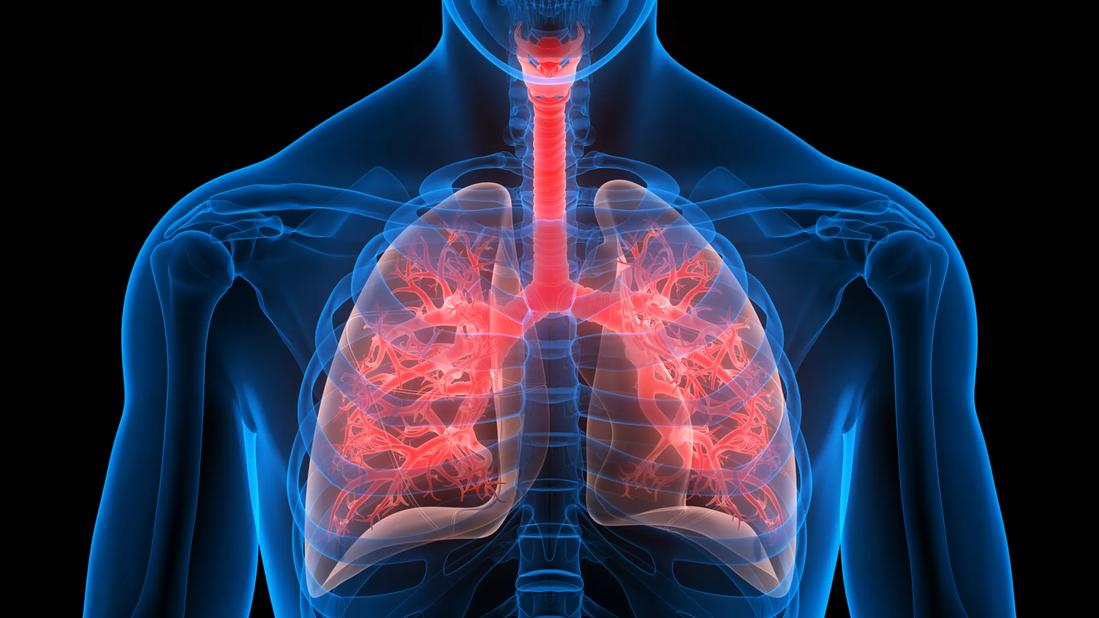
Image content: This image is available to view online.
View image online (https://assets.clevelandclinic.org/transform/41071c1d-daf2-4086-b884-04f483cc8de1/lungs-GettyImages-1249216538)
Cleveland Clinic Launches Florida Respiratory Virus Dashboard
Cleveland Clinic in Florida has introduced a new public-facing surveillance platform designed to provide clinicians and communities across southeast Florida with timely insight into circulating respiratory pathogens. The Florida Respiratory Virus Dashboard offers transparent, regularly updated data on respiratory viral activity, supporting both clinical decision-making and public health awareness.
Advertisement
Cleveland Clinic is a non-profit academic medical center. Advertising on our site helps support our mission. We do not endorse non-Cleveland Clinic products or services. Policy
The dashboard tracks several common respiratory pathogens, including influenza, SARS-CoV-2 (COVID-19), and respiratory syncytial virus (RSV), as well as adenovirus, seasonal coronaviruses, human metapneumovirus, parainfluenza, rhinovirus/enterovirus, Bordetella pertussis, and Mycoplasma pneumoniae.
“This dashboard strengthens our ability to support public health partners through timely and transparent monitoring of viral activity and emerging trends,” says Carla Sue McWilliams, MD, MBA, Division Chair for Infectious Disease for Cleveland Clinic in Florida. “To our knowledge, no other health system in Florida currently offers this level of public data transparency.”
Respiratory viruses demonstrate substantial seasonal and geographic variability. As a result, localized surveillance data can help clinicians better understand which pathogens are actively circulating in their communities, informing both testing strategies and patient triage.
For example, primary care providers can reference the dashboard to assess current influenza activity in the community. This information may help nursing teams triage patient calls, recommend at-home testing when appropriate, and identify patients who may benefit from timely antiviral therapy. Early treatment with oseltamivir for influenza or antiviral therapy for COVID-19 remains especially important for patients at elevated risk of complications.
The dashboard also supports clinical care in pediatric settings. “Clinicians can use data from the dashboard to reassure parents and guide care based on current viral trends in the community,” notes Dr. McWilliams.
Advertisement
In addition to guiding patient management, the platform promotes thoughtful laboratory stewardship. Clinicians typically begin respiratory evaluation with a smaller “quad” viral panel that screens for influenza A/B, SARS-CoV-2, and RSV. Broader multiplex panels may be reserved for hospitalized or high-risk patients when additional circulating pathogens are suspected.
Development of the Florida Respiratory Virus Dashboard began in late 2025 and required close collaboration among Cleveland Clinic’s infectious disease specialists, microbiology experts, laboratory personnel, and data analytics teams to build the infrastructure and ensure reliable data flow. The Florida tool was modeled after Cleveland Clinic’s dashboard for northeast Ohio, which launched in 2022 during the COVID-19 pandemic.
Efforts are now underway to integrate the Florida dashboard with the Centers for Disease Control and Prevention’s National Respiratory and Enteric Virus Surveillance System (NREVSS). Participating U.S. laboratories voluntarily report weekly totals of respiratory virus tests performed and the number of positive results to the NREVSS. These data enable public health officials to track viral seasons and monitor patterns of circulation across the country.
“The Florida dashboard is helping streamline what we do as an organization while also providing a new local resource for the community,” says Dr. McWilliams.
All respiratory viral tests included in the dashboard are polymerase chain reaction (PCR) diagnostics performed using nasopharyngeal or nasal swabs. Cleveland Clinic laboratories in Florida process up to 1,500 smaller respiratory panels each week, plus an additional 150 to 180 larger multiplex respiratory panels.
Advertisement
The dashboard is updated weekly and includes laboratory commentary. Oversight is provided by Cleveland Clinic’s Laboratory Medicine team, including Anisha Misra, PhD, Director of Parasitology and Mycology, and Hannah Wang, MD, Director of Molecular Microbiology and Virology.
Data reported on the dashboard include respiratory testing performed across all Cleveland Clinic sites in Florida. The dataset also incorporates tests ordered by community providers in the Treasure Coast – Martin, St. Lucie and Indian River counties – that are processed by Cleveland Clinic laboratories.
“Our dashboard reflects broader community trends, not just Cleveland Clinic patients,” Dr. McWilliams emphasizes.
Initial feedback from Cleveland Clinic primary care providers has been positive. According to Dr. McWilliams, clinicians have found the platform to be a practical reference tool for monitoring viral trends and helping triage patients.
The system was also designed with future adaptability in mind. If a novel respiratory pathogen emerges, the dashboard could be expanded to incorporate additional surveillance metrics.
By combining near real-time laboratory data with transparent public reporting, the Florida Respiratory Virus Dashboard aims to enhance situational awareness for clinicians while supporting more targeted testing, treatment, and community-level respiratory virus surveillance.
Advertisement
Advertisement
Cleveland Clinic in Florida explores extended reality for multimodality image guidance

The American Society of Clinical Oncology (ASCO) recently released updated guidelines

Cleveland Clinic's transplant team in Florida is using circulatory-death donor hearts to expand transplant opportunities for patients.
Repair of tiny lymphatic vessels offers big relief for patients with lymphedema after cancer surgery
AI-enhanced mammography improves cancer detection and may support more personalized screening strategies
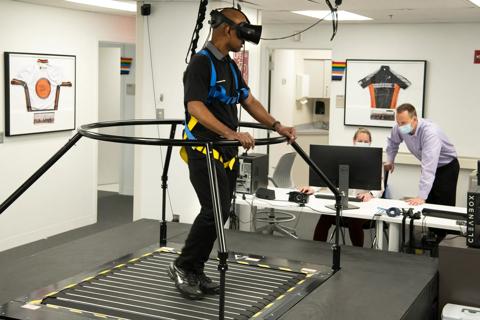
The Center for Neurological Restoration offers a structured, multidisciplinary approach to conditions that often require longitudinal management and escalation beyond first-line therapies
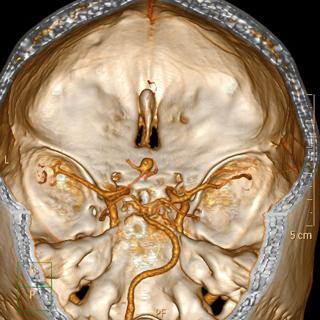
Multidisciplinary expertise provides advanced evaluation, second opinions and personalized treatment planning for patients with challenging cerebrovascular disorders
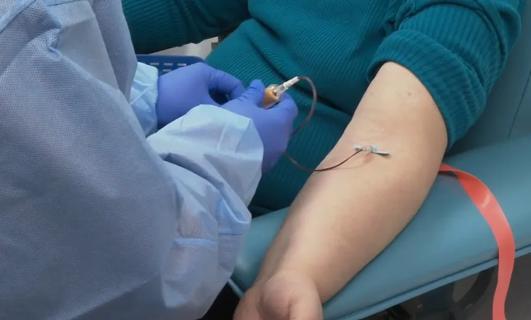
Study highlights strong predictive value of circulating tumor DNA testing
 Search