Locations:





Cleveland Clinic in Florida is home to region’s highest volume robotic spine surgery program
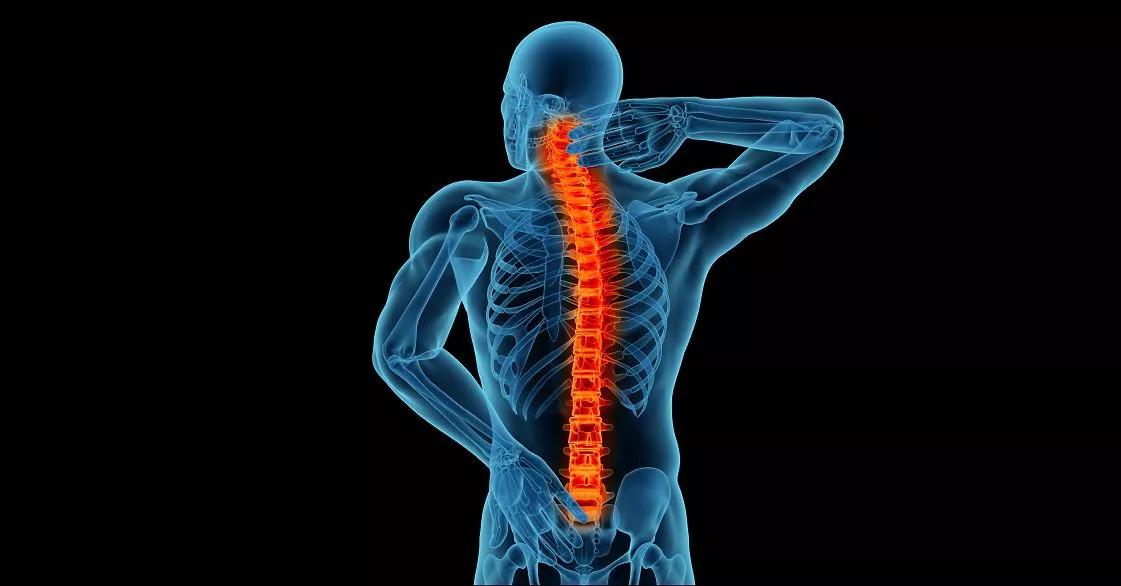
Image content: This image is available to view online.
View image online (https://assets.clevelandclinic.org/transform/e05856c8-2b7e-422f-9f01-bc4b5d0bf386/spine2-getty-jpg)
spine image
Each year, over a million spine surgeries are performed in the United States. In an era defined by rapid technological innovation, one might expect robotic technology to be more commonplace in these operating rooms. Yet more than two decades after the first FDA approval of a robotic platform for spine surgery in 2004, its presence remains the exception rather than the rule.
Advertisement
Cleveland Clinic is a non-profit academic medical center. Advertising on our site helps support our mission. We do not endorse non-Cleveland Clinic products or services. Policy
The data tell a story of cautious integration. A 2024 survey of the AO Spine’s international membership found that only 7% of respondents apply robotics on a routine basis for spinal instrumentation. Meanwhile, here in the U.S., an analysis of the Nationwide Inpatient Sample from 2016 to 2019 reported an overall robotic-assisted lumbar fusion rate of just 1.2%, albeit with a fourfold increase over that interval.
Against this backdrop of incremental growth, select institutions have embraced robotic platforms more broadly. At the Center for Spine Health at Cleveland Clinic in Florida, the use of robotic spine technology is extended beyond routine instrumentation to some of the most complex deformity cases referred from throughout the region.
In one recent case, a 69-year-old man was referred with untreated scoliosis, advanced degenerative changes and multiple failed prior surgeries. His spine had fused in a collapsed scoliotic position with major coronal and sagittal plane deformities.
“The spine was stiff, scarred and required complex corrective surgery using a 360 degree approach,” states Hoon Choi, MD, PhD, Director of Spine Surgery at Cleveland Clinic in Florida. “It entailed three-column mobilization at five levels in order to achieve satisfactory three-dimensional correction in addition to decompression of nerves.”
The procedure was performed in two stages over two days. The first stage involved a lateral approach for osteotomy and realignment. The second stage required extensive posterior instrumentation and correction. Dr. Choi used the ExcelsiusGPS™ robotic navigation system and Excelsius3D™ imaging platform for preoperative planning, intraoperative imaging, and computer-guided screw placement.
Advertisement
“The robotic navigation system enabled precise, minimally invasive osteotomies and screw insertions, with significant muscle preservation,” he describes. “The system’s flexibility also allowed us to use the navigation function independently when the robotic arm was not needed.”
The patient was discharged to acute rehabilitation, demonstrated significant improvement in preoperative symptoms and returned home after two weeks. “This case was made less invasive and more precise by leveraging robotic navigation and custom instruments and will be discussed at two upcoming annual spine conferences,” adds Dr. Choi.
Based at Cleveland Clinic Weston Hospital, the Center for Spine Health is the highest volume robotic spine surgery program in southeast Florida, and one of just a handful in the state. “Our team of spine surgeons use the full spectrum of surgical approaches, from traditional open techniques to the most advanced robotic-assisted approaches,” Dr. Choi says.
Indications for a robotic-assisted approach span degenerative spine conditions, failed surgeries, tumors, trauma and deformities, with procedures ranging from the cervical spine to the pelvis. “A lot of my cases are patients who come for second opinions or who have had previous surgery that failed,” says Dr. Choi, noting approximately 80% of his cases involve a robotic-assisted approach.
The robotic platform used at Weston Hospital accommodates multi-position spine surgeries, including lateral positioning, because it operates independently from the operating table. Navigation, intraoperative imaging and robotics are integrated for maximum precision. The advanced visualization platform, which incorporates digital X-ray, fluoroscopy and 3D imaging in a single system, can be used in both free-hand and robotic-assisted procedures.
Advertisement
A board-certified, fellowship-trained spine neurosurgeon, biomedical engineer and inventor, Dr. Choi was one of the original robotic spine surgeons to use the Excelsius system following its FDA approval in 2017. Shortly after, he was the first in the world to perform robot-assisted fusion in a pediatric patient utilizing the Excelsius robotic system. By 2020, he performed the world’s first percutaneous minimally invasive robotic-assisted screw placement in the upper cervical spine and robotic-assisted C1-C2 fusion through 1-inch incisions using his custom designed instruments.
More recently, Dr. Choi contributed to the development of a low-profile posterior fixation system with towers designed for percutaneous screw insertion and rod passage. Its use minimizes disruption, devascularization and detachment of musculature and stabilizing structures in the posterior cervical and upper thoracic spine.
The fixation system integrates with the Excelsius platform for accurate minimally invasive screw placement. “The technique allows me to place screws without extensive muscle dissection, which may reduce muscle atrophy and deformity often seen with traditional posterior cervical approaches,” he reports.
Dr. Choi characterizes other recent advancements in robotic spine technology as evolutionary rather than revolutionary. “Drill and implant technology have improved on the hardware side, while software upgrades are enhancing surgical planning capabilities,” he notes.
Artificial intelligence is also beginning to influence surgical planning, including suggesting screw trajectories and sizes. Dr. Choi anticipates significant improvements within the next year or so that may enhance planning and intraoperative decision-making.
Advertisement
“The biggest disadvantages of minimally invasive robotic spine surgery are the learning curve and high cost of the technology, which is why only a limited number of surgeons are able to utilize its advanced capabilities to its full potential,” he says.
Today, robotic spine surgery is fully integrated into both the ACGME-accredited Neurosurgery Residency and the Neurosurgery-Spine Surgery Fellowship programs at Cleveland Clinic in Florida. Training includes monthly workshops using spine models and cadavers, with deliberate emphasis on mastery of both traditional and robotic techniques, reports Dr. Choi, who also serves as the Neurosurgery Residency Program Director.
“Foundational competency remains paramount, which is why we have trainees learn to rely on their eyes, hands and the visualization of anatomic landmarks,” Dr. Choi explains. “That way they know if everything failed and the technology wasn’t online, they can still do the surgery.”
As national adoption continues at a deliberate pace, high-volume centers with concentrated expertise are demonstrating how integrated navigation, imaging and robotics can be applied across the spectrum of spinal pathology – from routine instrumentation to complex, multi-stage deformity correction.
Advertisement
Advertisement
Cleveland Clinic in Florida explores extended reality for multimodality image guidance

The American Society of Clinical Oncology (ASCO) recently released updated guidelines
Cleveland Clinic's transplant team in Florida is using circulatory-death donor hearts to expand transplant opportunities for patients.
Repair of tiny lymphatic vessels offers big relief for patients with lymphedema after cancer surgery
AI-enhanced mammography improves cancer detection and may support more personalized screening strategies
The Center for Neurological Restoration offers a structured, multidisciplinary approach to conditions that often require longitudinal management and escalation beyond first-line therapies
Multidisciplinary expertise provides advanced evaluation, second opinions and personalized treatment planning for patients with challenging cerebrovascular disorders
Study highlights strong predictive value of circulating tumor DNA testing
 Search