Locations:





Benefits include improved clinical outcomes and lower healthcare costs
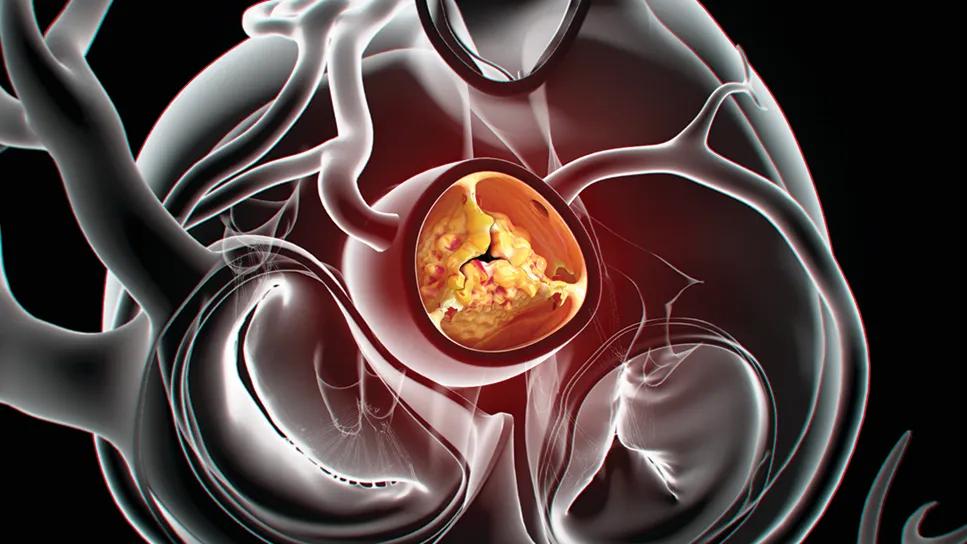
Image content: This image is available to view online.
View image online (https://assets.clevelandclinic.org/transform/8a3dfcf0-1e77-4cc0-9b50-37152e05c896/aortic-valve-stenosis-25-HVI-6544358)
The Case for Early Intervention in Asymptomatic Severe Aortic Stenosis
A growing body of evidence suggests that earlier intervention for severe aortic stenosis – before symptoms develop – may improve both clinical and economic outcomes. In an editorial published in the Journal of the American Heart Association, cardiovascular specialists from Cleveland Clinic in Florida outline the rationale for aortic valve replacement (AVR) in patients with asymptomatic disease.
Advertisement
Cleveland Clinic is a non-profit academic medical center. Advertising on our site helps support our mission. We do not endorse non-Cleveland Clinic products or services. Policy
“There are clear benefits to performing aortic valve replacement when patients with severe aortic stenosis are stable and not yet experiencing symptoms,” states José L. Navia, MD, a co-author of the editorial who serves as Vice Chief of the Heart, Vascular & Thoracic Institute at Cleveland Clinic in Florida and Chairman of Cardiothoracic Surgery.
The editorial accompanied a study that analyzed outcomes in 24,075 patients undergoing AVR for aortic stenosis after first categorizing patients by clinical presentation into three groups:
Patients in the asymptomatic category experienced the most favorable outcomes after AVR – whether treated with transcatheter aortic valve replacement (TAVR) or surgical aortic valve replacement (SAVR). The investigators also reported increased healthcare costs and resource use among patients with acute valve syndrome.
“Unfortunately, the majority of patients are not having valve replacement until they are presenting with severe symptoms,” explains Dr. Navia. “This is leading to greater cardiac damage prior to intervention and poorer outcomes after.”
In further support of early intervention, the editorial highlighted a meta‐analysis of four randomized controlled trials demonstrating that an early aortic valve intervention strategy outperformed conservative management in patients with asymptomatic severe aortic stenosis. One of those trials, the EARLY TAVR trial, found that patients undergoing early TAVR had better outcomes compared with those managed with clinical surveillance.
Advertisement
“We saw a reduction in the incidence of death, stroke and unplanned cardiovascular-related hospitalizations in the intervention group,” says Mauricio Cohen, MD, Director of Structural Heart Interventions at Cleveland Clinic in Florida, who served as a principal investigator for Cleveland Clinic’s Florida enrollment site. “Fewer hospitalizations for cardiovascular causes means overall cost savings.”
Early treatment strategies depend on identifying disease before symptom onset. At Cleveland Clinic in Florida, clinicians rely on a combination of diagnostic modalities to detect asymptomatic aortic stenosis.
Primary screening tools include clinical examination, echocardiography and CT calcium scanning.
Community screening initiatives can support this approach. For example, the Broward County/Florida Panthers Preventive Heart Program offers preventive heart testing to eligible residents of Broward County, including the option of a noninvasive CT calcium scan administered at Cleveland Clinic.
“A CT calcium scan is typically used to measure plaque in the coronary arteries but it can also provide valuable information on heart valve calcification, a major cause of aortic stenosis,” notes Dr. Navia.
Once aortic stenosis is confirmed, clinicians use additional diagnostic testing – including stress testing, CT imaging and cardiac MRI – to determine whether patients may benefit from early intervention. The goal, Dr. Navia adds, is to intervene before progressive ventricular dysfunction or heart failure develops.
Advertisement
The latest national guidelines recommend different interventions based on patient age and life expectancy:
At Cleveland Clinic’s Heart Valve Center in Florida, treatment decisions incorporate patient age, comorbidities and overall risk profile. “It depends on the patient’s biological age, not just chronological age,” says Dr. Navia.
For some younger patients with multiple comorbidities, surgeons may implant a bioprosthetic valve (animal or human tissue) during SAVR. While less durable than mechanical valves, bioprosthetic valves offer an important long-term advantage: they allow for future transcatheter valve-in-valve procedures and eliminate the need for lifelong anticoagulation.
Dr. Cohen also offers some patients who had TAVR a second TAVR years later, known as a redo-TAVR. “Caring for patients with aortic stenosis requires lifetime planning,” he states.
Consistent with national trends, TAVR now accounts for approximately 70% of aortic valve replacements performed at Cleveland Clinic in Florida. Across the system’s Florida locations, procedural outcomes mirror those achieved at Cleveland Clinic’s main campus in Ohio, with mortality rates of 0.5% or less.
“We perform valve replacements at our hospitals in Weston, Stuart and Vero Beach, with most patients receiving minimally invasive approaches and little variation in practice among sites,” observes Dr. Navia.
Advertisement
The program also continues to expand its procedural capabilities. The team at Cleveland Clinic Weston Hospital is introducing robotic-assisted techniques for both heart valve repair and replacement in appropriate patients.
Aortic stenosis is the most common type of heart valve disease in the United States. As evidence continues to accumulate, many clinicians anticipate that the paradigm for managing aortic stenosis will evolve toward earlier intervention in selected asymptomatic patients.
“While adoption may be gradual, earlier intervention for aortic stenosis will become standard in the future,” Dr. Navia predicts. “Our goal is to help patients with aortic stenosis avoid developing heart failure.”
Advertisement
Advertisement
Cleveland Clinic in Florida explores extended reality for multimodality image guidance

The American Society of Clinical Oncology (ASCO) recently released updated guidelines

Cleveland Clinic's transplant team in Florida is using circulatory-death donor hearts to expand transplant opportunities for patients.

Repair of tiny lymphatic vessels offers big relief for patients with lymphedema after cancer surgery
AI-enhanced mammography improves cancer detection and may support more personalized screening strategies
The Center for Neurological Restoration offers a structured, multidisciplinary approach to conditions that often require longitudinal management and escalation beyond first-line therapies
Multidisciplinary expertise provides advanced evaluation, second opinions and personalized treatment planning for patients with challenging cerebrovascular disorders
Study highlights strong predictive value of circulating tumor DNA testing
 Search