Locations:





Noninvasive modality gains ground in United States for patients with early-to-moderate disease
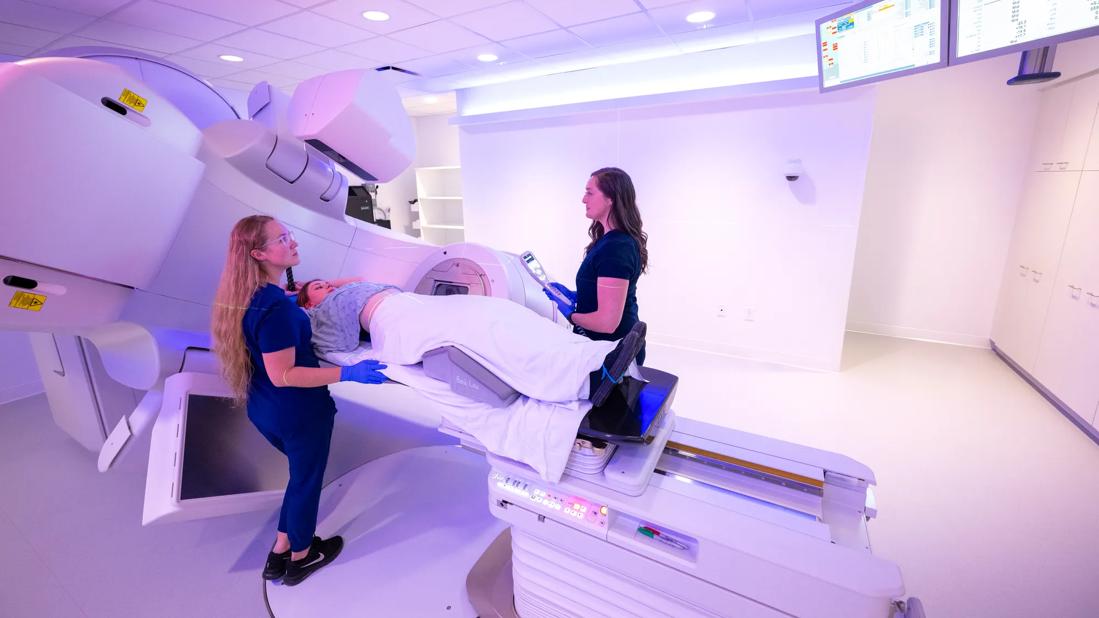
Image content: This image is available to view online.
View image online (https://assets.clevelandclinic.org/transform/1352ed89-df04-45b4-9e72-3d398fc2c5a0/CNR_6244108_06-13-25_010_MK)
Low-Dose Radiation Therapy for Osteoarthritis
Cleveland Clinic Indian River Hospital has expanded its use of low-dose radiation therapy (LDRT) for benign disease to include the treatment of osteoarthritis (OA). Although widely used in other countries for decades, this noninvasive modality has recently re-emerged in the United States as evidence supporting its efficacy continues to grow.
Advertisement
Cleveland Clinic is a non-profit academic medical center. Advertising on our site helps support our mission. We do not endorse non-Cleveland Clinic products or services. Policy
Indian River Hospital is the first Cleveland Clinic site in Florida to adopt the OA treatment pathway introduced at Cleveland Clinic’s main campus in Ohio in 2023.
“Our colleagues in Cleveland developed a standardized care path and a registry to track outcomes of patients who receive low-dose radiation for osteoarthritis,” states Marc Apple, MD, Chairman of the Department of Radiation Oncology at the Scully-Welsh Cancer Center. “The registry collects data that will be used to guide further studies on optimal dosage, field size, and other treatment parameters.”
An advanced external-beam radiotherapy platform is used at Indian River Hospital to deliver precise doses of radiation. Typically, 0.5 or 1.0 Gy per fraction is administered twice weekly for three weeks, for a total of 3.0 to 6.0 Gy.
“Treatments are quick, painless and associated with a very low risk of side effects, with only rare instances of temporary mild fatigue or slight skin irritation reported in the literature,” notes Dr. Apple.
With an estimated 32.5 million U.S. adults affected by osteoarthritis – the most common form of arthritis – Dr. Apple believes this service expansion will benefit many residents across the Treasure Coast.
Low-dose medical radiation has been safely used for decades to treat a broad array of benign conditions, including keloids, heterotopic ossification, plantar fasciitis and Dupuytren’s contracture, among others.
Earlier in his career, Dr. Apple innovated devices and performed research that contributed to the clinical development for the use of benign vascular brachy-radiation therapy for preventing intravascular restenosis after balloon angioplasty and/or stent placement, actively performed today at many advanced cardiology centers.
Advertisement
While its use in the United States declined after the 1980s due to the rise of alternative treatments and misperceived fears about such radiation exposure, LDRT continued to be widely used in other countries. Subsequent long-term studies, tracking thousands of patients, have found an almost negligible risk of secondary malignancies – the primary safety concern – especially for older patients.
“The doses of ionizing radiation used for non-cancerous conditions are far smaller than traditional cancer treatments,” confirms Dr. Apple. “Here at Indian River Hospital we routinely treat benign disease with low-dose radiation and are glad to be able to now offer it to appropriate patients for arthritis.”
Pointing to strong studies from Europe, Asia and the United States, Dr. Apple sees the pendulum swinging back in favor of LDRT for OA and anticipates more U.S. centers will offer it in the near future.
“Most of the recent studies are seeing response rates of 70% to 90% with good treatment durability,” he reports. “Patients are achieving a steady state in terms of their pain and function.”
At the American Society for Radiation Oncology Annual Meeting last September, South Korean researchers presented results from a randomized, placebo-controlled trial in mild to moderate knee OA. Patients receiving 3 Gy reported significant improvements in pain and physical function at four months, with 70% meeting responder criteria compared to 42% in the placebo group (p=0.014). Outcomes in the 0.3 Gy cohort were not significantly different from placebo, indicating the 3 Gy regimen drove clinical benefit.
Advertisement
Another study of 100 patients treated for hand OA found significant pain improvement in 94% of patients, though more than half (63%) underwent a second course of treatment at 12 weeks to achieve a response.
“Radiation works consistently in a majority of patients with regards to function, symptom and pain control and can readily be used in multiple joint sites and repeated to optimize outcomes depending on each patient’s situation,” states Dr. Apple.
He also notes that a combination of approaches, such as radiation plus tried nonsteroidal anti-inflammatory drugs (NSAIDs) or injections, may provide synergistic benefit, though specific optimal guidelines are evolving.
In OA, degenerative changes trigger the release of inflammatory mediators, such as interleukins and cytokines. Local immune cells respond to these inflammatory signals within the joint, amplifying synovial inflammation and perpetuating tissue injury.
Low-dose radiation appears to modulate this cycle by reducing pro-inflammatory cytokines, altering macrophage behavior, and affecting adhesion molecule expression, according to a review of the mechanistic and beneficial effects of LDRT.
“Modern therapeutic radiotherapy, in a dose dependent manner, can modify and regulate hyper immune-cell activity and chemical signaling in the treated area, reducing pain, swelling, irritation and range-of-motion limitations,” explains Dr. Apple. “With very low doses we’re turning down the ongoing inflammation pattern of destruction.”
Ideal patients for LDRT include middle-aged and older adults with OA in one to three joints – commonly the knee, hip, shoulder, wrist/hands or lumbosacral spine – who have tried NSAIDs, local injections, or other medical therapies without sufficient relief or worsening symptoms. “These are individuals who have early-to-moderate OA disease with underlying inflammation and limited advanced structural damage,” says Dr. Apple.
Advertisement
Additional candidates include patients who recognize early symptoms in a new joint after experiencing progressive OA elsewhere and individuals with drug intolerance or organ dysfunction limiting pharmacologic therapy.
Relative contraindications include prior full dose photon radiation to the same area and advanced joint damage that requires acute operative management. Future artificial joints or prosthesis can still safely be performed in areas, if needed, after prior LDRT.
LDRT offers a safe, noninvasive option with minimal treatment time. It is an effective management option reinforced by a continuously growing body of strong supportive clinical evidence. With increasing acceptance and advanced training across the country and encouraging global clinical outcomes, Dr. Apple expects inclusion in national guidelines within the next year or two, though broader adoption may be more focused to comprehensive centers of excellence/certification.
Advertisement
Advertisement

Cleveland Clinic's transplant team in Florida is using circulatory-death donor hearts to expand transplant opportunities for patients.
Repair of tiny lymphatic vessels offers big relief for patients with lymphedema after cancer surgery
AI-enhanced mammography improves cancer detection and may support more personalized screening strategies
The Center for Neurological Restoration offers a structured, multidisciplinary approach to conditions that often require longitudinal management and escalation beyond first-line therapies
Multidisciplinary expertise provides advanced evaluation, second opinions and personalized treatment planning for patients with challenging cerebrovascular disorders
Study highlights strong predictive value of circulating tumor DNA testing

Researchers with Cleveland Clinic in Florida highlight need for a national registry for gastrointestinal stromal tumors

Multidisciplinary LARS Center addresses life-altering consequence of rectal cancer surgery
 Search