Locations:





Cleveland Clinic Weston Hospital’s collaborative model elevates care for complex lung diseases
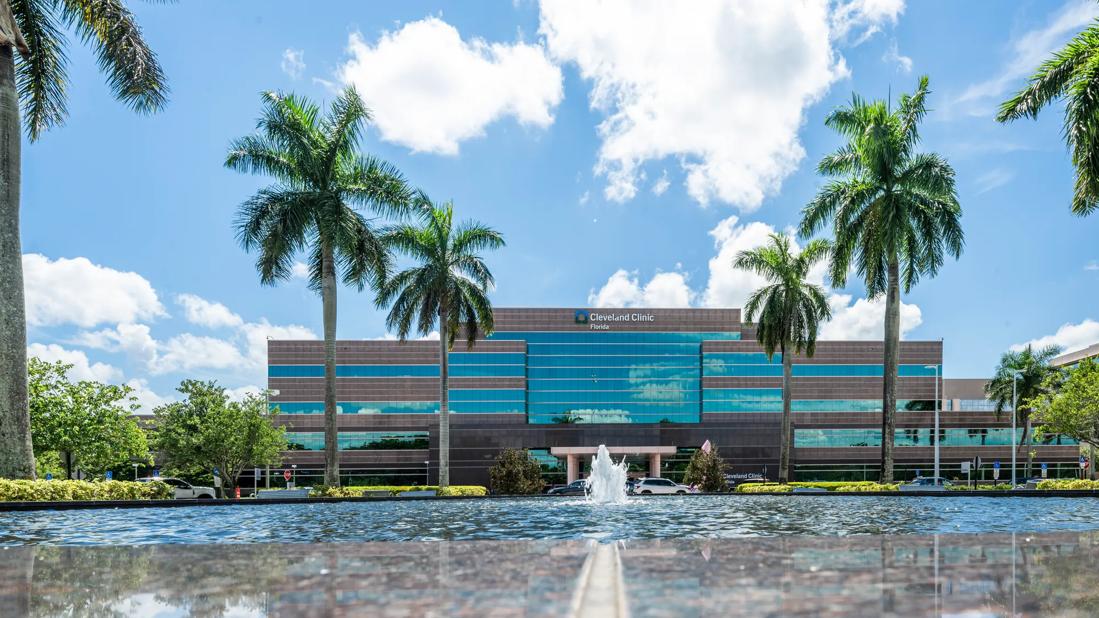
Image content: This image is available to view online.
View image online (https://assets.clevelandclinic.org/transform/04e73862-92f3-4b2f-aa70-9e31bc1244fd/PHI_5273708_09-16-24_1452_MLC)
Cleveland Clinic Weston Hospital
The past year has marked a transformative chapter for patients and clinicians confronting bronchiectasis and nontuberculous mycobacterial (NTM) lung disease. From the first-ever FDA-approved therapy for bronchiectasis to the launch of a national care and research network, the field has achieved long-awaited milestones that are reshaping diagnosis, treatment and collaboration.
Advertisement
Cleveland Clinic is a non-profit academic medical center. Advertising on our site helps support our mission. We do not endorse non-Cleveland Clinic products or services. Policy
At the forefront of this momentum is Cleveland Clinic Weston Hospital, home to Florida’s only designated care center within the newly formed Bronchiectasis and NTM Care Center Network (CCN), which includes additional sites across the state recognized as clinical associate centers. Established in March 2024 with philanthropic support, the Bronchiectasis and NTM Center at Weston Hospital has rapidly become a regional hub for multidisciplinary care, research and education.
Co-directed by pulmonary disease specialist Anas Hadeh, MD, and infectious disease specialist Carla McWilliams, MD, the center employs a unique care model that features:
“We conduct bi-monthly interdisciplinary clinics to provide comprehensive evaluations and care for the sickest of the sick,” states Dr. Hadeh, who serves as Director of the Pulmonary and Critical Care Medicine Fellowship Program at Cleveland Clinic in Florida. “Our team huddles before and after the visits ensure the highest level of care coordination.”
The care team includes a dietitian, respiratory therapist, pharmacist, nurse coordinator, and specialists in cardiothoracic surgery, ENT, and gastroenterology.
During its inaugural year, the Weston team cared for more than 1,300 patients, with roughly 75% treated for bronchiectasis and the remainder for NTM lung disease. The center’s development was supported by a $100,000 Catalyst Grant, which helped fund initial staffing, workflow optimization, and patient education materials.
Advertisement
According to Dr. McWilliams, who serves as Cleveland Clinic in Florida’s Chief of Infectious Disease, Quality and Safety, Weston Hospital provides a “one-stop” experience for patients traveling from across southern Florida, with many seeking second opinions or expert management of treatment intolerance.
“A notable portion of our patients consists of seasonal residents who travel from northern states and Canada and receive specialized care here during the winter season,” she adds.
The Bronchiectasis and NTM Center at Weston Hospital is also a leading site for both industry-sponsored and investigator-initiated trials. The team is currently enrolling patients in the ICoN-1 Phase 3 trial assessing MNKD-101 (clofazimine inhalation suspension) for NTM lung disease and will soon begin recruitment for the AIRTIVITY® Phase 3 trial, evaluating BI 1291583 in patients with bronchiectasis.
Two investigator-initiated studies, led by Dr. McWilliams, are launching soon as well. One is evaluating the impact of cognitive behavioral therapy on treatment outcomes and medication tolerability in NTM lung disease. The second will assess the incidence of NTM in a large multi-centered lung nodule and lung cancer screening program.
“As part of the Care Center Network, our team will also contribute data to the Bronchiectasis Research Registry, which supports collaborative, multicenter research and clinical trial planning,” notes Dr. McWilliams.
Beyond clinical care and research, the Weston team engages in many educational activities throughout the year for patients, providers and the community at large.
Advertisement
They conducted educational sessions across the state in conjunction with the Florida Thoracic Society on the challenges of NTM care and participated in round table discussions with Florida providers and national experts at the Eastern Pulmonary Conference (EPC).
“We also participate in a multi-site mycobacterial case conference every two months to discuss unique and challenging cases,” reports Dr. Hadeh, who serves on the Executive Council of the Florida Thoracic Society.
For patients, Weston Hospital hosts a Better Breathers Club – a monthly support group for individuals with chronic lung disease, available both virtually and in person.
Dr. McWilliams credits the Bronchiectasis and NTM Association and its predecessors with driving awareness of these often underrecognized lung conditions. “These diseases usually present with nonspecific symptoms – fatigue, weight loss, or chronic cough – which can delay diagnosis,” she explains.
Bronchiectasis is a chronic and irreversible condition where the lung’s airways become permanently damaged and widened. It affects 350,000 to 500,000 U.S. adults, according to the American Lung Association, and the risk of developing bronchiectasis increases with age.
NTM infections, on the other hand, are caused by naturally occurring environmental pathogens and can be treated and cured, though reinfection is common. As many as 220,000 people in the United States have NTM lung disease and the number of new cases is growing by an estimated 8% each year.
“Treatment adherence is often challenging due to medication burden and side effects,” says Dr. McWilliams. “But an experienced team can troubleshoot tolerability issues, adjusting regimens or dosing as needed.”
Advertisement
The establishment of the Bronchiectasis and NTM Care Center Network, announced in March 2025, was an important step in connecting individuals with knowledgeable clinicians experienced in caring for patients with these complex conditions. Initially consisting of 33 sites across the United States – 27 care centers and six clinical associate centers – the network was expanded in December to include more sites.
Other landmark developments this year include FDA approval of brensocatib, the first targeted therapy for non-cystic fibrosis bronchiectasis. The once-daily oral drug inhibits DPP1, an enzyme that drives airway inflammation. “We’ve waited a long time for a medication that addresses the root cause of chronic airway inflammation in these patients,” comments Dr. Hadeh.
In October, the first U.S. guidelines for the treatment of bronchiectasis were unveiled at the CHEST 2025 Annual Meeting, where Dr. Hadeh served as a faculty member for the inaugural bronchiectasis and NTM workshop. He also serves as a member of a consensus panel expected to release updated guidance on NTM lung diseases in 2026.
Bronchiectasis and NTM infections are rising nationwide, with Florida identified as a hotspot due to its aging population, humid climate, and other environmental factors.
With strong clinical volume, growing research participation, and regional leadership within the national Care Center Network, the Bronchiectasis and NTM Center at Weston Hospital is quickly becoming a cornerstone of care and discovery in this evolving field.
Advertisement
“These are complex, chronic conditions that require prolonged treatment and multidisciplinary care,” says Dr. Hadeh. “Our team is committed to advancing understanding, improving outcomes, and providing hope for patients.”
Advertisement
Cleveland Clinic in Florida explores extended reality for multimodality image guidance

The American Society of Clinical Oncology (ASCO) recently released updated guidelines

Cleveland Clinic's transplant team in Florida is using circulatory-death donor hearts to expand transplant opportunities for patients.

Repair of tiny lymphatic vessels offers big relief for patients with lymphedema after cancer surgery
AI-enhanced mammography improves cancer detection and may support more personalized screening strategies
The Center for Neurological Restoration offers a structured, multidisciplinary approach to conditions that often require longitudinal management and escalation beyond first-line therapies
Multidisciplinary expertise provides advanced evaluation, second opinions and personalized treatment planning for patients with challenging cerebrovascular disorders
Study highlights strong predictive value of circulating tumor DNA testing
 Search