Locations:





Standardizing a minimally invasive approach for Barrett’s Esophagus and Esophageal Cancer
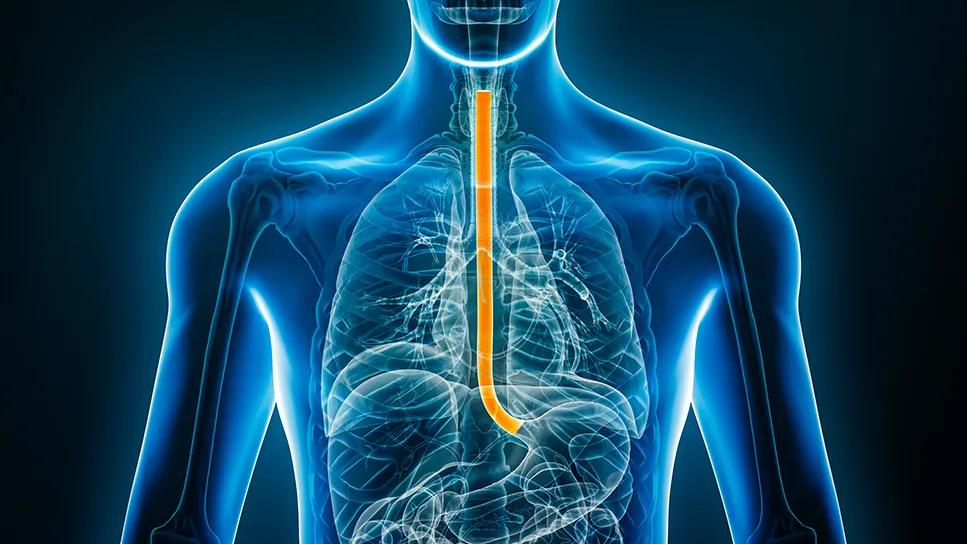
Image content: This image is available to view online.
View image online (https://assets.clevelandclinic.org/transform/e1bc98ec-3ce4-49c8-9ec8-da9ef895f40b/esophagus-illustration-2230778383)
Standardizing a minimally invasive approach for Barrett’s Esophagus and Esophageal Cancer
Nearly 20 years after liquid nitrogen spray cryotherapy (LNSC) entered clinical practice, the modality has reached an important milestone: the publication of expert and evidence-based consensus recommendations for its use in Barrett’s esophagus (BE) and esophageal cancer (EC).
Advertisement
Cleveland Clinic is a non-profit academic medical center. Advertising on our site helps support our mission. We do not endorse non-Cleveland Clinic products or services. Policy
The consensus marks the first coordinated effort to standardize the endoscopic ablation procedure that uses extreme cold to destroy abnormal or diseased cells in the esophageal mucosa. “Our goal is to ensure the safe and effective application of this cryotherapy technique,” states Tilak Shah, MD, the study’s principal investigator.
An interventional endoscopist, Dr. Shah serves as Medical Director in the Department of Gastroenterology, Hepatology and Nutrition within the Ellen Leifer Shulman & Steven Shulman Digestive Disease Center at Cleveland Clinic Weston Hospital.
Interventional spray cryotherapy uses low-pressure liquid nitrogen (−196 °C) to induce rapid freezing of targeted esophageal mucosa, resulting in cellular injury and necrosis.
Upper endoscopy is performed to identify the treatment segments, followed by placement of a large-bore decompression tube to evacuate nitrogen gas from the esophagus and stomach during treatment via passive and active venting. This step is critical to minimize distension and reduce the risk of gastric or esophageal perforation.
Liquid nitrogen is then delivered through a catheter threaded through the endoscope and sprayed onto the target tissue in controlled freeze-thaw cycles. The rapid temperature change causes intracellular ice formation, vascular stasis, and subsequent cell death, with sloughing of devitalized tissue and re-epithelialization during healing.
Compared with radiofrequency ablation (RFA) – the most commonly used ablation modality – LNSC can produce deeper and less uniform tissue injury, which may be advantageous in certain clinical scenarios, such as nodular disease, uneven surfaces, or treatment-refractory BE. The technique also largely preserves the extracellular matrix, which is thought to facilitate mucosal healing and may contribute to lower rates of adverse events, such as ulceration, bleeding and perforation.
Advertisement
While LNSC is offered at select U.S. centers, including Cleveland Clinic in Florida and Ohio, questions have persisted regarding when, how, and for whom the modality should be used. Following conversations in May 2024 at Digestive Disease Week in Washington, D.C., the Spray Cryotherapy Esophageal Consortium was formed to help overcome this hurtle.
“We felt the best way to answer some of these questions was to gather a group of experts and use a modified Delphi consensus process to draw on everyone's collective experience,” explains Dr. Shah. “The subsequent recommendations will support the use of spray cryotherapy in clinical practice and promote the future trials needed to deliver high-level evidence on which to base national guidelines.”
A systematic literature review conducted by Cleveland Clinic research fellows in Florida formed the foundation for the expert survey that was completed by a multidisciplinary panel of 19 experts. Following three Delphi rounds, consensus was achieved on 41 of 42 statements addressing indications, training, technical execution, retreatment timing, and contraindications.
While multiple ablation technologies are available – RFA, argon plasma coagulation (APC), and balloon cryotherapy – LNSC fills an important therapeutic gap. The consensus highlights several clinical scenarios where LNSC is particularly useful:
Barrett’s esophagus
Advertisement
Early esophageal cancer
Locally advanced or inoperable EC
“RFA remains preferred for superficial BE because of its consistent, shallow depth of injury, but there are no good options for esophageal cancer,” Dr. Shah notes. “These indications are expected to be especially valuable for oncologists less familiar with spray cryotherapy.”
For endoscopists already offering LNSC or planning to start, the intra- and post-procedure recommendations address recurring questions around freeze cycles, decompression, catheter technique, and session endpoints.
Treatment typically requires multiple freeze-thaw cycles to cause ischemic damage, and one session may include 2 to 4 cycles for up to three regions of the esophagus, according to the consensus. Frequency of retreatment varies: every two to three months for BE and more frequently for bulky EC when symptom relief – especially dysphagia – is a priority.
“For esophageal cancer, specifically bulky tumors, we’ve learned from trials that patients do much better and are able to swallow better when they are treated more frequently,” says Dr. Shah. “So instead of once a month, a patient might go for two sessions in a three-week span.”
He also notes that many of his patients with EC no longer require esophageal stenting, reducing the use of a complication-prone intervention. Dr. Shah now performs 70% to 80% fewer stent placements than in prior years.
Advertisement
The only unresolved topic debated by the panelists was whether biopsies can be performed in the same session as cryotherapy. “Some of the survey participants expressed concerns about the risk of complications, such as nitrogen gas dissecting through biopsy sites,” explains Dr. Shah. He points out, however, that in his experience, same-session biopsies posed no issues.
With the publication of expert consensus recommendations, the clinical use of liquid nitrogen spray cryotherapy enters a more structured, evidence-guided era. This work helps define LNSC’s role across the spectrum of Barrett’s esophagus and esophageal cancer and sets the stage for the high-quality trials needed to advance the technology even further.
“We are currently working on an IRB submission for a Cleveland Clinic-funded randomized trial where we're going to look at this technology for esophageal cancer,” offers Dr. Shah.
The proposed phase II trial will evaluate whether adding cryotherapy to standard chemotherapy improves cure rates in patients newly diagnosed with locally advanced, non-metastatic EC. This work builds on Dr. Shah’s earlier research prior to joining Cleveland Clinic, where he led pilot and phase I trials confirming the safety of combining LNSC with systemic therapy.
“Having the consensus really helps when we're writing grants and planning the trial because we have something that is agreed on and is published,” he adds.
Advertisement
Advertisement
Cleveland Clinic in Florida explores extended reality for multimodality image guidance
The American Society of Clinical Oncology (ASCO) recently released updated guidelines

Cleveland Clinic's transplant team in Florida is using circulatory-death donor hearts to expand transplant opportunities for patients.
Repair of tiny lymphatic vessels offers big relief for patients with lymphedema after cancer surgery
AI-enhanced mammography improves cancer detection and may support more personalized screening strategies
The Center for Neurological Restoration offers a structured, multidisciplinary approach to conditions that often require longitudinal management and escalation beyond first-line therapies
Multidisciplinary expertise provides advanced evaluation, second opinions and personalized treatment planning for patients with challenging cerebrovascular disorders
Study highlights strong predictive value of circulating tumor DNA testing
 Search